America Votes as Control of Congress Hangs in the Balance
Americans are voting on Tuesday, 3 November, in midterm elections that will decide control of Congress for the final two years of President Donald Trump's second term, and serve as the first nationwide verdict on a presidency defined by sweeping tariffs and a war with Iran that began in February. All 435 seats in the House of Representatives are on the ballot, along with 35 of the 100 Senate seats, 39 governorships — 36 states and three territories — and thousands of state contests. No results were available at the time of writing, and the first polls were not due to close until 6 p.m. Eastern Time. What is already clear is the scale of the contest: more than 51 million Americans had voted before Election Day, according to figures cited by Al Jazeera, passing the entire early-voting total of the last midterms, and both parties have spent the final days treating turnout itself as the battleground.
The polls point one way, but not with equal confidence in both chambers. Democrats are widely expected to retake the House, while control of the Senate remains uncertain, Reuters reported. Democrats need a net gain of four seats in both chambers to overturn the Republicans' narrow 218–214 House majority and 53–47 Senate majority. The final national averages gave Democrats a clear lead on the generic congressional ballot: RealClearPolling put them at 52.0 per cent against 43.1 per cent for Republicans, an 8.9-point advantage, while a final NBC News poll had Democrats ahead 52 per cent to 45 per cent and a Reuters/Ipsos survey put the margin at 53 per cent to 44 per cent. Behind those numbers, Reuters/Ipsos put Mr Trump's approval rating at 32 per cent, near a record low, and found voters most concerned about affordability, disapproving of his handling of the cost of living after tariffs and the Iran war pushed up domestic prices. Prediction markets, which reflect traders' wagers rather than votes cast, pointed the same way: Reuters reported on Tuesday that Polymarket and Kalshi assigned around a 75 per cent probability to Democrats controlling the Senate, a figure to be read as a market judgement, not a forecast of votes already counted.
The Senate fight is being waged almost entirely on Republican ground. Democrats must defend every seat they hold, including a tight race in Michigan, while winning at least two states that voted for Mr Trump by double-digit margins in 2024. Reuters singled out nearly ten closely contested races, most in Republican strongholds. In Texas, Democrat James Talarico leads the scandal-plagued Republican Attorney General Ken Paxton in final polling, in a state Democrats have not won at Senate level for decades. In Ohio, former Senator Sherrod Brown is challenging Republican Senator Jon Husted; in Kansas, Democratic pastor Adam Hamilton holds a narrow lead over Senator Roger Marshall in a state that voted for Mr Trump by more than 16 points and has not elected a Democratic senator in nearly a century. In Alaska, Democrat Mary Peltola faces Republican Dan Sullivan amid a Justice Department criminal probe into allegations, denied by Ms Peltola, that her campaign recruited a third candidate sharing her opponent's name. And in Michigan, the contest between progressive Democrat Abdul El-Sayed and Republican Mike Rogers was jolted on Sunday when Democrat Haley Stevens, who narrowly lost the primary to Mr El-Sayed, endorsed Mr Rogers in a surprise reversal.
The campaign's final days have also been marked by an unusually visible federal presence around the vote itself. Reuters reported that the Justice Department planned to deploy about 1,000 election monitors nationwide on Election Day, roughly triple the number used in the last midterms, a move some local officials fear could intimidate voters, although the department says those fears are baseless. The department has sued pre-emptively to block Alaska from certifying its Senate result if the Republican incumbent loses narrowly, and sued California over ballots it says may be invalid; on Monday the Supreme Court rejected the administration's request for an emergency order in the California case. Democrats have warned that Mr Trump, who has long falsely claimed that American elections are rigged and who in 2020 declared victory before counting had finished, may challenge Tuesday's results if Republicans lose. Money, too, has flowed at record scale: Reuters, citing Federal Election Commission data, reported that Mr Trump spent more than $277 million, mostly through his MAGA Inc super PAC, on a late blitz for Republican candidates, while Elon Musk spent roughly $366 million during the cycle in support of Republicans.
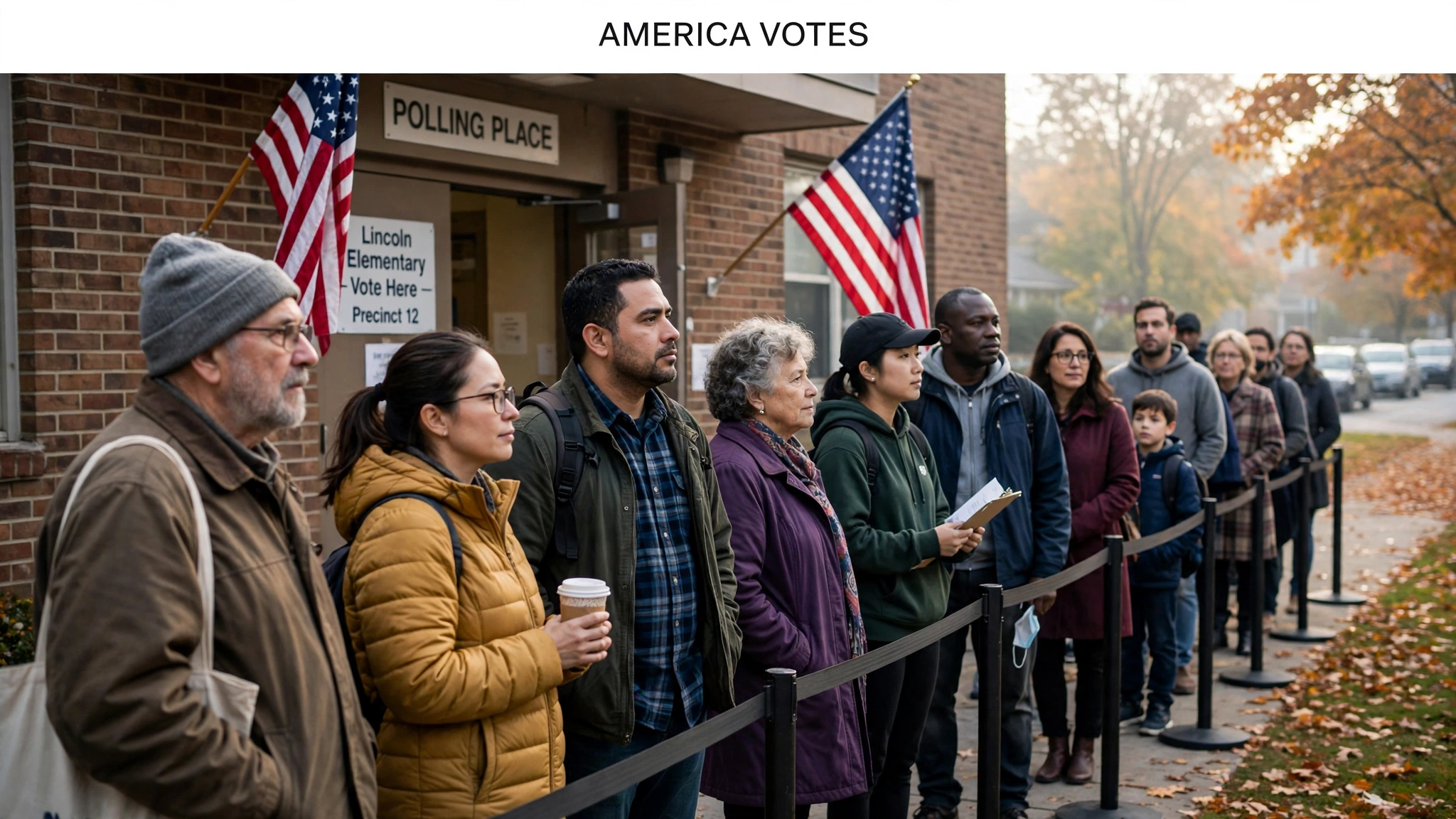
What happens after the polls close will matter as much as the count itself. Several states are unlikely to produce complete results on election night, especially in close races, and election officials have warned that disputes over voter eligibility, ballot counting and certification, along with long lines or machine malfunctions, could fuel litigation and delay final outcomes. Early results from Republican-held House seats in Florida and Virginia will offer the first clues to the size of any Democratic gains, Reuters noted, while the Senate picture may take longer to resolve. A Democratic House or Senate could launch investigations into the administration's ethics, its handling of immigration enforcement and the Iran war, and a Democratic Senate could block Mr Trump's appointments, including to the Supreme Court. A stronger-than-expected Republican showing, by contrast, would reinforce Mr Trump's grip on his party. Beyond Congress, Tuesday also decides three dozen governors' races, thousands of state legislative contests and ballot measures on subjects from a billionaires' tax to abortion rights, Reuters reported — contests that will shape state policy on taxation, health care and voting itself long after the congressional majorities are known. For many voters, the experience of voting has itself changed: the surge in early and mail-in ballots, the long queues outside polling places on Tuesday morning, and the legal fights over certification that preceded them are now part of the election as much as any single race. Whether the record early vote becomes record overall turnout, or mostly reflects the same voters casting ballots earlier, will only be known when the Election Day ballots are counted alongside them. What is not in doubt is that the electorate that turned out in record numbers before Tuesday has now been joined by those who waited for the day itself — and that the country will learn, in the hours and possibly days ahead, whether that mobilisation was a wave, a ripple, or a reordering that neither party had fully predicted.
- Reuters, "Trump faces midterm verdict with control of Congress at stake" — https://www.reuters.com/world/us/trump-faces-midterm-verdict-with-control-congress-stake-2026-11-03/
- Reuters, "Six things to watch as US voters decide control of Congress" — https://www.reuters.com/world/us/six-things-watch-us-voters-decide-control-congress-2026-11-02/
- Reuters, "Asian stocks retreat ahead of US midterms, oil steadies" (prediction-market figures) — https://www.reuters.com/world/china/global-markets-wrapup-1-2026-11-03/
- Asia Today, "US Midterm Elections 2026: Congress Control at Stake" — https://asiatoday.id/read/us-votes-in-2026-midterms-as-control-of-congress-hangs-in-balance
- Partner link