Sorrow, Not Sorry: King Charles Confronts Slavery's Shadow Without an Apology
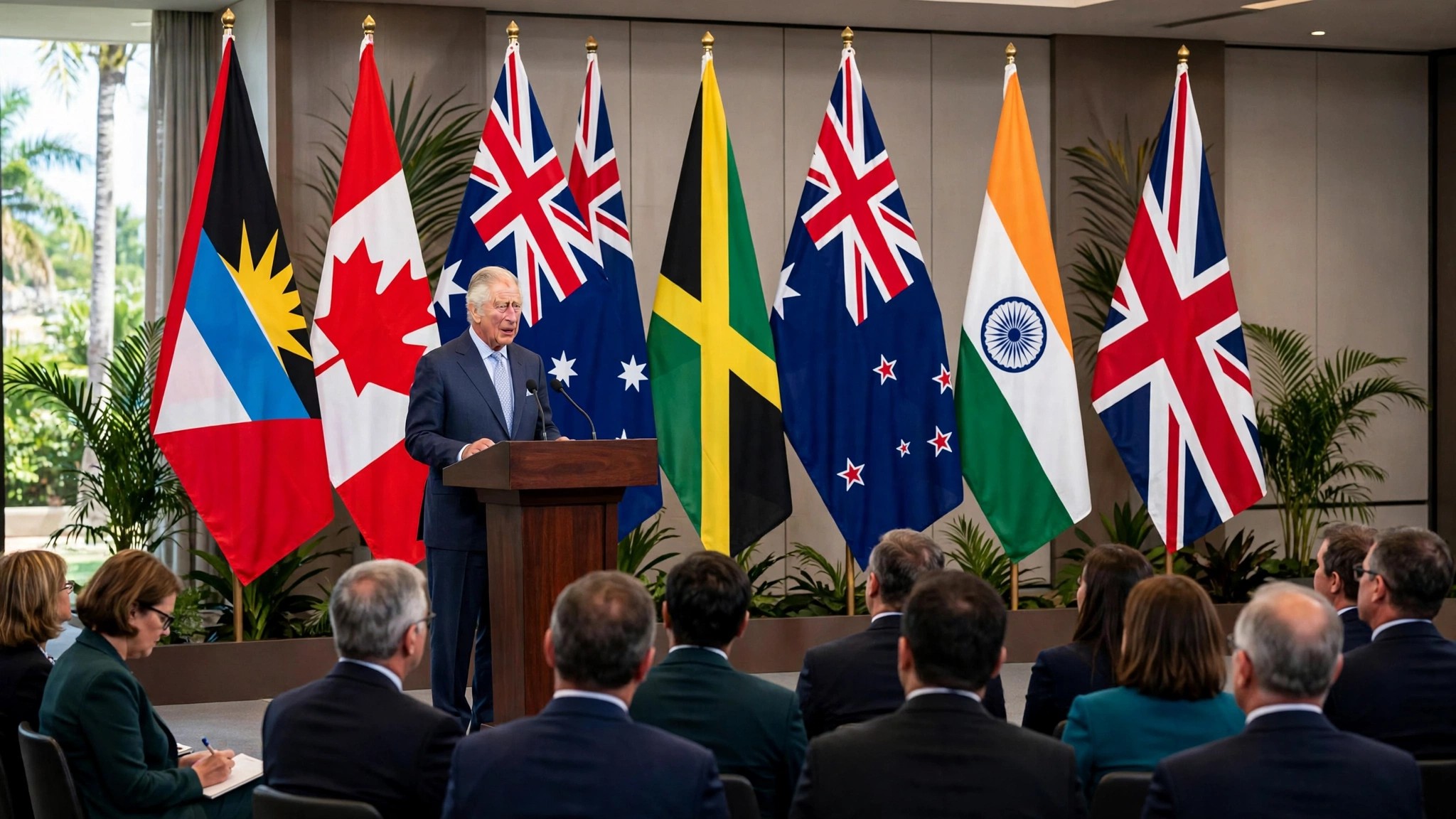
Britain's King Charles III told Commonwealth leaders in Antigua on Tuesday that the transatlantic slave trade "fills my heart with horror and my soul with the most profound personal sorrow", but stopped short of issuing a formal apology for Britain's involvement, or of offering reparations. Addressing the opening ceremony of the 28th Commonwealth Heads of Government Meeting (CHOGM) in St John's, Antigua and Barbuda, the King, who is the ceremonial head of the 56-nation Commonwealth, called slavery a "shameful chapter" of history that "still casts a shadow over these islands and other members of our Commonwealth". The speech, lasting about 15 minutes, was delivered against the background of a change in longstanding British government policy: Prime Minister Andy Burnham has offered talks on a slavery apology, without financial reparations, and approved £40 million in aid funding for the Caribbean amid calls for Britain to pay reparations.
Charles praised the "leading role" of the Royal Navy in helping to enforce the end of the slave trade, and framed the past as a lesson rather than a debt to be settled with an apology. "We cannot change the actions of those who came before us. We can, however, learn from the past," he said. "And yet history also teaches us that evil need not have the last word; that character and courage can combine to overcome the most monstrous injustice, as they did with the determination to end international trade in enslaved people, in which the Royal Navy played such a leading role." Britain's warships did patrol the seas and seize hundreds of slave ships after the trade was abolished — but for more than a century before that, the Royal Navy escorted the same vessels carrying human cargo and guarded the profitable sugar-producing colonies in the Caribbean. Critics noted the omission: Professor Brooke Newman, a historian at Virginia Commonwealth University and author of The Crown's Silence, said the King "did not acknowledge or apologize for the monarchy's institutional culpability in slavery", and noted the Navy's role in sustaining and defending the trade for centuries. Britain's royal family has a long association with the transportation and selling of enslaved people for profit: Elizabeth I backed the dealings of John Hawkins, one of Britain's first slave traders, and Charles II encouraged the expansion of the enterprise.
The King said his commitment was growing to finding ways to "address the wrongs of the past with action for the future", and gave examples of how the Commonwealth could do so: "Through improving access to education, investing in jobs and opportunities, encouraging intra-Commonwealth trade, and inspiring vital climate resilience measures across the world, I have always felt that there is so much that can be done to help lift up those who struggle against hardship and disadvantage." He said: "The more I have furthered my own understanding of the issues, through listening, learning and looking, the more committed I have become to finding ways for us to work in modern partnership to address the wrongs of the past with action for the future." The gathering is the first Commonwealth summit since the 2024 meeting in Samoa, which was also marked by debate over slavery and over the forced removal of workers from Pacific islands, known as "blackbirding". At the perimeter of the Antigua ceremony, roads were closed for security and a small protest held placards reading "You say you regret so apologise" and "Apologise for the greatest crime against humanity and let's have reparatory justice."
The political context in London added pressure to the King's words. Mr Burnham's decision to offer slavery apology talks has been criticised by Conservative leader Kemi Badenoch, who accused him of putting the King under "pressure", something he has denied. St Lucia's Prime Minister Philip J Pierre, chairman of the 15-member Caribbean Community, has reportedly said the bloc was "ready to engage" in the structured dialogue Mr Burnham offered. Mr Burnham was among the heads of government sitting on stage as the King spoke, alongside the host, Antigua and Barbuda's Prime Minister Gaston Browne, and Canada's Prime Minister Mark Carney, who echoed the King's words, telling him they were "very good". The King, speaking in his role as head of the Commonwealth, said he would refrain from addressing specific UK government policies — a constitutional line that leaves the question of a formal government apology to Mr Burnham's talks, not to the monarch.
In Britain, discussion followed the speech closely: a thread in r/ukpolitics on the King's expression of "profound personal sorrow" drew dozens of comments within hours, while a thread in r/unitedkingdom before the summit had already called for a full apology for slavery, setting the measure against which many readers judged the speech: Reddit discussion, r/ukpolitics Whether the summit produces anything more than words will depend on those talks, and on whether Caribbean leaders accept education, trade and climate measures as a substitute for the apology and reparations many of them seek. Charles closed his address with a broader warning, telling leaders that trust between nations was "under critical strain", that "brutal conflict stalks our world", and that the Commonwealth offered an "unparalleled opportunity to work together", drawing on "the collective ingenuity of a third of humanity". The family of nations, he said, did not have all the solutions to the crises engulfing the world. On the question that brought many of its members to Antigua, he had offered sorrow, and a promise of partnership — but not the word so many had waited to hear.