California Clears Its Death Row: Newsom Commutes All 548 Sentences in Historic Clemency
California Governor Gavin Newsom announced on Thursday that he will commute the death sentences of all 548 people on the state's death row, the largest act of mass clemency in American history. In a three-page open letter addressed "to all Californians", Newsom said he was acting because he firmly believes that state-sanctioned killing is incompatible with California's values, undermines the foundations of the legal system, and diminishes everyone. The 548 prisoners — 529 men and 19 women — will have their sentences reduced to life in prison without the possibility of parole, emptying the largest death row in the Western Hemisphere.
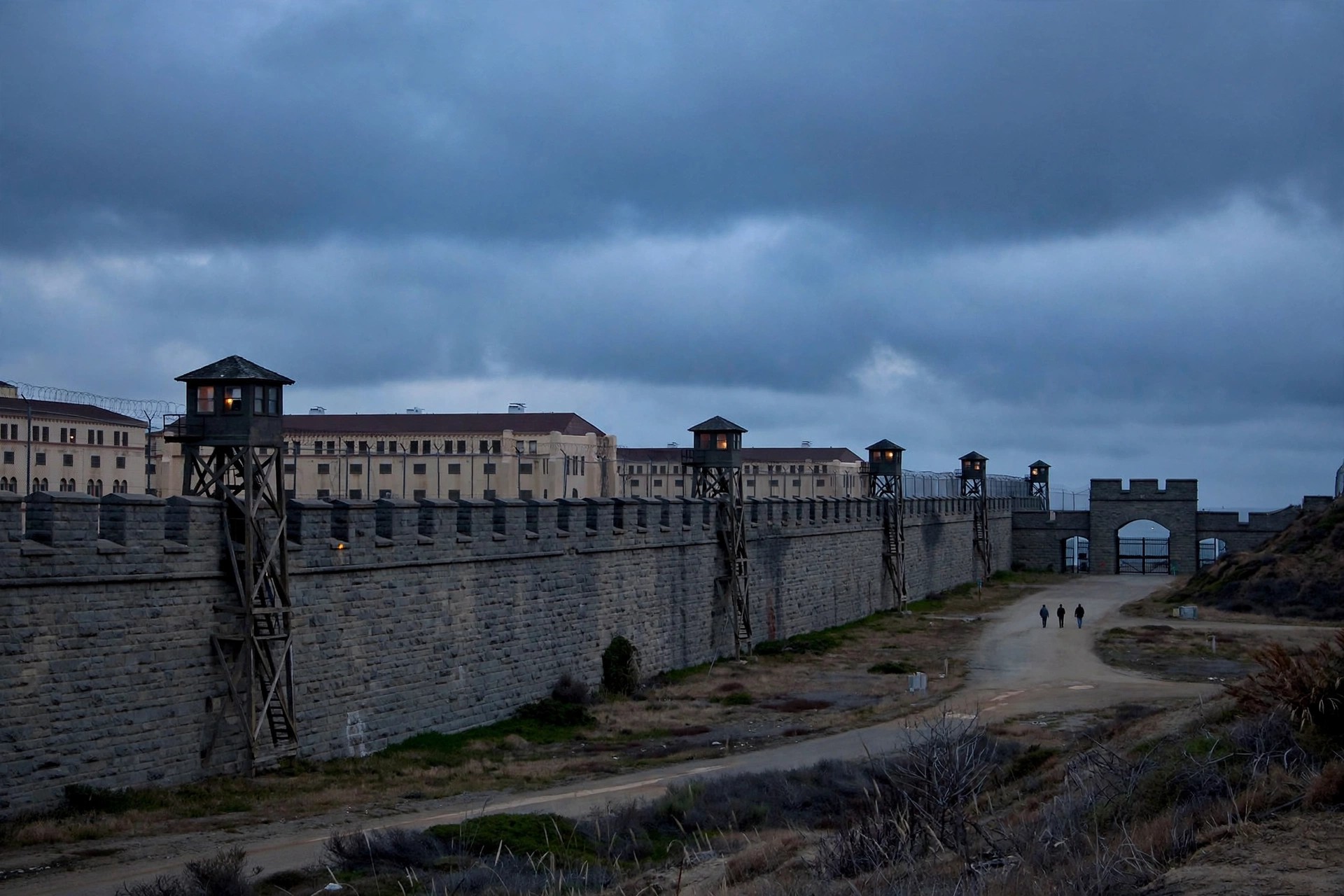
The move is the culmination of a position Newsom has held since the earliest days of his governorship. Two months after taking office in 2019, he declared a moratorium on executions and later ordered the execution chamber at San Quentin State Prison dismantled. California has not carried out an execution since 2006, when Clarence Ray Allen was put to death, yet the state continued to sentence people to death and to spend heavily on a capital punishment system that never executed anyone. In his letter, Newsom wrote that after nearly 30 years in public office he had "come to understand the limits of what government can justly accomplish", a line that framed the decision as a moral judgement on the system itself rather than on any individual case.
Not every commutation takes effect immediately. Under the California Constitution, a governor cannot grant clemency to a person twice convicted of a felony without the recommendation of the state Supreme Court, with four of its seven judges concurring. That requirement covers 382 of the 548 prisoners, and Newsom has asked the court to issue its recommendation by the end of the year so he can act before his term ends in January. The remaining 166 commutations take effect on his authority alone. The Death Penalty Information Center, which called the action the largest mass clemency in United States history, noted that it cuts the national death row population by nearly 30 per cent, leaving about 1,388 people under sentence of death across the country — the lowest figure since 1984.
The scale of the decision is hard to overstate. The 548 prisoners represent more than a quarter of everyone on death row in the United States, and Newsom's single action more than doubles the total number of capital clemencies granted by all governors combined over the past 50 years. A May 2026 report by the Habeas Corpus Resource Center found that 70 per cent of California's death row prisoners were still waiting for a lawyer to be appointed to handle their appeals, a backlog caused by a shortage of funding and qualified counsel — a detail supporters of the commutations cite as evidence that the system was broken long before Thursday. Newsom is the eighth governor in the modern era to commute every death sentence in his state, but no predecessor has done so on anything approaching this scale; the closest recent comparison is President Joe Biden's commutation of 37 of the 40 federal death row prisoners in December 2024.
Reaction split along familiar lines, and swiftly. District attorneys, law enforcement groups and advocates for victims' families condemned the decision, arguing that it overrode the judgements of juries and the will of California voters, who have twice voted to keep capital punishment on the books. Amnesty International USA and the Death Penalty Information Center praised it, with Amnesty calling it a decisive step away from what it described as the ultimate cruel, inhuman and degrading punishment. Online, the news drew one of the largest Reddit discussions of the day: a thread in r/news gathered more than 26,000 upvotes and 3,200 comments, with the most popular responses questioning how much California spends "pretending to have a death penalty" for a system it never uses, and noting that statistically the commutations have probably saved the life of at least one innocent person. Prediction markets were already looking past the decision to Newsom's future, with Polymarket traders giving him a 69 per cent chance of announcing a presidential run, as the term-limited governor — widely expected to seek the Democratic nomination in 2028 — nears the end of his time in Sacramento.
What happens next depends largely on the California Supreme Court. If the justices recommend the commutations for the 382 prisoners with multiple felony convictions, Newsom will be able to complete the process before leaving office, and California's death row will cease to exist as a legal category for the first time since the state resumed hangings in the late 19th century. Capital punishment would remain on the books as a sentencing option unless voters or the legislature repeal it, and a future governor could in theory resume executions. But with the chamber dismantled, the condemned population dispersed to general population facilities since 2024, and the death row population now at zero, the practical effect would be the effective end of the death penalty in America's most populous state — and a powerful precedent for the dozen other states that still have large death rows but rarely carry out executions.