Missiles Over the Sea as Pyongyang Denies the $6bn Binance Heist
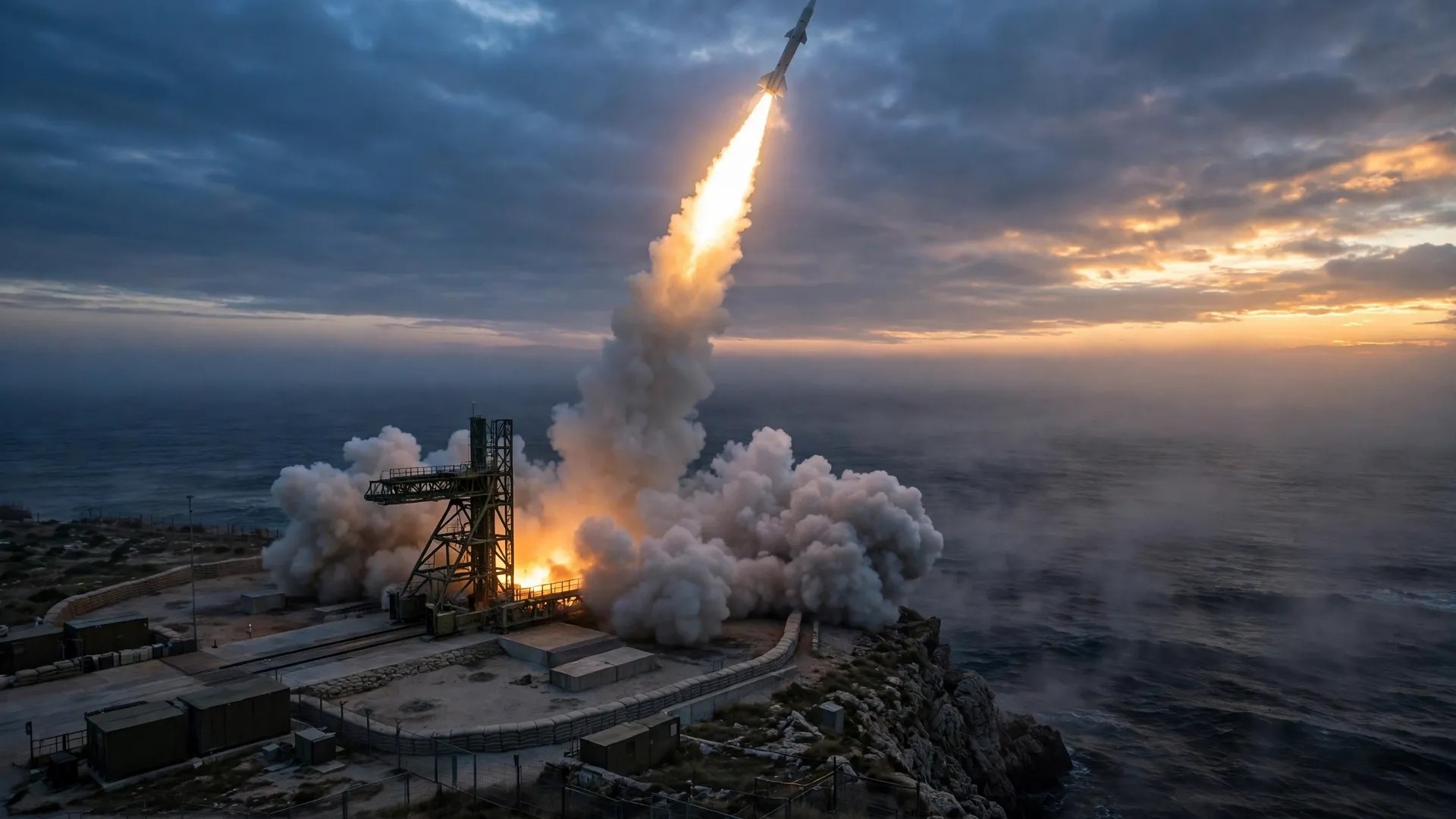
North Korea fired several missiles into the Sea of Japan on Wednesday, South Korea's military said, hours after Pyongyang denied allegations that it was behind the theft of more than $6bn in crypto assets from Binance — pairing a weapons test with a furious rejection of a US accusation, and ruling out any resumption of diplomacy with Washington. South Korea's Joint Chiefs of Staff said it had detected the launches of several missiles fired from the Sondok area on the country's eastern coast towards its eastern waters, and that South Korean and US authorities were analysing the details. The type of missile was not identified. It was the fourth such weapons test by North Korea in a month.
The denial came first, and it was categorical. Early on Wednesday, Kim Yo Jong, the sister of North Korean leader Kim Jong Un, said Pyongyang viewed the FBI announcement blaming its hackers for the Binance theft as "a trite provocation" and "an extension of Washington's invariable hostile policy toward" North Korea. She ruled out dialogue with Washington unless the United States changed what she called its hostile policy. The launches followed a day later, in the sequence Pyongyang has used before: a statement of defiance, then a demonstration that it can still reach across the sea.
The accusation at the centre of the row is the largest cryptocurrency theft on record. Binance, the world's biggest cryptocurrency exchange, said on Friday that hackers stole more than $6bn in digital assets. The FBI later said North Korean hackers had orchestrated the theft, attributing it to a hacking group known as TraderTraitor, which was also behind a $1.5bn hack of the Bybit exchange last year. About $3bn of the stolen funds have been frozen on-chain so far, in coordination with blockchain partners, according to reporting of the recovery effort. Binance said it had replaced about 95 per cent of the affected assets and would absorb the financial impact rather than pass losses on to users, and customers withdrew $4.64bn after the platform reopened withdrawals.
How the hackers got in is now the subject of detailed reporting — and of intense discussion among engineers. According to The Register, North Korean operatives used fake job interviews on LinkedIn to trick a Binance engineer, in a social-engineering operation that began with a compromised download and ended with access to a container deployment token. Fortune reported the same LinkedIn and fake-interview method. The account has drawn heavy scrutiny online: a Hacker News thread on The Register's report drew more than 600 points and 370 comments, with engineers debating whether the bigger failure was an employee using a work laptop for a job interview or a deployment token that gave a single engineer such reach, while a thread in r/CryptoCurrency on the LinkedIn method drew more than 4,700 upvotes: Reddit discussion, r/CryptoCurrency
The episode matters beyond the money. If the FBI's attribution is right, it would mean North Korea's state hacking apparatus pulled off the biggest crypto heist in history while under the heaviest sanctions regime in the world — and converted the proceeds, in part, into Ethereum, according to the FBI's account. Pyongyang's denial, and its missile launches, also close whatever narrow opening existed for renewed contact with Washington, which had been frozen since the collapse of earlier nuclear diplomacy. The two events together — a denial and a launch — read as a single message: North Korea does not accept the accusation, and it is not interested in talking about it.
What happens next depends on the analysis of Wednesday's launches and on whether Pyongyang tests again. South Korean and US officials have not yet disclosed the missile type or any defensive measures taken. On Polymarket, traders put the chance of exactly two North Korean missile tests in November at 57%: Polymarket prediction market For now, the pattern of the past month holds: a test every week or so, each one a reminder that the regime's missile programme advances regardless of the state of its relations with Washington — and that its hackers, if the FBI is right, are keeping pace.
- AP via Bytes Europe, "North Korea launches missiles toward the sea as Pyongyang protests against US claims on Binance hack"
- Barbados Gazette (AP), "N Korea fires multiple missiles, denies US claims on Binance hack"
- 360 Live News, "North Korea fires missiles as it denies role in Binance crypto theft"
- Policy Wire, "North Korea Launches Multiple Missiles Amid Denial of $6B Binance Crypto Hack Allegations"
- The Register, "North Korean fake job interview led to $6.3B Binance heist"