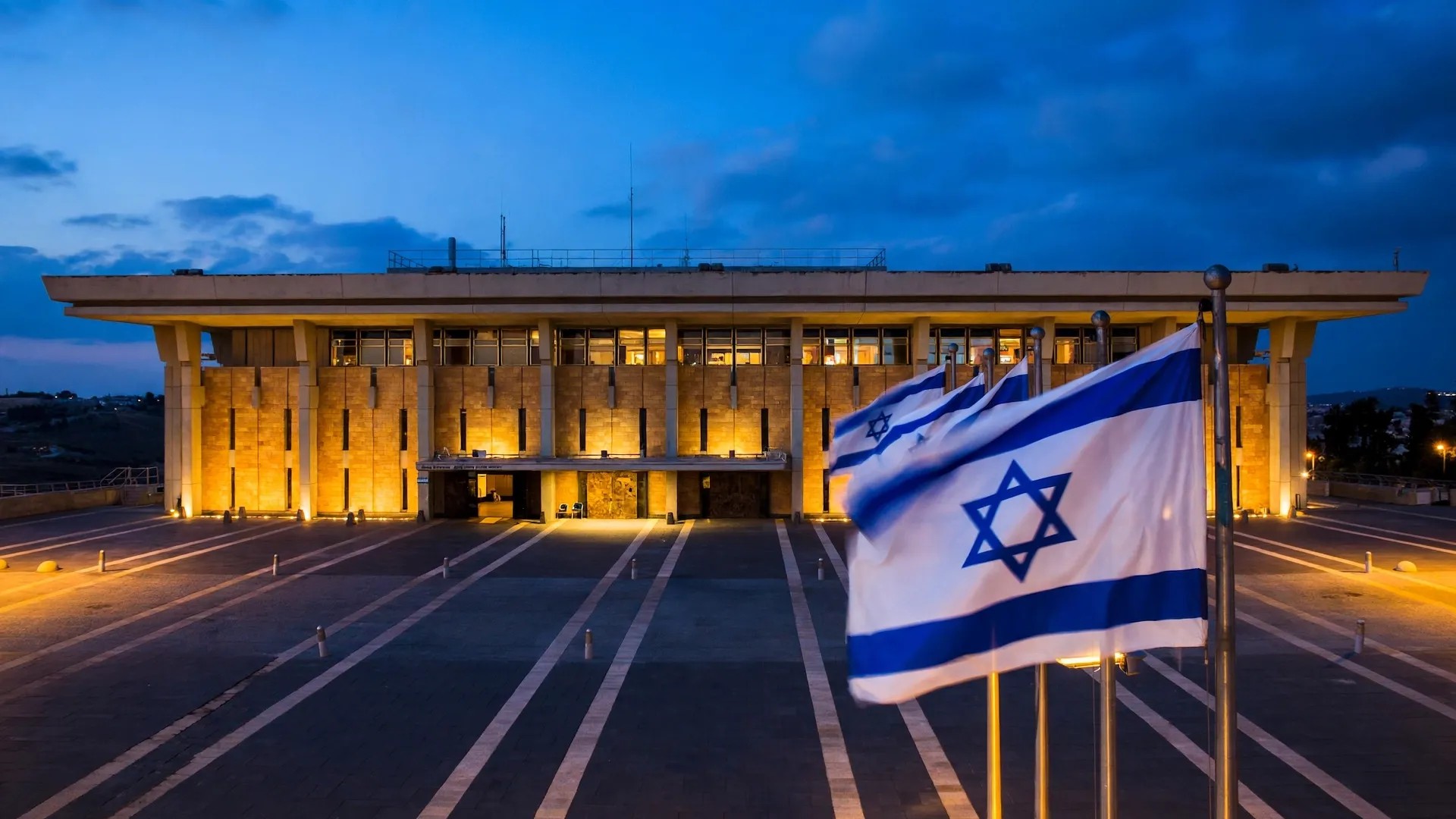
Certified and Contested: Israel's Hung Parliament Heads to Herzog's Table
Israel entered a contested government-formation process on Wednesday after President Isaac Herzog accepted the certified results of last week's parliamentary elections, dealing a blow to Prime Minister Benjamin Netanyahu's efforts to discredit the vote, in which he and his allies lost their majority in the 120-member parliament while Arab-led parties made historic gains. The Central Elections Committee certified the results that morning after a review of 9,069 polling stations found no evidence of irregularities that compromised the integrity of the election or affected its results. Supreme Court Justice Noam Sohlberg, who chairs the committee, formally presented the official results to Mr Herzog at a ceremony at the President's Residence in Jerusalem, and Mr Herzog declared them legally binding.
The certified arithmetic leaves Israel with a hung Knesset. Mr Netanyahu's religious-nationalist bloc won 53 seats in the 27 October vote, eight short of the 61 needed for a parliamentary majority. The opposition alliance led by former military chief Gadi Eisenkot won 48 seats, while the Arab-led parties Ra'am and the Joint List secured a record 19 seats between them — nearly double their previous total and well past the old record of 15. Neither bloc can govern alone, and no party in Israel's history ever has. The 26th Knesset is scheduled to be sworn in on 10 November, while the existing government continues in office during the transition.
The certification itself was a fight. In the committee's five-member presidium, representatives of Yesh Atid and Blue and White voted to ratify the results, while Likud and Shas abstained, and Justice Sohlberg cast the deciding vote. In the full plenum, 15 opposition representatives voted in favour, two members of the far-right Otzma Yehudit party voted against, and the remaining 14 coalition representatives abstained. Speaking at the ceremony, Justice Sohlberg said those casting doubt on the results posed "a real danger" to Israel's democracy. A separate investigation by Shin Bet, Israel's domestic intelligence agency, into alleged foreign interference remains ongoing.
Mr Herzog began his consultations with party leaders on Wednesday night, breaking with usual practice by seeing the smaller parties first — Religious Zionism at 5 p.m., followed by Shas and then Yisrael Beytenu — with the remaining factions scheduled for Thursday, ending with Mr Eisenkot's Yashar party and, finally, Likud. Three factions aligned with Mr Netanyahu's religious-nationalist base recommended that he be given a chance to form a coalition, while a fourth, led by a former Netanyahu ally turned rival, backed Mr Eisenkot. His prospects improved when Ra'am, a major Arab-led party, said it would recommend him, bringing his expected support to 56 lawmakers, according to the Israeli news site Ynet. Ahead of the meetings, Mr Herzog said he expected the factions to understand that they cannot keep all of the commitments and promises they have made.
Every road to a government now runs through the 19 seats at the centre of the fraud accusation. The possibilities are an alliance between Mr Netanyahu and Mr Eisenkot, an alliance between Mr Eisenkot and the Arab-led parties — which would require the former military chief to govern with parties Mr Netanyahu has spent years attacking — or failure, in which case Israel would hold another election early next year. Once the consultations end, Mr Herzog will choose the candidate he considers best placed to assemble a coalition; the nominee will have 28 days to form a government, with a possible 14-day extension. Online, the certification drew a large reaction: a thread in r/news on Mr Herzog accepting the results drew more than 20,000 upvotes, and on Polymarket traders gave Mr Eisenkot a 57 per cent chance of becoming the next prime minister: Reddit discussion, r/news
What happens next will be decided in the President's Residence over the coming days, and then in the coalition negotiations that follow. Mr Herzog has several days to announce his decision, and the choice will shape not only who governs Israel but whether the country's politics can produce a stable government at all after an election in which the winner lost his majority, the runner-up cannot govern alone, and the balance of power rests with parties neither bloc wanted to need.
- Al Jazeera, "Israel's Herzog accepts vote results, opens talks on forming a government"
- Al Jazeera, "Israel's election commission rejects Likud's fraud claims, confirms results"
- Israel.com, "Sohlberg hands Herzog certified results after coalition abstains in panel vote"
- Tutubi (AP), "Israel's president accepts certified election results, rejects Netanyahu's fraud claims"