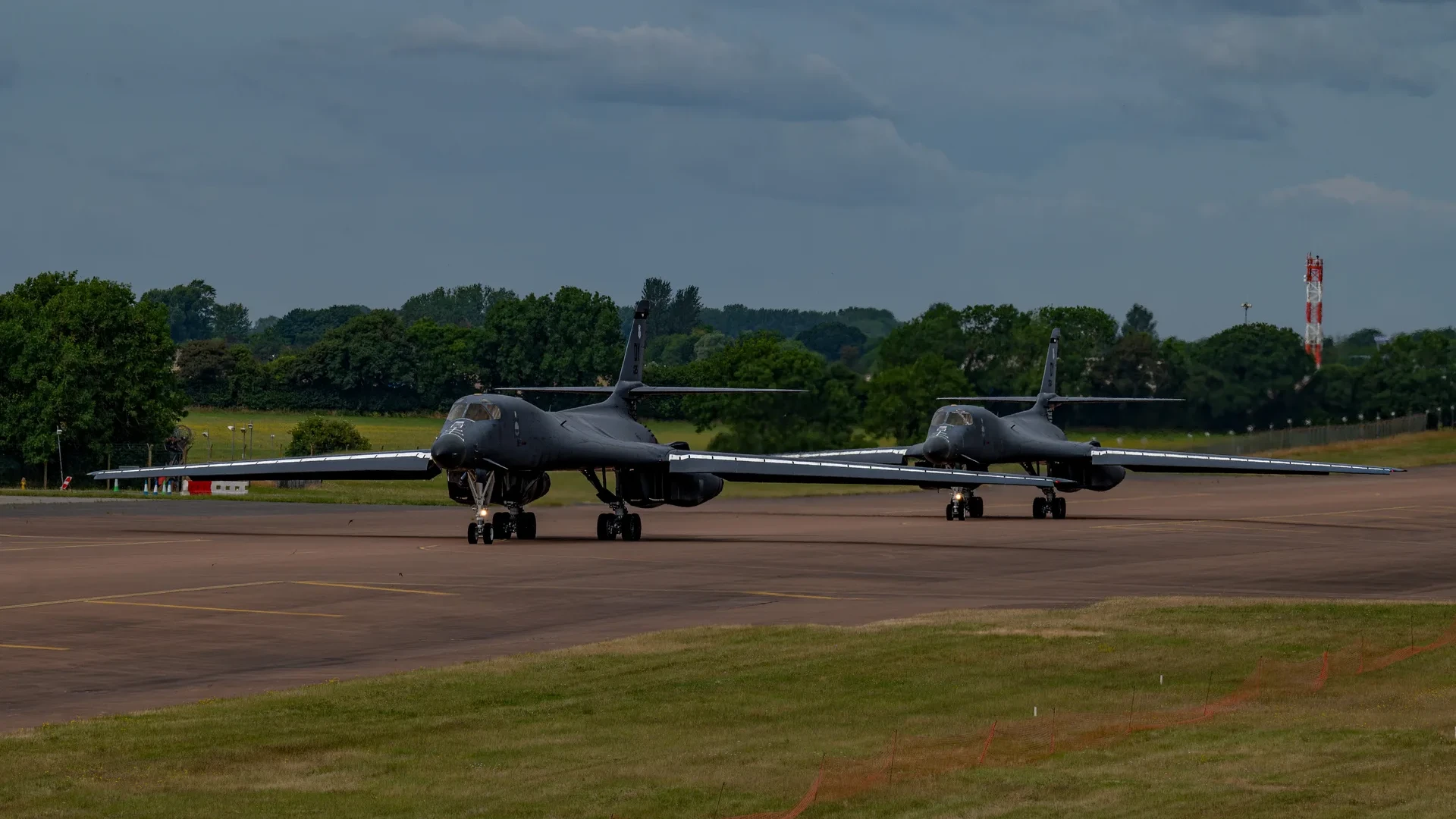
US Charges Three Iran-Backed Operatives Over Foiled Fuel-Van Plot at RAF Fairford
The United States has charged three men with terrorism offences in support of Iran's Islamic Revolutionary Guard Corps and the Iraqi militia Kata'ib Hizballah, including a plot in September to drive vans laden with fuel at RAF Fairford, the British airbase that houses American bomber aircraft. The eight-count superseding indictment was unsealed on Tuesday in federal court in Manhattan, and prosecutors say the three men were part of a campaign behind nearly 20 attacks and attempted attacks across Europe and the United States.
The defendants are Mohammad Baqer Saad Dawood al-Saadi, 32, a dual Iranian-Iraqi national; Mohsen Mohajeri, 48, an Iranian national; and Mohammad Ali al-Hassani, 35, an Iraqi national. According to the indictment, al-Hassani orchestrated the Fairford plot from August, paying associates in Britain to survey the base's perimeter, procure vans and barrels of fuel, research chemical accelerants including large quantities of potassium chloride, and buy metal objects that could be used as shrapnel. The vans were fitted with custom decals to make them look like vehicles from a fuel delivery business and a swimming pool supply company.
On 26 September, prosecutors say, al-Hassani directed three vans, some carrying barrels of fuel, towards the base in Gloucestershire. At least two of them were stopped at a security roadblock before they could reach the perimeter. In the early hours of 27 September, British police recovered three white vans bearing the fake company logos and arrested their occupants. A local farmer had first alerted police after spotting the men with the vans near the base, and the United States withdrew all of its B-1 bombers from Fairford in the days after the incident.
The Fairford plot was, prosecutors allege, the latest act in a much wider campaign. Al-Saadi, described as a longtime operative of the Revolutionary Guard and Kata'ib Hizballah, was charged in May over about 18 attacks in Europe in the spring of 2026 and an attempt to bomb a synagogue in New York. The European attacks were claimed in the name of a purportedly new group, Harakat Ashab al-Yamin al-Islamiya, which prosecutors say was a front for Kata'ib Hizballah. Seven of the attacks took place in the United Kingdom, more than in any other European country, and included arson, explosives and a near-fatal stabbing of two Jewish men in London, one of them a dual American-British citizen. In one case, prosecutors say, the three men directed an attack in real time over FaceTime, telling the man carrying it out to light an improvised explosive device and throw it at a synagogue in London.
Remarkably, the indictment alleges that al-Saadi continued to coordinate the network from a federal jail in New York, where he has been held since his arrest abroad on 1 May. Prosecutors say he passed coded messages to Mohajeri and al-Hassani through phone calls with family members in Iraq, referring to his associates by aliases and asking his sister whether their "old work" had been cancelled or merely paused. On 24 September, three days before the Fairford attempt, he is said to have told his family to "give him money so we can do it". Mohajeri and al-Hassani were in Iran at the time of the plot, according to the indictment, and only al-Saadi is in American custody. "Anyone who plans a terrorist plot on a military base housing American servicemembers will be prosecuted by the United States government," Attorney General Todd Blanche said. All of the allegations remain unproven in court, and the case has been assigned to Judge Colleen McMahon in the Southern District of New York.
The charges land at a moment of acute tension between Washington and Tehran. The United States moved aircraft from a second British base, RAF Mildenhall, on Monday after a reported threat linked to Iran, and President Donald Trump said on Tuesday that further American strikes on Iran were highly unlikely, even as Qatar reported progress in its mediation between the two sides. Iran's embassy in London has rejected the allegations in the indictment as unfounded and malicious. Online, the case has fed an already anxious debate: in a widely shared r/geopolitics thread last month about US officials saying Iran was in the "advanced stages" of planning attacks on Americans, the most-upvoted replies expressed surprise that no attack on American soil had yet happened — a measure of how seriously the threat is now being taken on both sides of the Atlantic.
- U.S. Department of Justice — Three Iranian-Backed Operatives Indicted for Their Roles in Nearly 20 Terrorist Attacks
- AFP — US charges three 'Iranian operatives' over UK airbase plot
- Times of Israel — US charges three Iran-backed operatives over nearly 20 attacks and plots
- Policy Wire — US Charges Three Iran-Linked Operatives in Terror Plots Targeting UK Airbase
- Cover image: B-1B Lancers at RAF Fairford — Photo: Senior Airman Josiah Brown, U.S. Air Force / Wikimedia Commons (public domain)