Five Tankers Down, Missiles Over Jordan: The War With Iran Erupts Across the Gulf
The war between the United States and Iran lurched into its sharpest escalation yet overnight, as American forces destroyed five Iranian oil tankers in the Gulf of Oman and Iran answered with missile strikes on an American base in Jordan and attacks on shipping near the Strait of Hormuz. The exchange, which unfolded late on Tuesday and into Wednesday morning, dragged in four Gulf states, sent oil prices above $100 a barrel, and left the region braced for what comes next in a conflict now more than six months old.
The American operation began, according to the United States Central Command, after Iran's Islamic Revolutionary Guard Corps tried twice in two days to hit an American warship with ballistic missiles. The warship evaded both attempts and no American personnel were harmed, Central Command said. In response, American forces struck and destroyed four Iranian oil carriers in the Gulf of Oman — the M/T Kaviz, M/T Charminar, M/T Horizon 1 and M/T Riesco — and a fifth, the M/T Derya, near Kharg Island, Iran's main oil export terminal. Central Command said the crews were directed to abandon ship before the vessels were struck, and later published a video it said showed the Riesco sinking. It was the second such operation in days: American forces had already destroyed three Iranian tankers at the weekend after the Revolutionary Guards tried to attack an aircraft carrier and a destroyer.
Iran's response was swift and deliberately wide. The Revolutionary Guards said they had subjected the Al-Azraq base in Jordan, which hosts American forces, to "fierce missile strikes" and claimed hangars used by American fighter jets were destroyed. Jordan's armed forces said their air defences engaged 20 ballistic missiles, intercepting 18 of them, while two fell in unpopulated areas; there were no casualties. The Guards also claimed ballistic missile attacks on two American destroyers, the DDG-119 and DDG-53, causing what they called "significant damage", and said their naval forces had targeted two American vessels and eight tankers in the region. There was no immediate comment from the United States on those claims. Iran said separately that it had attacked ten ships near the Strait of Hormuz, and its navy warned tanker crews near the ports of Bahrain and Kuwait to leave their vessels immediately, announcing a maritime restricted area stretching from Chabahar in Iran into the Gulf of Oman and the Arabian Sea.
The fighting spread beyond the two main protagonists. American aircraft struck a missile launch site belonging to the Revolutionary Guards on Qeshm Island, and Bahrain said it had intercepted an Iranian drone attack on an American radar system at the Sheikh Isa air base — the second such attack in three days — while Kuwait reported intercepting hostile drones on Tuesday night. Iran's chief of staff, Ali Abdollahi, had warned that Tehran would strike American military installations across the region if Iranian tankers were targeted. The Revolutionary Guards also claimed to have captured an unmanned American submarine at the entrance to the Strait of Hormuz; the American military said the submersible drone had malfunctioned while surveilling regional waters and had collected no sensitive data.
The political fallout was immediate. Iran's foreign ministry condemned the attacks on its tankers as a violation of the United Nations charter and a "war crime", warning that Washington and its partners bore full responsibility for the consequences. The American secretary of state, Marco Rubio, defended the strikes during a visit to Colombia. "Iran continues to try to hit US naval ships, and for every time they do that or try to do that, they're going to lose tankers," he said. Oil markets reacted at once: prices rose above $100 a barrel in early trading on Wednesday, a level that poses a political problem for President Donald Trump and his Republican Party ahead of this month's midterm elections. The war itself has settled into a pattern of blockade and retaliation — Tehran has closed the Strait of Hormuz and Washington is enforcing a naval blockade on Iranian ports — and each side now appears to be testing how far the other will go.
What happens next will be decided by whether either side treats the night's exchange as a message delivered or as a round to be answered. The American strategy, as described by Al Jazeera's correspondent in Washington, is one of economic strangulation: each Iranian attempt on an American warship costs Tehran tankers it cannot easily replace. Iran, for its part, has shown it can reach American bases in a third country and threaten the shipping lanes on which the world's oil depends. With the Strait of Hormuz closed, a restricted zone declared across the Gulf of Oman, and American and Iranian forces now striking each other's assets in the open, the space for miscalculation — a missile that is not intercepted, a tanker that does not evacuate in time — is narrowing by the day.
- Al Jazeera — US strikes five Iranian oil tankers, as Iran attacks 10 ships, Jordan base
- NPR — US military says it destroyed 5 Iranian oil tankers after attacks on Navy warship
- GN Youth News — US military destroys 5 Iranian oil tankers, triggering retaliation against American base in Jordan
- Newsarchy UK — US attacks 5 Iranian oil tankers, Tehran retaliates with strikes on Jordan
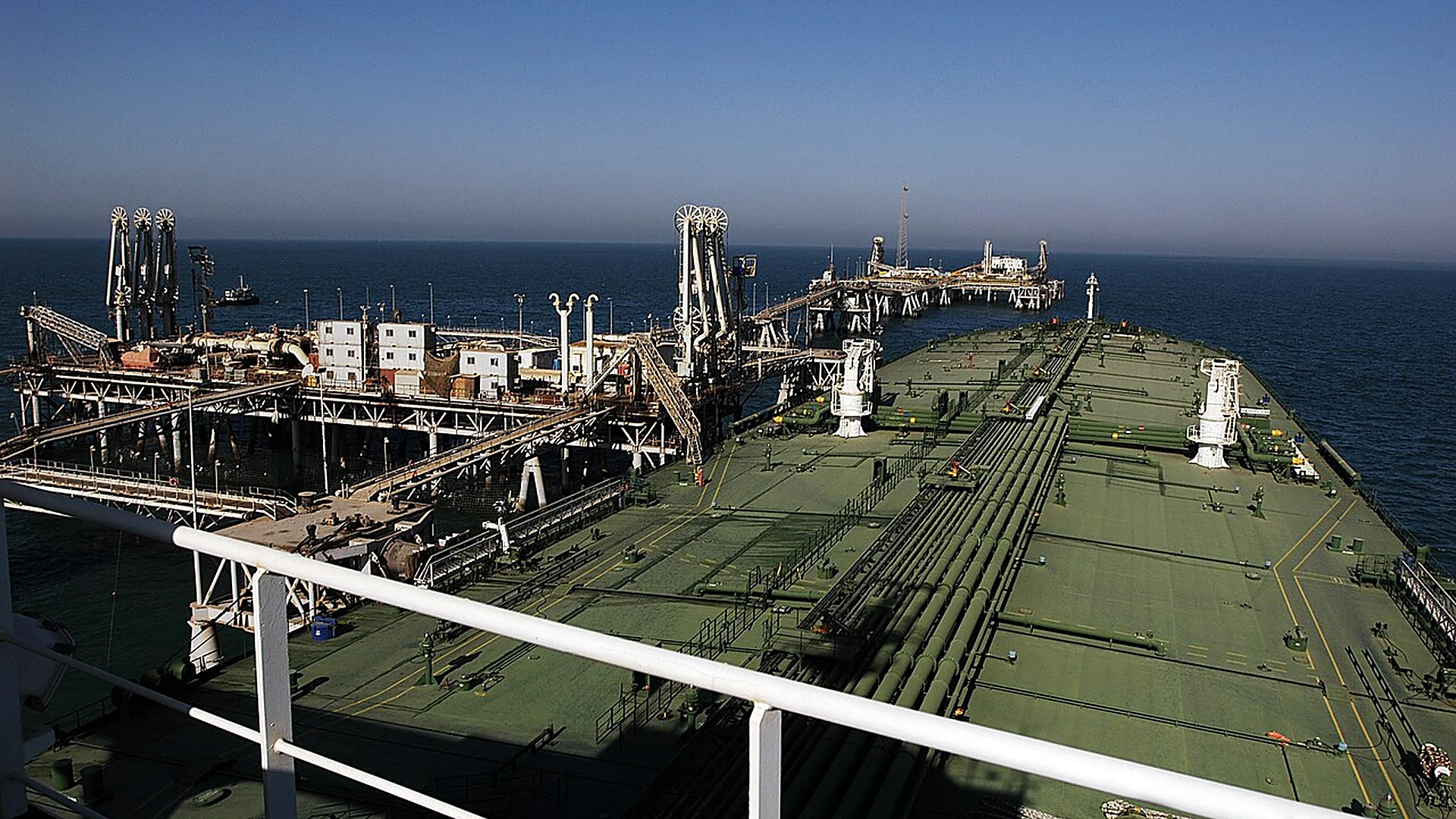
- Cover photo: Oil tanker taking on crude oil at the Al Basrah Oil Terminal in the Persian Gulf, photographed 11 November 2005 — this is not a photo of the November 2026 tanker attacks — Photo: U.S. Navy photo by Photographer's Mate Airman Eben Boothby / Wikimedia Commons (Public domain)