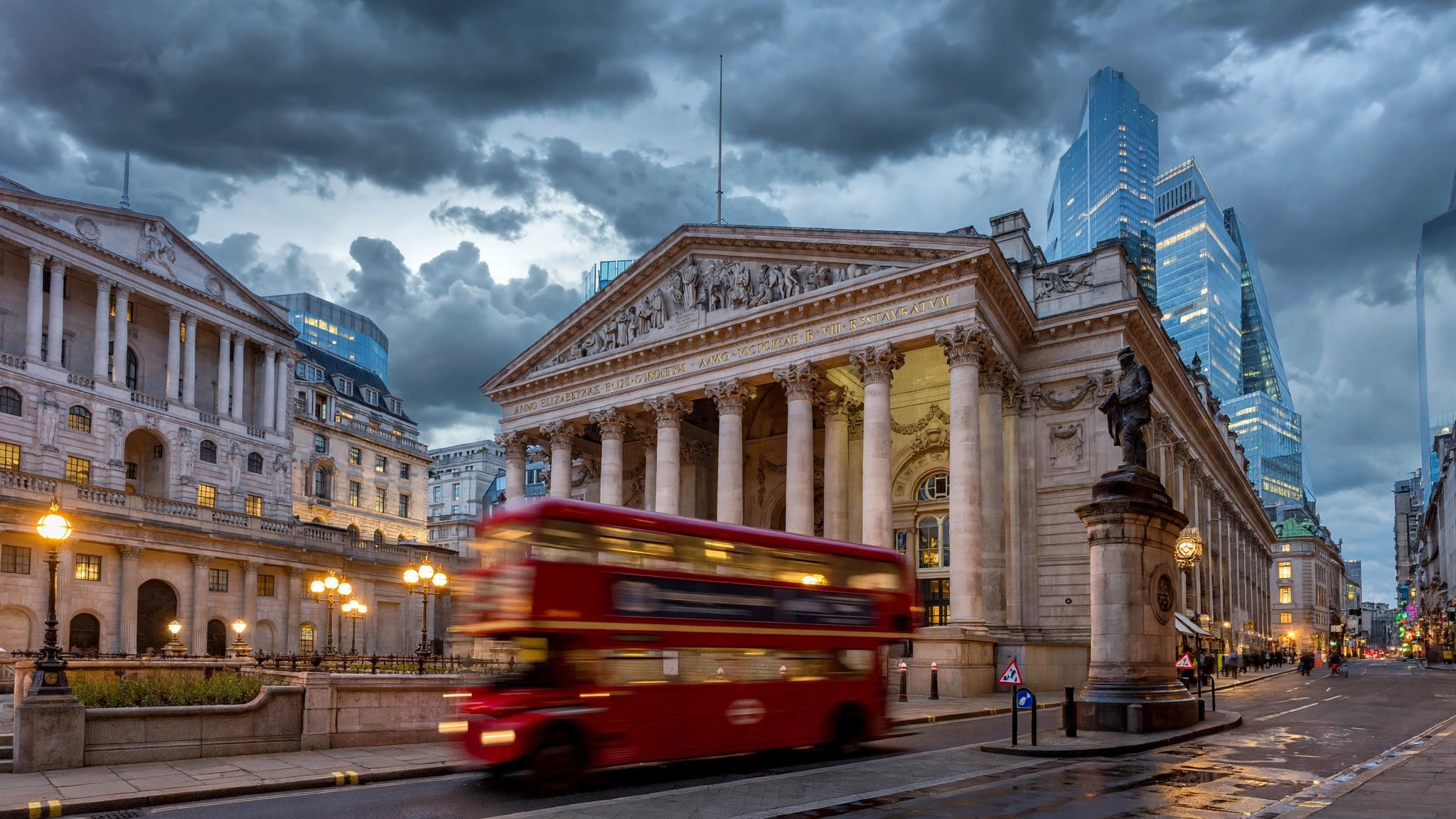
Bank of England Raises Rates to 4% for the First Time in Three Years as Inflation Heads for 5%
London — The Bank of England raised interest rates to 4% on Thursday, its first increase in more than three years, as policymakers warned that inflation is heading for 5% next year on the back of surging energy prices. The decision, announced after the Monetary Policy Committee voted 8-1 to lift Bank Rate by a quarter of a point from 3.75%, ends a long period of falling rates and puts British borrowers on notice that borrowing costs are going up, not down.
The move had been widely expected after consumer price inflation accelerated to 3.5% in September, its highest level in 11 months and up from 3.1% in August. The Bank said inflation is now expected to rise to around 5% by the middle of 2027, well above its 2% target, before easing as the jump in energy prices drops out of the annual comparison. The main pressure comes from the conflict in the Middle East, now in its ninth month, which has driven global energy prices higher from an already elevated level. The Ofgem energy price cap rose by 3.6% for a typical household on 1 October and is forecast to rise a further 22% in January, feeding directly into household bills.
Eight of the nine members of the Monetary Policy Committee backed the quarter-point increase at the meeting that ended on Wednesday. Catherine L. Mann, the sole dissenter, voted for a larger half-point rise to 4.25%. Governor Andrew Bailey, who chaired the meeting, sought to calm fears of a run of increases, saying the move is not the start of a sequence of rate rises. "Monetary policy is not on a pre-set path," the Committee said, adding that it will watch pay, pricing behaviour and the amount of slack in the economy before deciding whether to move again. Its next decision is due on 17 December, and the October inflation figures are published on 18 November.
The decision will be felt quickly by millions of households. Borrowers on tracker mortgages, which move in line with Bank Rate, will see their monthly payments rise, and London homeowners on tracker deals face around £600 a year more. Savers, by contrast, may finally see better returns on their deposits after years of rates that lagged inflation. Economists currently expect the Bank to raise the base rate by another quarter of a point by February, though forecasts can change quickly if energy prices fall or the economy weakens. The Bank's central projection has the economy growing 2.2% by the end of 2026, a full percentage point above its July forecast, suggesting the economy is stronger than feared even as prices climb.
For the government, the rate rise is an uncomfortable backdrop. Prime Minister Andy Burnham's administration has been pressing the Bank to support growth, and the decision to tighten policy while households are already squeezed by energy bills will fuel a political argument about who bears the cost of bringing inflation down. The Bank's answer is that it has no choice: with inflationary pressure in the pipeline now sufficient to warrant an increase, leaving rates unchanged would risk higher prices becoming embedded in wages and prices. The question now is whether one rise is enough, or whether the Bank will be forced to go further as the winter energy shock works its way through the economy.