Drones Torch One of Russia's Biggest Chemical Plants as Kyiv Widens Its Strikes Deep Inside Russia
Ukrainian long-range drones struck one of Russia's largest petrochemical complexes overnight into Sunday, setting off a large fire at the Nizhnekamskneftekhim plant in Nizhnekamsk, in the Russian republic of Tatarstan, roughly 1,200 kilometres from the Ukrainian border. Three people were injured in the attack, regional authorities said. In a second strike the same night, drones hit electrical substations in Taganrog, in Russia's Rostov region, killing a chief engineer and temporarily halting train services — the latest sign that Kyiv's long-range campaign is widening from oil refineries to the chemical plants that supply Russia's war economy.
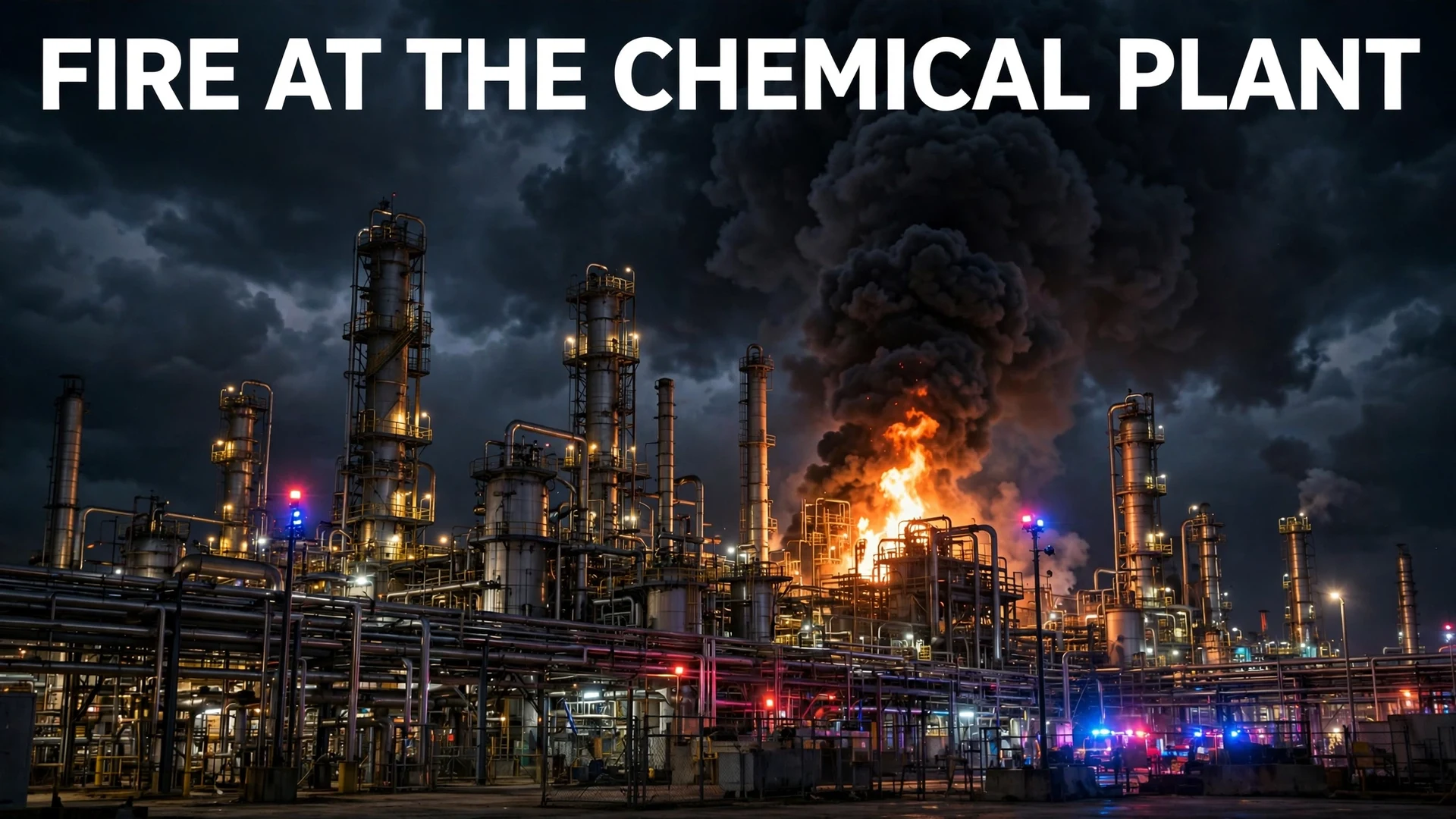
In Nizhnekamsk, a major centre of Russia's petrochemical and oil-refining industries, the attack began in the early hours. "Early this morning, Nizhnekamsk was the target of a massive and prolonged attack by enemy drones," the city's mayor, Radmir Belyaev, wrote on Telegram. "As a result of this attack, facilities in the industrial zone were damaged." Footage of a major fire circulated on social media in Russia and Ukraine, and reports identified the blaze as being at the Nizhnekamskneftekhim complex, owned by the chemicals producer SIBUR and one of Europe's largest petrochemical plants. The regional health ministry said three people were injured, without giving details of which facility had been hit, and the full extent of the damage remained unclear.
The Taganrog attack struck the power grid rather than a factory. The governor of the Rostov region, Yury Slyusar, said a Ukrainian drone hit an electrical substation, killing its chief engineer, and a second substation and a bridge were also damaged. The city's mayor, Svetlana Kambulova, said the fire at the substation had been put out and a local state of emergency had been declared. Because the damaged 220 kV substation also supplies power to the railway, train services were temporarily suspended. Russia's defence ministry said it had shot down 533 Ukrainian drones between Saturday night and Sunday morning over a dozen regions and annexed Crimea.
The strikes came on a night of heavy exchanges in both directions. Russia launched 132 attack drones at Ukraine overnight, including 78 jet-powered Shaheds, and Ukraine's air force said its defences had shot down or jammed 106 of them by 08:00, with hits recorded at 20 locations. A Russian hit on a DTEK energy site in Odesa cut power for nearly 50,000 people, and casualties were also reported in Zaporizhzhia. Ukraine's General Staff reported that its forces had neutralised about 2,230 Russian personnel over the preceding day, a figure that, like the Russian drone tally, cannot be independently verified.
The choice of target is the story. Nizhnekamskneftekhim produces ethylene, polyethylene, polypropylene and synthetic rubbers — the building blocks of plastics and tyres, including tyres for military vehicles — and Kyiv has been widening its long-range campaign from the oil refineries it has hammered for two years to the petrochemical plants behind them. Nizhnekamsk has been hit before: Ukraine's General Staff confirmed strikes against the TANECO refinery in the city in August and again in September. Each strike is designed to raise the cost of the war for Moscow's industry, and each one reaches deeper into Russia than the last.
The escalation sits uneasily beside the diplomacy. American envoys spent last week shuttling between Moscow and Dublin as the United States mediates talks between Ukraine and Russia, and Europe has just fought its way into the negotiations. But on the ground, neither side is pausing: Russia's nightly drone barrages against Ukrainian energy infrastructure continue as winter closes in, and Ukraine's answer is to take the war to the factories that keep Russia's war machine supplied. What happens next will turn on whether the damage at Nizhnekamsk proves to be a passing fire or a lasting blow to one of Russia's biggest chemical plants — and on whether a campaign aimed at the war economy can change the arithmetic of a war that diplomacy has so far failed to stop.