Three Tankers Strike Mines and Catch Fire in Hormuz as Iran Warns Ships to Keep Out
Three oil tankers caught fire after striking naval mines in and around the Strait of Hormuz on Saturday, Iran's navy and its Revolutionary Guards said, in the latest attack on commercial shipping in the waterway at the centre of the war between the United States and Iran. Iranian state television reported the incidents, citing statements from the paramilitary Revolutionary Guard's navy and the Iranian Armed Forces' Navy. Two tankers were hit inside the strait, while a third was burning east of the chokepoint, and the statements gave no details about casualties, the tankers' nationalities or their destinations.
The Guards' navy said the two tankers inside the strait had been attempting to cross without authorisation and had switched off their navigation and automatic identification systems. "An hour ago, two offending oil tankers, which were secretly attempting to transit the unauthorised Strait of Hormuz with their navigation and automatic identification systems turned off, exploded and caught fire after hitting naval mines," the statement said, as reported by Iranian state broadcaster IRIB. One of the vessels hit in the south of the strait was a supertanker, whose flames lit up the shore at night, according to the Guards. The navy said two other tankers attempting to pass through the strait had turned back after receiving warnings from the Guards' traffic control centre.
In a separate statement, Iran's conventional navy said another tanker sailing through a prohibited zone east of the strait, also with its tracking and identification systems switched off, "caught fire and was forced to stop after striking a naval mine". The navy warned that any vessel entering the zone would meet the same fate. "Without a doubt, any offending tanker that travels in the restricted area east of the Strait of Hormuz will be set on fire by hitting naval mines," it said. The statements also accused tanker owners of sending vessels into the restricted area on the strength of assurances from US President Donald Trump, which Tehran called baseless.
The claims have not been independently confirmed. Reuters said it could not immediately verify the reports, which came only from Iranian military authorities, and the UK Maritime Trade Operations centre, which monitors shipping in the region, had not confirmed the incidents at the time of publication. The US military has said it cleared the main shipping routes through the waterway of mines. The reports come a day after the Revolutionary Guards released footage of a large plume of smoke rising from a vessel it said was carrying liquefied gas and had struck a mine in the south of the strait, and days after American and Iranian forces exchanged fire in the strait itself.
The human cost of the campaign at sea is mounting. The United Nations told the Security Council this week that at least 25 seafarers have been killed in and around the Strait of Hormuz since the war between the United States, Israel and Iran broke out in February, and the UN's International Maritime Organization has tracked 136 security incidents involving vessels in Hormuz and the wider Middle East between 1 March and 11 November — 35 of them in October alone, the highest monthly tally since the conflict began, and ten more so far in November. Shipping through the strait is about 65 per cent below pre-war levels, according to UK Maritime Trade Operations, and Tehran has insisted the strait will not reopen until the United States meets its demands, including an end to the American naval blockade of Iran's ports and the lifting of economic sanctions.
For now, the oil market is taking the latest incidents in its stride. Brent crude closed at about $95.84 a barrel on Friday, up from $72 before the war began in late February, but the International Energy Agency said on Thursday that the world oil market had flipped into surplus for the first time since the war began, with supply running about 1.7 million barrels a day ahead of demand in the fourth quarter. What happens next will turn on whether the mine campaign escalates from claims to confirmed sinkings, and whether the ceasefire that has held unevenly since April can survive a waterway where mines, unlike missiles, stay in the water long after the fighting stops.
- Life News Agency — Iran says three oil tankers caught fire after striking mines in Strait of Hormuz
- Zot News — UN says at least 25 seafarers killed in and around Strait of Hormuz since war began
- Hathalyoum — Iran's IRGC says two oil tankers hit mines in Strait of Hormuz
- Trading News — Oil price forecast: Brent rebounds on Hormuz attacks
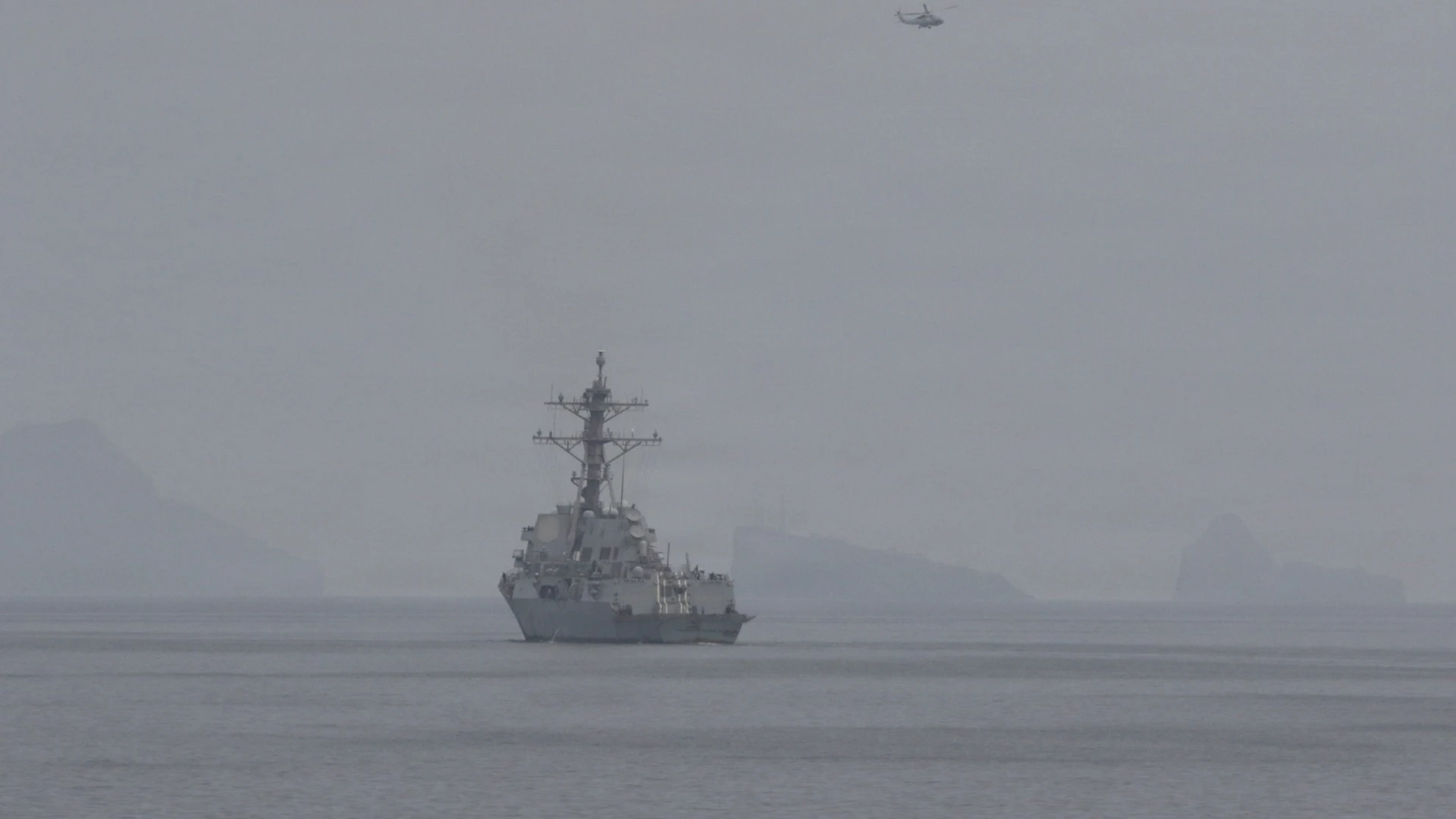
- Cover photo: A U.S. Navy guided-missile destroyer in the Strait of Hormuz during mine-clearance operations in April 2026 — Photo: NAVCENT Public Affairs, U.S. Navy / Wikimedia Commons (Public domain)