US and Iranian Forces Trade Fire in the Strait of Hormuz as Tankers Burn and a Ship Is Seized
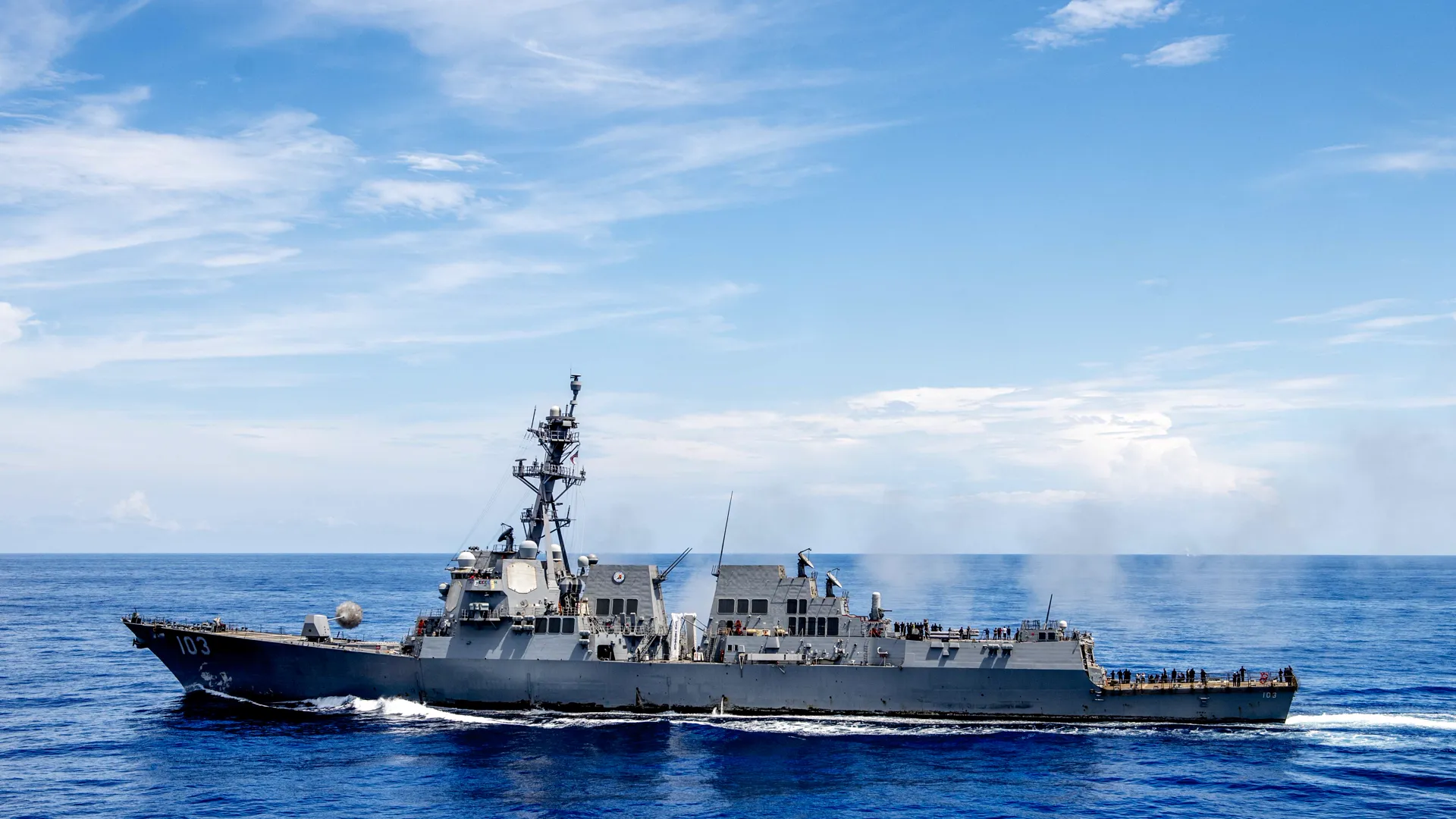
The United States and Iran exchanged fire in the Strait of Hormuz this week, in the gravest clash between the two countries since a ceasefire took hold in April, as Iranian forces fired on three American warships and Washington answered with strikes on Iranian military targets. US Central Command said Iranian forces launched multiple missiles, drones and small boats at the destroyers USS Truxtun, USS Rafael Peralta and USS Mason as they transited the strait toward the Gulf of Oman, and that American forces intercepted the attacks and responded with self-defence strikes. No American ship was hit, the command said, and President Donald Trump insisted the ceasefire remained in force, dismissing the exchange as a "love tap".
Iran told the story the other way round. Its top military command accused the United States of violating the ceasefire first, by attacking an Iranian oil tanker and another vessel approaching the strait, and said ten sailors were wounded and five more were missing. Tehran said its forces retaliated with ballistic and anti-ship cruise missiles and destructive drones, inflicting what it called significant damage on American warships, and that the United States also carried out air strikes on civilian areas on Qeshm Island, the strategic island at the mouth of the strait. Iran's Tasnim news agency, citing a senior source, said the three destroyers came under fire and fled toward the Gulf of Oman — an account Washington rejects.
Mr Trump, speaking to reporters in Washington, said the destroyers had "transited, very successfully, out of the Strait of Hormuz, under fire", and that "there was no damage done to the three Destroyers, but great damage done to the Iranian attackers. They were completely destroyed along with numerous small boats." He added that the warships would rejoin the American naval blockade of Iranian ports, which he called a "Wall of Steel". The clash puts new strain on a truce that has held, unevenly, since 8 April, when it ended weeks of American and Israeli strikes on Iran — and it comes as the two sides were reported to be in advanced talks on ending the war.
The confrontation at sea was followed within hours by seizures and sinkings on both sides. Iran's Revolutionary Guards said on Friday that its navy had seized the tanker Ocean Koi, registered in Barbados, in a "special operation" in the Gulf of Oman, accusing it of trying to disrupt Iranian oil exports; state television released video of Iranian forces boarding the ship. US Central Command said separately that its forces had disabled two Iranian-flagged tankers as they tried to enter Iranian ports. And the mine campaign in the strait continued for a third day: the Guards' navy said two more tankers exploded and caught fire after striking mines on an unauthorised southern route on Friday night, and Iranian state media said another tanker caught fire after hitting a mine east of the strait in the early hours of Saturday.
The waterway at the centre of the crisis carries about a fifth of the world's seaborne oil and liquefied natural gas, and shipping through it has been heavily restricted since the war between the United States, Israel and Iran began on 28 February. Tehran has declared the southern route near Omani waters unauthorised and mined, requires prior authorisation for transit, and has now announced a new body, the Persian Gulf Strait Authority, to manage passages through the strait. More than 130 attacks on vessels in the strait have been verified since the war began, and the pace has quickened: at least ten ships were hit in the first ten days of November alone. Oil has kept moving despite the attacks, but insurers and shipowners have grown steadily more cautious, and each new incident narrows the margin for error.
What happens next turns on whether both sides can keep calling this a ceasefire. Mr Trump has said the truce holds, and Iran's foreign ministry spokesman said Tehran would send its position to Pakistan, which has led the mediation, once its views were finalised — but neither side has moved on the issues that divide them: Tehran calls its enrichment programme non-negotiable and refuses to transfer its stockpile of highly enriched uranium abroad, while Washington's blockade of Iranian ports remains in full force. The test in the coming days is whether the exchange of fire stays a one-off "trifle", as Mr Trump put it, or becomes the moment the fragile pause in the Gulf finally breaks.
- TradingView — US and Iran exchange fire in Strait of Hormuz (dpa-AFX)
- Al Jazeera — Iran says seized tanker in Gulf of Oman, as US 'disables' two ships
- Press TV — Another tanker catches fire after hitting mine in Strait of Hormuz
- Fairview Africa — Trump says Iran ceasefire holds as warships exchange fire in Strait of Hormuz
- Cover photo: The guided-missile destroyer USS Truxtun (DDG-103) under way at sea — Photo: Mass Communication Specialist 2nd Class Michael B. Zingaro, U.S. Navy / Wikimedia Commons (Public domain)