Houthis Claim Strikes on Saudi Arabia's East-West Pipeline and Yanbu Oil Facility as UN Extends Yemen Sanctions
Yemen's Houthis said on Thursday they had struck a pumping station on Saudi Arabia's East-West oil pipeline and an oil facility in the Red Sea port of Yanbu, the latest claims in a campaign that has turned the kingdom's oil infrastructure into a front line of the regional war. Houthi military spokesman Yahya Sarea said a drone hit Pumping Station No. 7 on the pipeline and a ballistic missile hit the Yanbu facility, and the group also claimed a strike on an Aramco site in Riyadh. None of the damage claims has been independently verified, and Saudi Arabia has not confirmed any hit on the facilities.
What Riyadh did confirm was more limited. The Saudi-led coalition said on Thursday it had intercepted and destroyed two Houthi drones, one over the Riyadh region and one over the oil-rich Eastern Province, coalition spokesman Maj. Gen. Turki al-Maliki said in a statement carried by the Saudi Press Agency. The coalition said nothing about the pipeline, Yanbu or the Aramco site, and neither the Saudi energy ministry nor Aramco has confirmed any damage. The Houthis did not say on which day the claimed attacks took place, and they offered no evidence of damage.
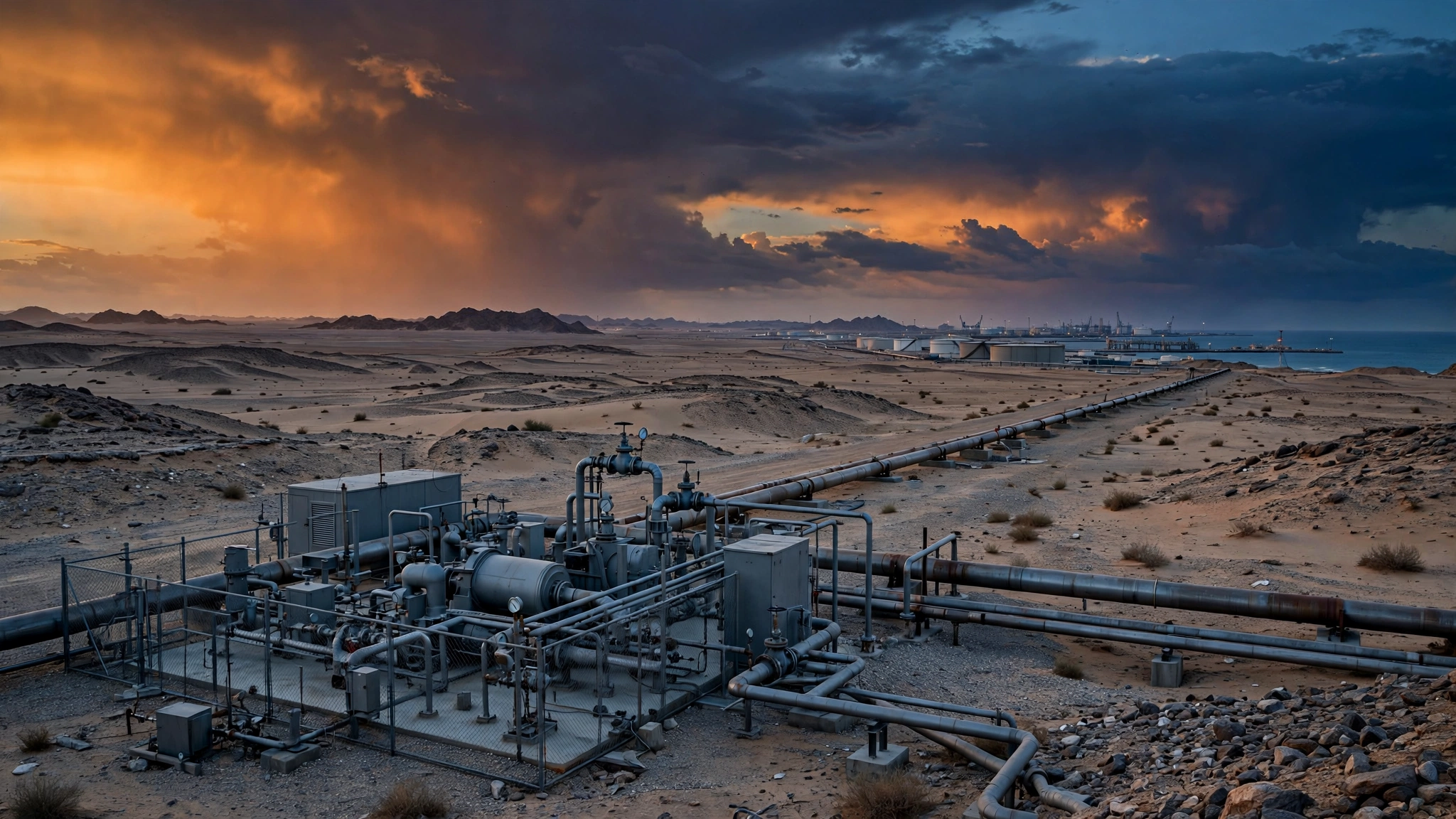
The pipeline is what makes the claim matter. The East-West pipeline, also known as Petroline, runs about 1,200 kilometres from the Abqaiq processing centre in the Eastern Province to Yanbu on the Red Sea, letting Saudi Arabia export crude without depending entirely on the Strait of Hormuz. With shipping through the strait disrupted — four tankers were hit there this week — Riyadh has rerouted about 4 million barrels a day through the pipeline to Yanbu, equivalent to about 4 per cent of global supply, according to Reuters. A route built as a bypass has become a central artery, and a target.
The claims cap a week of escalating strikes on both sides. On Monday, the pipeline was hit near Medina in an attack Saudi Arabia confirmed: a limited fire that was put out, no injuries, and operations continued, with the kingdom naming no attacker. On 7 November the Houthis claimed six operations, including a strike on Pumping Station No. 8 at Dawadmi and an Aramco tower in Riyadh, where debris damaged floors of the building. On Wednesday, the coalition said it intercepted three cruise missiles headed for Riyadh, two drones aimed at Mecca and the south, and two missiles pointed west; the Houthis denied targeting Mecca. Civil defence alerts sounded in Taif, Yanbu and Khamis Mushait before the all-clear was given.
The claims came on the same day the United Nations Security Council voted unanimously to extend sanctions on Yemen for another year and demanded the Houthis stop attacking Saudi Arabia. Saudi Foreign Minister Faisal bin Farhan met China's special envoy for Middle East affairs, Zhai Jun, in Riyadh to discuss the attacks and efforts to prevent further escalation. Fighting has intensified since September, when the Houthis advanced towards the Bab el-Mandeb strait, and the group has since stepped up strikes on Saudi airports, ports and oil facilities while Saudi Arabia has ramped up airstrikes on Houthi targets in Yemen in response. On Wednesday, the Houthis also launched a combined-arms offensive in southeastern Lahij governorate, according to the Institute for the Study of War.
For now, the central facts remain unverified: no independent confirmation of damage at the pumping station, in Yanbu or in Riyadh, no casualty figures, and no date from the Houthis for the claimed strikes. Satellite fire-detection data found no new heat anywhere along the East-West pipeline on 12 November, the day of the claim, but logged 280 megawatts of combined fire radiative power over Yanbu's industrial city in 27 detections that day. The Institute for the Study of War said it could not verify the Houthis' claims. What is confirmed is the pattern — a campaign aimed at the infrastructure that carries Saudi oil to the world — and the stakes, with the pipeline carrying a share of global supply that the Hormuz disruption has made harder to replace. Confirmation, if it comes, is likely to arrive first from Riyadh or from satellite imagery, not from the claims themselves.
- Reuters — Yemen's Houthis say they attacked pumping station on Saudi Arabia's East-West oil pipeline
- Zark News — Houthis Claim Strikes on Saudi Oil Pipeline, Yanbu Facility and Aramco Site
- Institute for the Study of War — Houthi Attacks in Saudi Arabia map, 12 November 2026
- Reuters — Saudi Arabia intercepts Houthi missiles, drones; group denies targeting Mecca