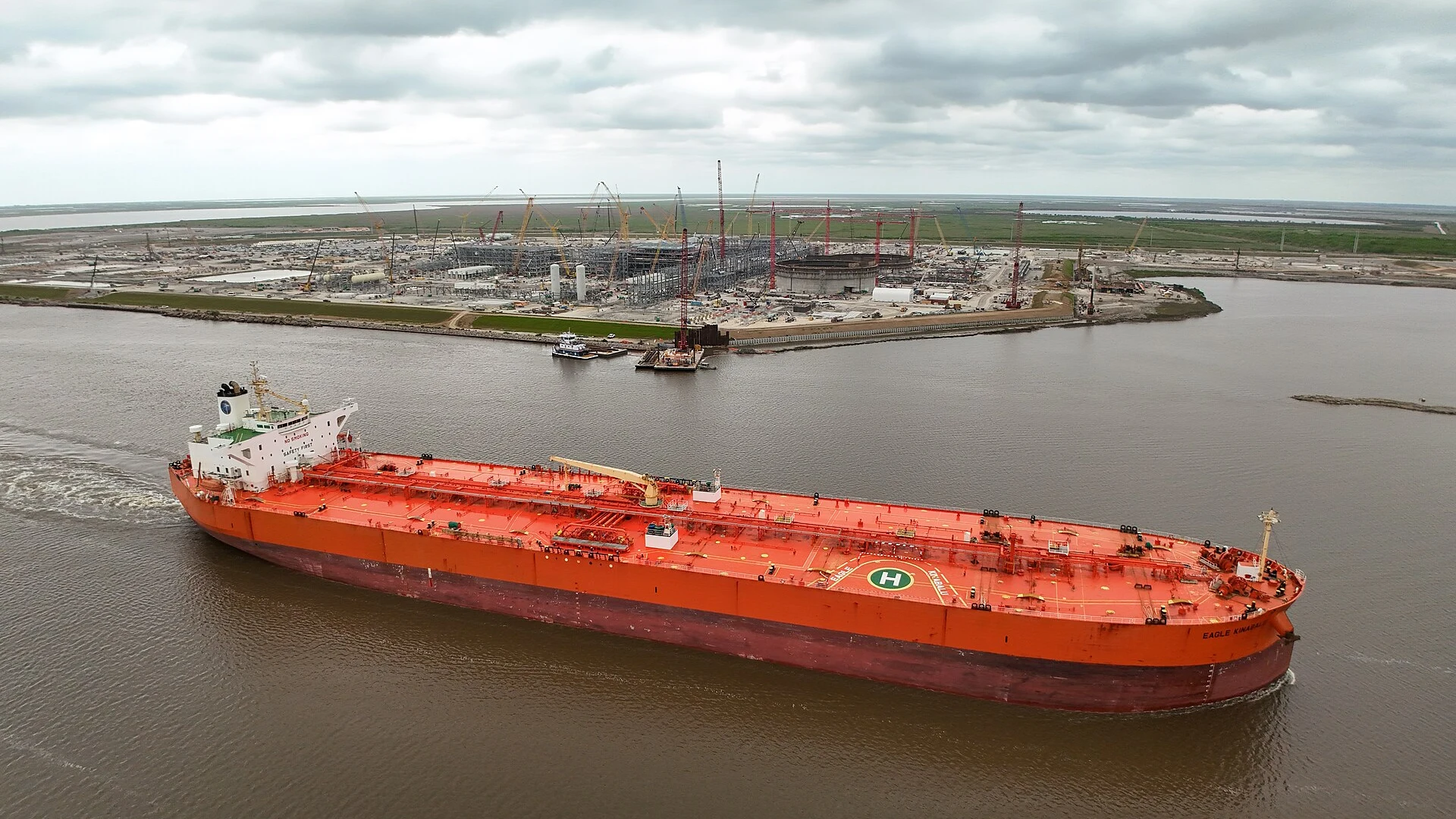
Four Tankers Hit in the Strait of Hormuz as Oil Jumps and Trump Says the US Needs No Iran Deal
Four oil tankers were hit by explosions in the Strait of Hormuz this week, Iran's military said on Thursday, in the latest escalation of attacks on shipping through the world's most important oil waterway, and oil prices jumped in response. Iran's Revolutionary Guards Navy said two supertankers were disabled by explosions on Wednesday night after they ignored warnings against using what Tehran calls a prohibited path through the strait, and were left burning with a combined cargo of more than four million barrels of oil. Iran's army later said two more tankers had struck mines on Thursday afternoon while sailing through the eastern strait after ignoring warnings and disabling their radar systems. Brent crude settled at $95.82 a barrel, up $3.06 or 3.3 per cent, while US West Texas Intermediate crude closed at $88.74, up $2.21 or 2.6 per cent.
The Iranian account could not be independently verified, and the details that could be checked told a more complicated story. No ship was named by Tehran, and Reuters said it could not immediately verify the claims. The United Kingdom Maritime Trade Operations agency said in reports on Thursday that a vessel was hit by an unidentified projectile about 14 nautical miles northwest of the United Arab Emirates emirate of Ras Al-Khaimah on Wednesday while exiting the strait, causing a fire in its engine room. That vessel, the Dominica Prosperity, run by South Korea's Sinokor, was hit on 11 November and all 22 crew were evacuated. Satellite heat data pulled from NASA's fire-detection system showed heat at sea near one reported tanker strike since 7 November, but none after the latest reports, a gap that proves little on its own: a blast that does not ignite cargo, a fire inside the hull or one put out within hours, or cloud cover, would leave no mark.
The tanker attacks were part of a wider escalation across the region. Yemen's Houthis claimed strikes on Saudi energy sites, including a pumping station on the East-West pipeline, the Red Sea port of Yanbu and an Aramco building in Riyadh, though no damage was confirmed. The International Maritime Organization has verified more than 130 attacks on vessels in the strait since the US-Israeli war with Iran began on 28 February, and the pace has quickened: at least 10 ships were hit in the first 10 days of November, after 37 attacks in October, the highest monthly tally since the conflict began, according to data from the Washington Institute for Near East Policy. The attacks continued despite a rebound in traffic through the strait and expectations of a de-escalation in the war, expectations that had been reflected in falling oil prices.
President Donald Trump, who on Wednesday had said the war could be over "quickly" and that talks over the past day had gone "very good", reversed course on Thursday. Writing on Truth Social, he said the United States does not need a deal with Iran, claiming it has Iran's money, hundreds of billions of dollars, and its strait. A day earlier he had threatened to renew military strikes on Iran, and on Tuesday he paused the US operation to escort stranded ships through the strait, codenamed "Project Freedom", a day after it began, saying "great progress" had been made towards a complete and final agreement. Secretary of State Marco Rubio said on Tuesday that Operation Epic Fury, the US-Israel air and naval campaign that began in February, had concluded because its objectives had been achieved, but the naval blockade of Iranian ports remains "in full force", and US Central Command said on Wednesday that its forces had disabled an Iranian-flagged tanker, the M/T Hasna, in the Gulf of Oman after it allegedly failed to comply with warnings.
Iran, meanwhile, is tightening its own rules for the waterway. Tehran has declared the southern route near Omani waters unauthorised and mined, says it requires prior authorisation for transit, and is confining safe passage to designated northern corridors. The United States military, which is enforcing the blockade and escorting commercial vessels through the waterway, insisted the strait remains open. Oil has kept moving despite the attacks: flows averaged 10.5 million barrels a day since the start of October, according to Kpler data cited by Reuters, though supertanker rates have fallen about 50 per cent from their October highs as Asian buyers turn towards West African and Brazilian crude.
What happens next will be decided by markets and diplomats in the same breath. The International Energy Agency publishes its monthly oil-market report on Friday, when US October producer price data is also due, and traders will be watching both for the scale of the supply shock. The diplomacy has dimmed with the attacks: Iran's foreign minister, Abbas Araghchi, was in Beijing on Wednesday, where his Chinese counterpart, Wang Yi, called for the war to end and the strait to reopen "as soon as possible", and Pakistan, which has led the mediation, remains the channel through which proposals move. But Tehran's red lines have not moved: its enrichment programme is non-negotiable, and it refuses to transfer its roughly 400 kilograms of highly enriched uranium out of the country. No agreement has been signed, and this week's explosions may have done more to kill the deal than to force it.
- Business Post — Crude oil soars $3 as Hormuz disruptions threaten global supply
- Balitang Marino — Four oil tankers struck by Hormuz explosions
- Aimdesk — Hormuz tanker reports vs satellite heat data
- The Apex Wire — Oil jumps $3 as Saudi attacks escalate
- Cover photo: The crude oil tanker Eagle Kinabalu in Port Arthur, Texas — Photo: Quintin Soloviev / Wikimedia Commons (CC0)