Four Million Spaniards Down Tools in First General Strike in 14 Years as Housing Costs Swallow a Generation's Pay
Four million Spanish workers downed tools on Wednesday in the country's first general strike in 14 years, shutting factories, ports and railways in a mass protest against a housing crisis that has made a home unaffordable for much of a generation, less than three weeks before a snap general election. The 24-hour walkout, called under the slogan "Salaries. Housing. Prices.", was backed by Spain's two largest unions, the UGT and the CCOO, and by tenants' associations, and it turned the cost of housing — long a slow-burning grievance — into the defining issue of the campaign for the 29 November vote.
The numbers explain the anger. Spain has a deficit of about 750,000 homes, which the central bank expects to grow to more than a million by 2028, and rents have risen 22.9 per cent over the past decade, according to the national statistics institute. The average rental price of €1,176 a month is equivalent to about 98.7 per cent of a young person's average monthly salary, according to the Youth Council of Spain. "I'm 36 years old and I still can't move out on my own," Jesus Gonzalez, a hospital IT worker in Madrid who supported the strike, told CNN. "Rents just keep going up, house prices just keep going up, and it's simply impossible." The spark was the eviction in late September of Maricarmen Abascal, 87, from the Madrid apartment where she had lived for 70 years; her subsequent death turned her into a symbol of the crisis, and weeks of protests followed.
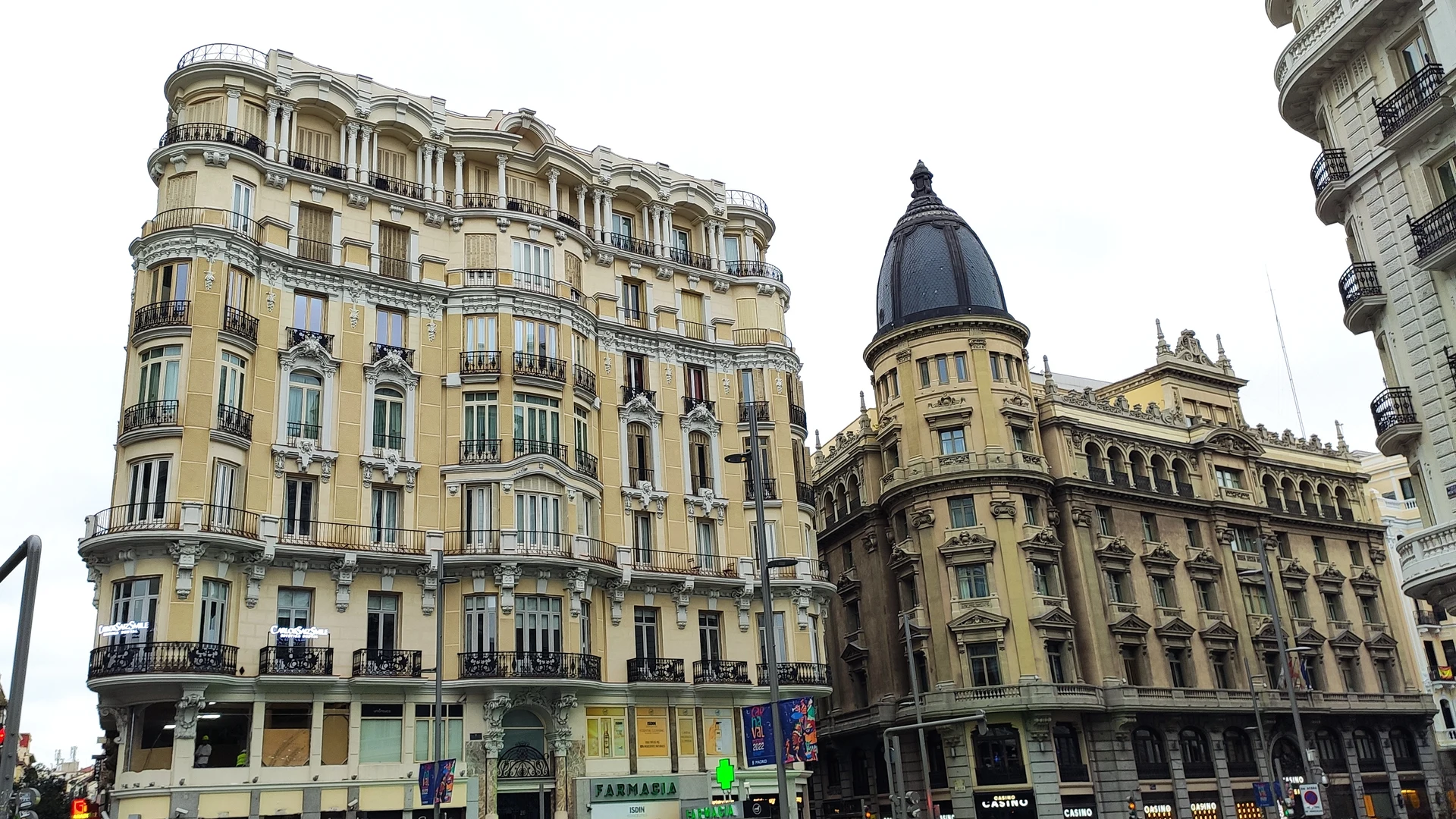
Wednesday's stoppage was felt across the economy. The unions reported participation of 90 per cent at ports and in the automotive sector, with total stoppages at factories including Volkswagen's in Navarre and SEAT's in Barcelona. Electricity demand fell by as much as 15.5 per cent in the late morning, according to the grid operator Red Eléctrica, and Madrid's metro said peak-hour usage was down 42 per cent on the same period the previous week. In Madrid, protesters blocked the Gran Vía, the capital's main shopping street, cheering as stores drew their shutters and jangling sets of house keys above their heads, while in Barcelona the metro ran no trains outside peak hours. Two heavy storms, Charles and Bruna, forced unions to suspend a demonstration in the southern port city of Cádiz, but evening marches in Madrid and Barcelona still drew tens of thousands despite the rain.
The day was not without confrontation. Police reported more than 40 arrests by midday from 476 incidents linked to the strike, including blockades of offices and industrial estates and burning rubbish containers, and the unions said they would file a criminal complaint over what they described as a disproportionate police response, including tear gas and batons, that left 20 protesters injured. Employers' groups called the strike counterproductive: Angela de Miguel, vice-president of the business lobby CEOE, told state broadcaster TVE that the solution was to build more homes and cut taxes on construction and home-buying, arguing that small businesses were hurt by the same shortages. With more people able to work remotely and services now weighing more heavily in the economy, analysts said the disruption was likely to be less pronounced than in previous general strikes.
The politics of the strike are as pointed as its economics. Prime Minister Pedro Sánchez's Socialist government backed the movement — no ministers scheduled official events on Wednesday — and Sánchez hopes to harness voter resentment over housing in the 29 November election to shift the narrative away from corruption cases involving his inner circle and a deadly train crash last month. His Socialist Party still trails in opinion polls. The strike follows parliament's rejection last month of government decrees aimed at curbing evictions and limiting rent pressures, a defeat that prompted Sánchez to call the snap vote. Online, the debate has been sharper than the picket lines: in a thread on r/europe with more than 1,100 upvotes, commenters pointed to a deeper supply gap — Spain's population growing by about 500,000 a year since 2022 while only around 100,000 homes are built annually — while a thread on r/worldnews questioned the target, its most-upvoted comment asking why workers were striking against an opposition not in power.
The strike's economic cost is likely to be modest — BBVA Research estimated it could shave 0.1 to 0.2 per cent off Spain's annual gross domestic product — but its political cost is the open question. Spain's economy is otherwise strong: the International Monetary Fund forecasts growth of 2.5 per cent in 2026, among the highest in advanced economies, and unemployment has fallen from 14.55 per cent when Sánchez took office in 2018 to 10.18 per cent. Yet for many Spaniards that prosperity has not translated into a home, and the strike made that failure visible in every major city on a single day. Whether it moves votes will be decided on 29 November; what it has already done is force every party in the campaign to answer the question the protesters chanted on the Gran Vía — who, in today's Spain, can actually afford to live there.
- CNN — Millions of Spaniards stage first general strike in 14 years as anger rages over housing
- Le Monde — Spain's nationwide strike erupts amid housing crisis and anger over shrinking purchasing power
- NPR — Spain's workers hold a general strike over housing costs before national election
- Reuters — Workers across Spain stage first general strike in 14 years as anger rages over housing
- Cover photo: Gran Vía, Madrid, 26 February 2022 — the avenue protesters blocked during the general strike of 11 November 2026 — Photo: Américo Toledano / Wikimedia Commons (CC BY-SA 4.0)