Israel Sends Tanks Across Gaza's Yellow Line in First Ground Crossing Since the Ceasefire
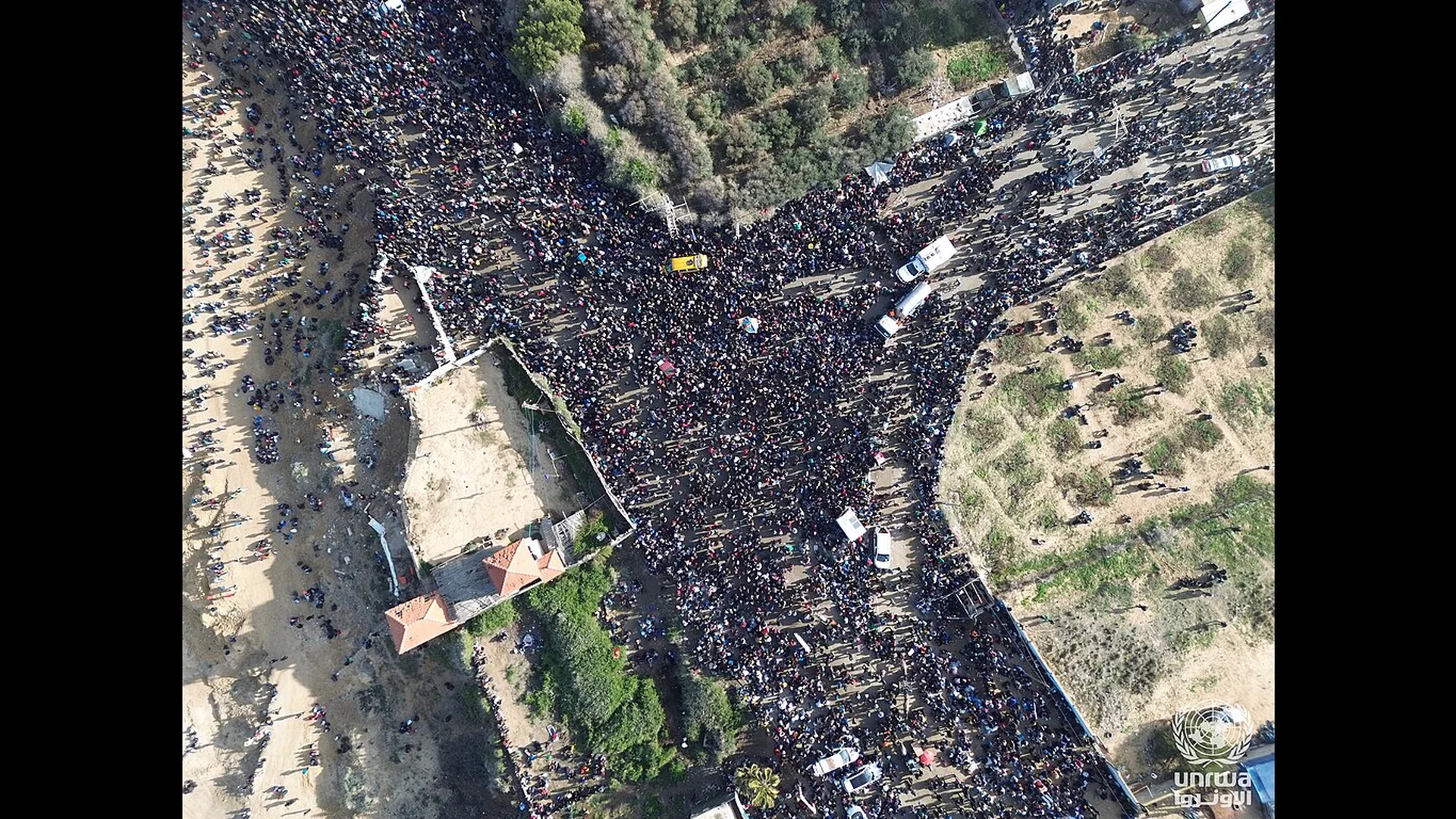
Israeli tanks rolled across the ceasefire line in central Gaza on Wednesday, advancing west of the so-called Yellow Line near the Nuseirat and Bureij refugee camps in the first ground operation of its kind since the October 2025 truce took hold. Dozens of displaced Palestinian families, many already uprooted several times since the war began in 2023, piled their belongings onto bicycles, wheelchairs, motorcycles and vehicles and fled as tank shells sounded in the area. The advance, along Gaza's main north-south Salah al-Din road, was described by multiple outlets as the first time Israeli ground forces had crossed the line since the ceasefire was struck.
Israel's military said troops and intelligence personnel had begun what it called "a targeted operational activity" to dismantle a tunnel west of the Yellow Line that it said posed a threat to its forces. In a statement to the AFP news agency, the military described the move as "a precise operation … to remove a threat posed to IDF troops operating in the Gaza Strip", saying there was Hamas infrastructure in the area and that it was responding to Hamas ceasefire violations. The operation was carried out jointly with Shin Bet, Israel's domestic security agency. COGAT, the Israeli military body overseeing civilian affairs in the territory, said the army had closed the affected stretch of Salah al-Din Street and told residents to stay away until further notice, identifying blocks 660, 661 and 666 in the Bureij and Nuseirat areas. The military has not said how long the operation will last.
Three Palestinians were killed on Wednesday, according to Gaza's Civil Defence agency and hospital officials, in three separate incidents: one near Nuseirat, one in Gaza City and one outside the Deir el-Balah police station. An Israeli airstrike near the site of the army raid killed one person, Palestinian medics said, while an official at al-Awda Hospital said an airstrike on the town of al-Mughraqa, north of Nuseirat, killed one person and wounded several others. Salam Aql, a resident ordered to leave the area, told Reuters her family had wanted to stay "because we are exhausted from being displaced so many times". "We are tired, I swear to God, we are tired. But as we were sitting there, gunfire started coming in," she said, adding that a boy had been hit in the leg by a bullet. "Once he was wounded, we could not stay any longer."
Hamas condemned the operation as "a flagrant violation of the ceasefire agreement" and called the advance and the forced evacuations northeast of Nuseirat "a dangerous development". The group urged ceasefire mediators to intervene and blamed both Israel and Washington for any harm to civilians. Israel, for its part, says Hamas has recently been regrouping and rearming, and has accused the group of attempting to derail the October 2025 US-brokered ceasefire agreement. The Israeli military told AFP it reserved "the freedom to act and manoeuvre whenever necessary to eliminate any immediate threat in the Gaza Strip". Neither side has said the ceasefire has ended, but both have accused the other of violating its terms for months.
The operation lands on a truce that was already under severe strain. The ceasefire halted major fighting when it took effect on 10 October 2025, but the rest of the plan — Israel's withdrawal, reconstruction and Hamas's disarmament — has stalled. Under the first phase, Israeli troops pulled back to the Yellow Line, leaving them in about 53 percent of Gaza; Israel has since moved that line gradually, and its forces now control around two-thirds of the enclave, with Hamas holding a sliver of territory along the coast. The United Nations said in September that almost Gaza's entire population was displaced within the limits of the line, on less than 40 percent of the territory's land. According to an AFP tally based on figures from the Gaza health ministry, more than 1,600 Palestinians have been killed since the ceasefire began, while the Israeli military says five of its soldiers have been killed.
The timing sharpened the alarm. The US-backed Board of Peace, the body overseeing the truce, warned on Tuesday that the fragile agreement could collapse if it was not fully implemented, and in a report to the UN Security Council it found both sides failing to meet key commitments — the civilian administration committee meant to take over governance has not entered Gaza and the international stabilisation force remains undeployed. Israel's defence minister, Israel Katz, said on Wednesday that Israel would not withdraw its troops from Gaza until Hamas was disarmed and the territory demilitarised. With no duration announced for the operation and mediators under pressure to intervene, the crossing of the Yellow Line has become the sharpest test yet of whether the 13-month-old ceasefire can hold. Palestinian authorities say more than 74,000 people in Gaza have been killed in the military campaign Israel launched after Hamas-led fighters killed about 1,200 people in southern Israel on 7 October 2023.