Record Diesel Prices Push UK Inflation to 3.6%, Its Highest in a Year
Inflation in Britain rose to 3.6 per cent in the year to October, official figures showed on Wednesday, its highest level in a year, as record diesel prices and the most expensive petrol in four years pushed up the cost of living for households heading into the winter. The Office for National Statistics said the consumer prices index climbed from 3.5 per cent in September, a reading that matched the expectations of economists in the City and marked the fourth consecutive monthly increase in the annual rate.
Fuel was once again the main driver of the increase. Prices paid by motorists rose at an annual rate of 33.2 per cent, the steepest yearly jump since July 2022, when the aftermath of Russia's full-scale invasion of Ukraine sent energy costs soaring around the world. Petrol rose by 5.2p a litre between September and October, taking the average price to 174.7p a litre, the highest since August 2022. Diesel climbed 7p a litre to 199.5p, the highest price since records began three decades ago. Grant Fitzner, the statistics office's chief economist, said fuel prices were again a major contributor to the rise in the annual rate, adding that the yearly cost of raw materials, and of goods leaving factories, continued to climb, driven by higher crude oil and petrol prices — a sign that dearer energy is feeding through the wider economy and not just hitting drivers at the pump.
Prices have surged in recent months because of the conflict in the Middle East, which has lifted the price of oil on world markets above $100 a barrel and rattled the global economy. The Bank of England responded earlier this month by raising interest rates for the first time in three years, lifting them from 3.75 per cent to 4 per cent, and it signalled that a further rise could follow unless the conflict is resolved. The Bank has said it raised rates to limit how far higher energy costs spill over into other prices, and that it will keep setting rates so that inflation returns to its target of 2 per cent and stays there. Its policymakers believe inflation could peak at close to 5 per cent in the middle of next year and not return to 2 per cent until 2028; in a worse outcome, in which the war in the Middle East escalates further and sends oil prices higher still, they have suggested inflation could reach 6.2 per cent in 2027.
More pressure is already on the way for household energy bills. The energy regulator Ofgem raised the price cap by 4 per cent at the start of October, driven by rising wholesale gas prices, and the consultancy Cornwall Insight forecasts that gas and electricity bills will jump by 26 per cent in January, adding £443 to annual costs when a new price cap comes into force and taking a typical yearly bill to £2,166. The government says it is providing help for households facing the squeeze: VAT on electricity bills has been cut to zero until next July, and 20 million homes will receive a £100 payment in January, a measure announced by Chancellor John Healey in last month's budget. Emma Reynolds, chief secretary to the Treasury, said the payment would give families breathing space and that the budget had started long-term work to bring energy costs down for good. For many families the figures are already being felt in daily life: Sophie, who manages a cafe at the Old Boat Corner community centre in Brighton, told the BBC she watches her smart meter at home like a hawk, cooking with the oven far less than she used to, keeping the heating off so far and wearing more layers, with electric blankets on the sofa.
There were some signs of cooling elsewhere in the figures. Food price inflation rose by 0.9 per cent, the slowest pace in five years, while price rises in restaurants and cafes slowed and hotel prices fell on average. Core inflation, which strips out energy, food, alcohol and tobacco, was unchanged at 2.8 per cent, and services inflation held steady at 3.7 per cent, slightly below what economists had predicted. Those steadier underlying figures are closely watched by the Bank of England when it sets interest rates, and they could persuade its policymakers to hold off on a further rise at their December meeting. Financial markets, however, still anticipate at least two quarter-point increases before the end of next year, and analysts said the Bank could be forced to raise borrowing costs from as early as next month if the conflict in the Middle East keeps oil prices high.
The political argument over the figures was swift. Andrew Griffith, the shadow chancellor, said four successive rises in the inflation rate were down to soaring energy costs and Labour's decision to raise taxes and employment costs. The government, by contrast, points to the conflict in the Middle East and Russia's invasion of Ukraine as the forces pushing up costs around the world. With the next inflation release due on 16 December and the Bank's next rate decision the following day, the figures land at an awkward moment for a government that has promised to bring the cost of living down: the squeeze at the pump is now showing up in the headline rate, the January energy bill rise is already priced in, and the winter ahead looks more expensive than the one just past.
- The Guardian via World Right Now — Record fuel costs push UK prices to a one-year high
- BBC News via World Right Now — Fuel costs lift UK inflation to 3.6% as energy bills loom larger
- Le Private Banker — UK Inflation Rises to 3.6% as Diesel Hits Record Pump Price and Motor Fuel Inflation Tops 33%
- Moneyfacts — UK Inflation Rises To 12-Month High of 3.6% In October
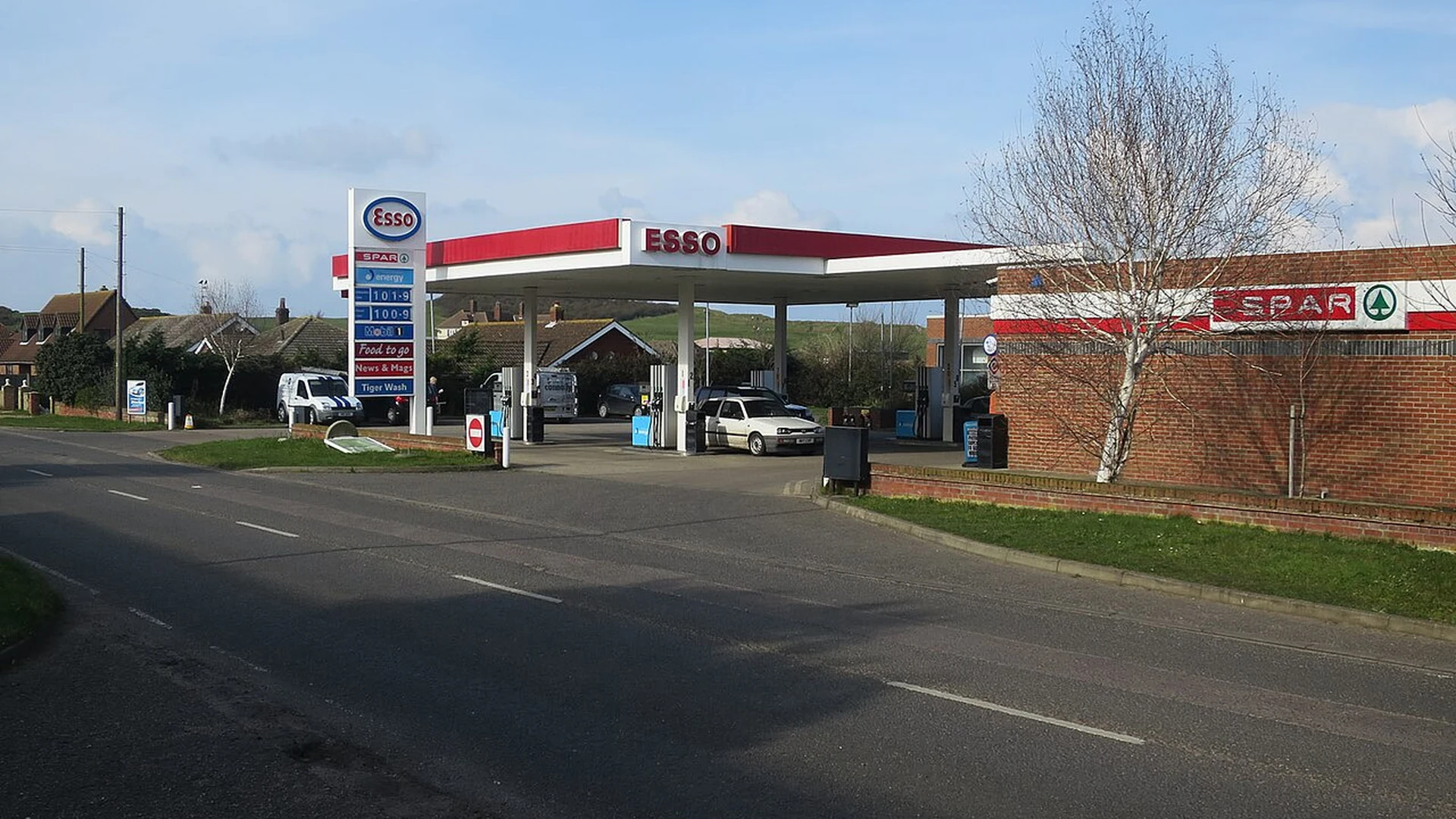
- Cover photo: Esso petrol station, Weybourne Road, Sheringham, Norfolk, England, 27 February 2016 — the price board shows 2016 prices and must not be presented as current — Photo: Hugh Venables / Wikimedia Commons (CC BY-SA 2.0)