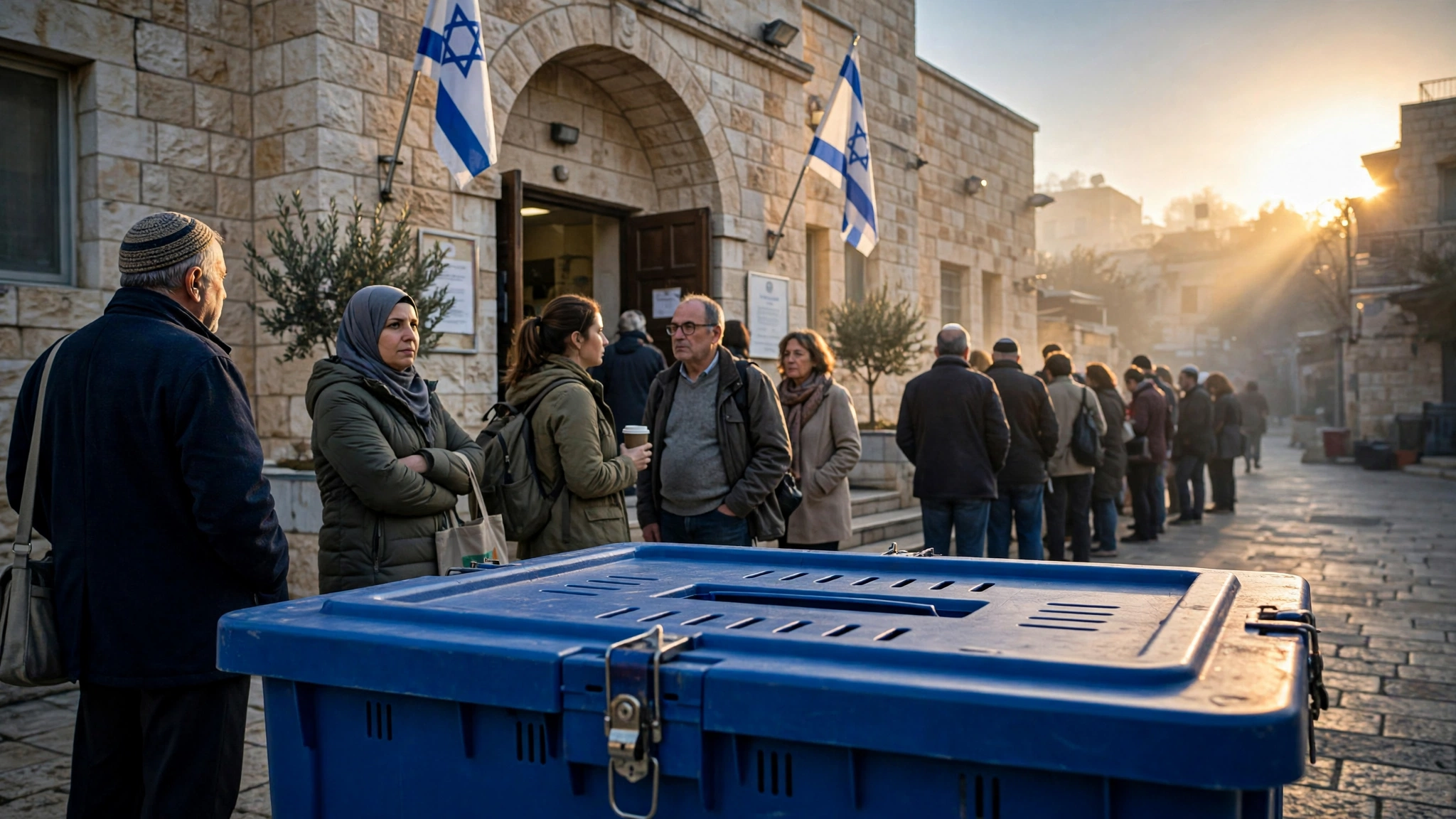
The Day Israel Went Back to the Ballot Box for the First Time Since October 7
Israelis voted on Tuesday, 27 October 2026, in the country’s first national election since the Hamas-led attack of 7 October 2023. The vote will choose the 120 members of the Knesset, and comes after three years in which security, the wars that followed, and responsibility for the October 7 failures have dominated national debate.
The Central Elections Committee said 7,331,981 people were eligible to vote and 12,018 polling stations were operating across the country. Special arrangements covered groups including hospital patients, prisoners and service members. Most polling stations were scheduled to close at 10 p.m. local time.
Prime Minister Benjamin Netanyahu cast his ballot at a school in Jerusalem and urged supporters to vote. The election has widely been framed as a judgment on his leadership, particularly over the security failure of October 7 and the conflicts that followed. His supporters point to his leadership during a period of continuing insecurity; his opponents are seeking accountability and a change in direction.
The campaign has also brought other divisive questions back to the fore: exemptions from military service, the balance of power between the courts and government, the economy and the future of Israel’s security policy. Those questions have left voters weighing not only who should lead, but what kind of government the country should form.
Israelis do not elect a prime minister directly. Voters choose party lists for a 120-seat parliament; a party must receive at least 3.25% of valid votes to enter the Knesset, and a government needs the support of at least 61 lawmakers. That makes coalition negotiations central to the outcome.
Final pre-election polls pointed to a close contest, with no dependable route to 61 seats for either the Netanyahu-aligned parties or the opposition. The projections varied among pollsters, and the opposition itself is made up of parties that do not necessarily agree on a coalition. The largest party, therefore, may not be the one able to form a government.
Election day also included an investigation into suspected vote-buying in the Negev. Israeli media reported that police arrested three suspects after finding envelopes containing cash and Ra’am ballot slips. The allegations are under investigation; the reporting does not establish that the party or its leader was involved, or that voters were paid.
When polling stations close, exit polls and vote counts will begin. Official results are due after the count is completed, but forming a government may take longer: the next chapter will depend on which party leaders can assemble a coalition with enough support in the Knesset.
- Israel Central Elections Committee — election timetable
- The Times of Israel — eligible voters and polling stations
- Associated Press — election day and Netanyahu’s vote
- Reuters — election-day reporting and pre-election polling
- Ynet — police investigation into suspected vote buying
- Israel Democracy Institute — voting arrangements and electoral process