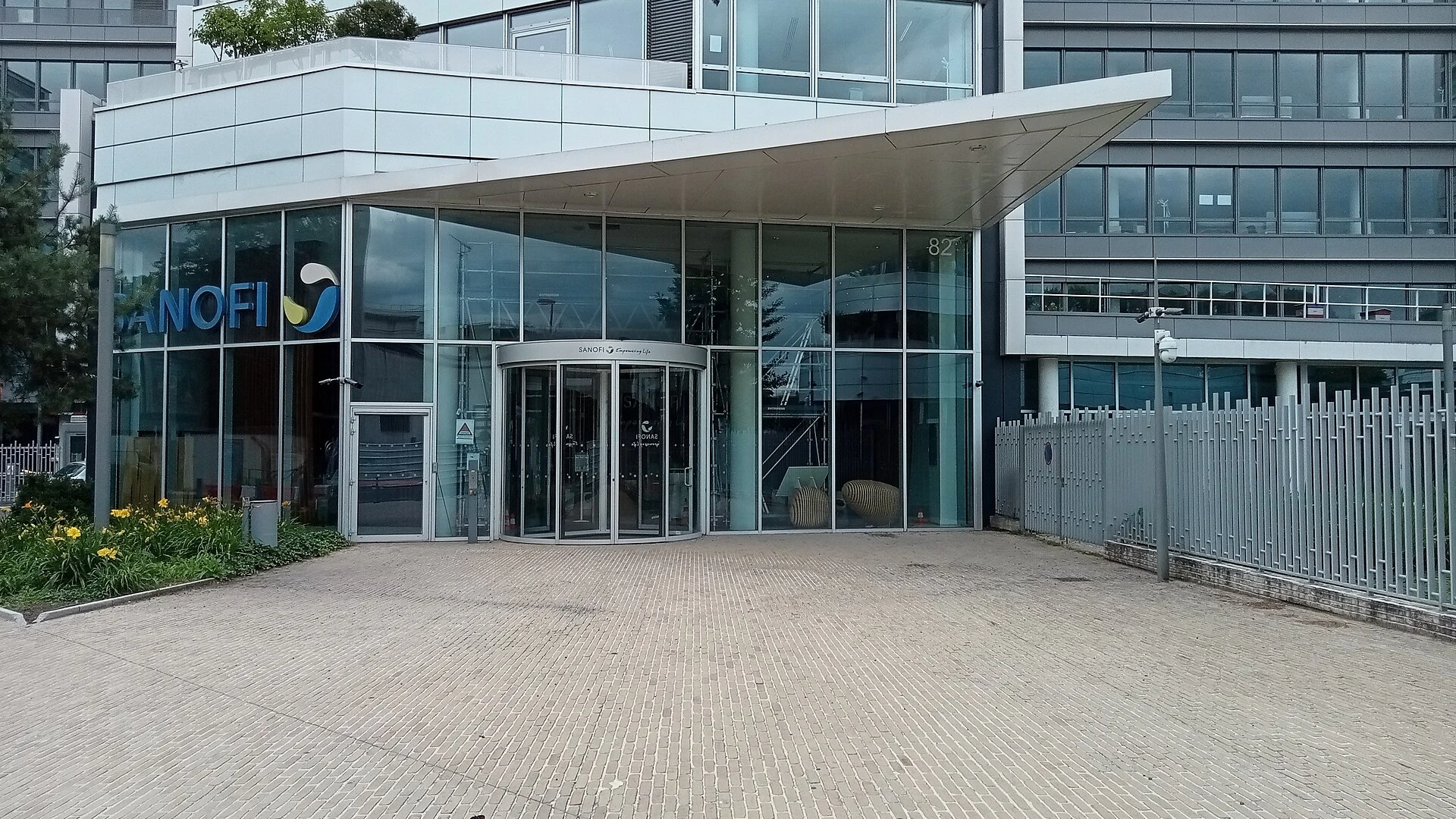
Sanofi Pays $41 Billion for Insmed in Its Biggest Bet Yet on Lung Disease
Sanofi agreed on Tuesday to buy the American drugmaker Insmed for $41 billion in cash, the biggest pharmaceutical acquisition in three years, in a bold move to secure new sources of growth as its blockbuster drug Dupixent approaches the loss of patent protection. The French company will pay $175 a share for Insmed, a premium of about 46 percent over the price before reports of a possible deal emerged last week, and expects the transaction to close in the first half of 2027. Insmed shares jumped 14 percent on the news, while Sanofi said the deal would add to its earnings per share by the end of 2028.
The prize is Insmed's fast-growing portfolio of respiratory medicines, led by Brinsupri, the first and only approved treatment for non-cystic fibrosis bronchiectasis, a serious chronic lung disease in which the airways become permanently widened and prone to repeated infections. Brinsupri, a once-daily oral pill approved by the United States Food and Drug Administration in August 2025, has already reached blockbuster status, generating $1.09 billion in revenue through the end of September this year, barely a year after its American launch. Insmed estimates that about 500,000 patients in the United States are diagnosed with the disease, with a further 600,000 across France, Germany, Italy, Spain and Britain combined.
The deal also brings Arikayce, an inhaled antibacterial treatment for a rare and chronic lung infection known as MAC lung disease, which recorded $433.8 million in revenue in 2025, up 19 percent on the year, and is under priority review at the FDA for wider use. Behind those two approved drugs sits a late-stage pipeline asset, treprostinil palmitil inhalation powder, or TPIP, a once-daily inhaled therapy in phase 3 trials for pulmonary hypertension and fibrotic lung disease that Sanofi says could become a significant growth driver beyond 2030. The acquisition gives Sanofi two first-in-disease commercial products and a pipeline it describes as highly differentiated, in a respiratory field where it says significant unmet patient need remains.
For Sanofi, the timing is driven by the patent clock. Dupixent, its best-selling eczema and asthma treatment, faces the loss of exclusivity in the coming years, and the company has been under pressure from investors to rebuild its pipeline before that revenue begins to erode. "This acquisition is a major strategic step to significantly accelerate our mid- and long-term growth trajectory," said Belen Garijo, Sanofi's chief executive, who called Insmed a strong strategic fit for the company's immunology and rare disease business. Will Lewis, Insmed's chair and chief executive, said the deal "delivers immediate, certain cash value for Insmed shareholders" and would bring its therapies to more patients around the world, faster than Insmed could on its own.
Investors welcomed the deal, with Insmed shares jumping 14 percent on Tuesday, and Barron's calling the transaction a rare win for both sides. The price is hefty — Reuters Breakingviews noted that at 46 percent over the unaffected share price, Sanofi is paying up — but analysts broadly read it as the cost of filling the gap Dupixent will leave. The announcement also capped a burst of big-ticket deal-making: a day earlier, CrowdStrike unveiled a roughly $43.9 billion all-stock acquisition of the cybersecurity firm Zscaler. Sanofi's purchase is the largest pharmaceutical acquisition in three years, according to Bloomberg, and the biggest biotech deal in nearly three years, according to MarketWatch.
The transaction, which has been approved by the boards of both companies, still needs the approval of Insmed's shareholders and of regulators in the United States and elsewhere, and Sanofi said it would fund the purchase through a combination of debt and cash on hand, with committed financing already secured. The company confirmed its progressive dividend policy and said it expected to maintain a strong credit rating, with the combined group's cash generation supporting rapid deleveraging. J.P. Morgan advised Sanofi on the deal, while Goldman Sachs advised Insmed. If it closes as planned, Sanofi will have spent more on a single acquisition than at any point in its recent history — a measure of how much is riding on the lung drugs now carrying its next phase of growth.