Democrats Clinch 258 House Seats, Their Largest Majority Since 1992
The Democrats have secured their largest majority in the House of Representatives since 1992, winning at least 258 seats in this month's midterm elections after a recount in North Carolina delivered the milestone on Sunday. The victory, confirmed when Democrat Chuck Hubbard defeated the Republican incumbent Virginia Foxx in the state's fifth congressional district, gives the party its best general election result in decades — and, with the Senate also in Democratic hands, sets up divided government against a Republican president from January. It is the largest majority held by either party in the lower chamber in more than three decades.
The scale of the win is striking by any measure. Democrats have gained 44 House seats so far, four more than the 40 they picked up in President Donald Trump's first midterm in 2018, and their 258-seat tally matches the total they won in 1992, when Bill Clinton was first elected president, and beats the 257 they won in Barack Obama's election year of 2008. Republicans will hold at least 173 seats. Four races remain uncalled — one each in Minnesota and Tennessee, and two in Louisiana heading to December runoffs — and if Democrats win all the races where they are leading, they could reach 260 seats. The popular vote was lopsided too: some 56 per cent of voters backed Democrats in House races against 42 per cent for Republicans, a 14-point spread that one analysis called the biggest win for either party in 50 years, since the elections that followed Watergate.
The seat that sealed it was among the closest in the country. Mr Hubbard, a retired journalist, defeated Ms Foxx — a longtime Republican who chaired the powerful House Rules Committee, which decides which bills reach the floor — by just 330 votes, 48.7 per cent to 48.6 per cent, after a recount Ms Foxx had requested. The result means Democrats have won 11 of North Carolina's 14 House seats, in a state Mr Trump carried by three points in 2024. The party's gains stretched far beyond North Carolina: it won the Arizona state House, Senate and governor's office for the first time since 1966, took control of the Texas House, and won supermajorities in Colorado's legislature — a sweep that supporters celebrated across Democratic forums online, where one widely shared thread noted the party's largest national House vote margin since Watergate.
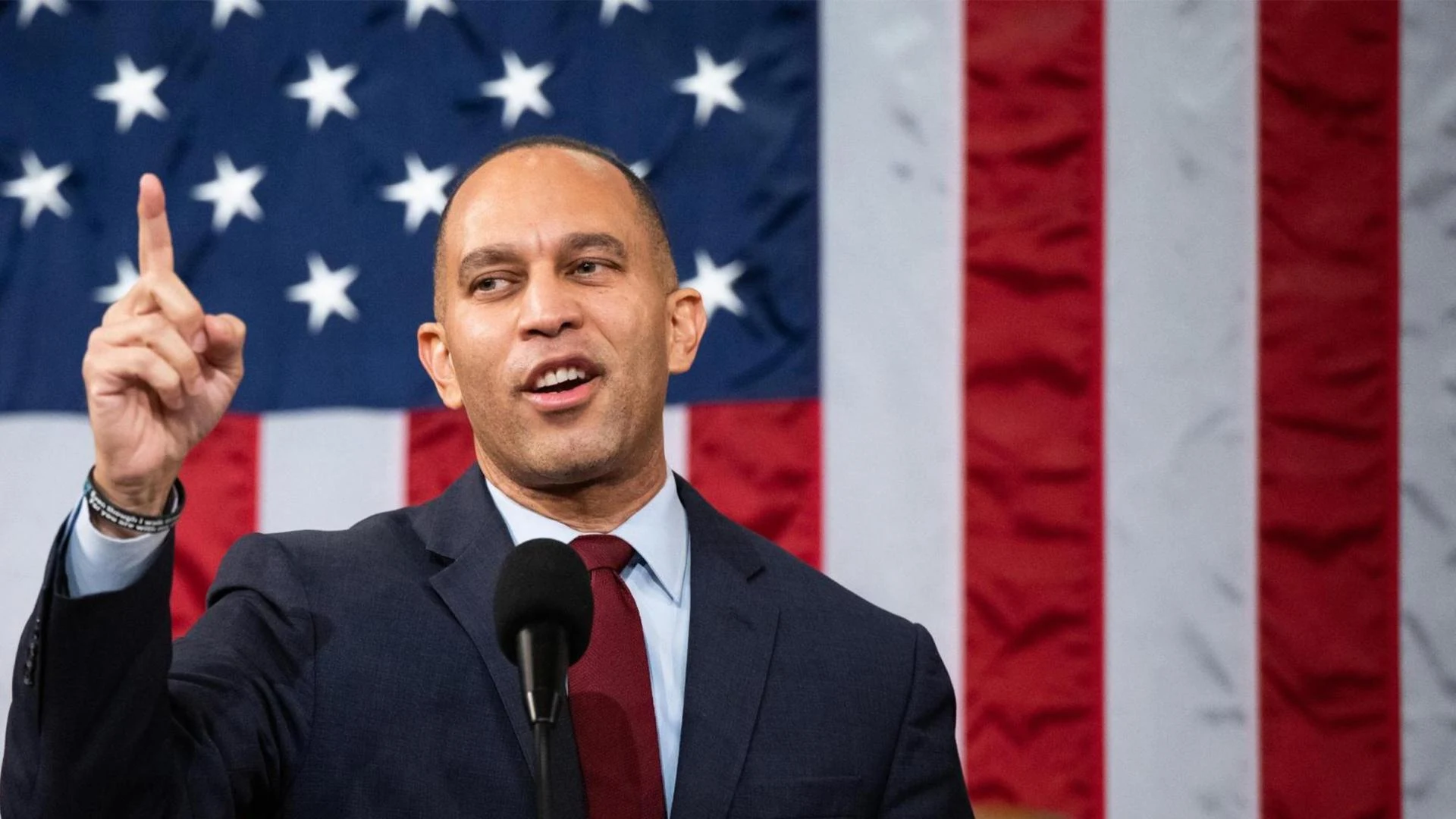
The majority brings with it a leader about to make history. Hakeem Jeffries of New York, the House Democratic leader, is in line to become the first Black Speaker of the House when the new Congress convenes on 3 January 2027, and he will be able to lose dozens of Democrats on any given vote and still reach the 218 needed for passage. "House Democrats have just secured the largest majority any party in Congress has held this century," Mr Jeffries wrote as the tally was confirmed. The party is preparing a 100-day agenda built around the cost of living: swift votes to reverse the Republicans' Medicaid cuts, restore the Affordable Care Act tax credits the Republicans allowed to expire, restore food assistance benefits, and confront Mr Trump's tariffs — which Mr Jeffries said had raised costs for ordinary Americans by thousands of dollars a year — as well as ending what he called the "reckless and costly war of choice in Iran" that has driven up petrol, food and diesel prices.
The agenda will also test how the party balances governing against confrontation. Democrats have vowed to use their subpoena powers and launch a flurry of investigations into the Trump administration, including how the president and his family have grown wealthier since he returned to office, and Mr Jeffries has not ruled out trying to impeach Mr Trump for a third time. The White House has already warned that such probes could amount to "blatant criminality". Inside the caucus, the argument is about proportion: Representative Tom Suozzi, a centrist from New York, said the party should spend 75 per cent of its time on affordability and 25 per cent on accountability, while Representative Jason Crow of Colorado said the pressure to deliver was the point. "Like, hell yeah, we should feel pressure," Mr Crow said. "There are people dying in this country and people losing their healthcare, losing their livelihoods, losing their farms." Progressive leader Alexandria Ocasio-Cortez called the result "a mandate for change".
What happens next is procedural and political in equal measure. The four outstanding races will be settled in the coming weeks, the new Congress will be sworn in on 3 January, and the speaker's election that day will formally hand Mr Jeffries the gavel. Mr Trump responded to the result on Sunday on Truth Social, and the Republicans, whose House numbers have fallen to one of their lowest tallies in decades, have elected Representative Jim Jordan of Ohio to lead them in the minority, vowing to "fight for American families" over the next two years. The Democrats now face the harder half of a landslide: a majority that large was won on a promise to make life cheaper, and the voters who delivered it will be watching whether the first hundred days do.
- Associated Press — Democrats secure biggest House majority in decades with affordability agenda ahead
- Reuters — North Carolina win gives Democrats biggest US House majority since early 1990s
- The Times — Another Democratic win gives party its largest House majority for 34 years
- Fox News — Democrats clinch historic House majority as Chuck Hubbard defeats longtime GOP Rep. Virginia Foxx
- Washington Examiner — Democrats clinch 258 House seats to mark largest majority in over three decades
- Cover photo: Hakeem Jeffries speaking at the opening day of the 118th Congress, January 2023 — Photo: U.S. government / Wikimedia Commons (Public domain)