Britain Writes to 100,000 Veterans in Its Biggest Readiness Drive Since the Cold War
Britain's armed forces have written to around 100,000 former service personnel, telling them their country may need them again, in the first mailing of its kind since the Cold War, as the government warns that the country faces a heightened threat from Russia and must be ready for the worst.
The letters, signed by the heads of the Army, Royal Navy and Royal Air Force, went this week to members of the Strategic Reserve — former regulars who retain a legal liability to be recalled in exceptional circumstances, including a national emergency or a transition to war. Recipients were asked to update their contact details and to say what jobs and skills they have acquired since leaving the services, with a particular interest in cyber, intelligence, medicine and communications. The letters also invite them to volunteer for training and exercises, including NATO's flagship Steadfast Defender exercise next spring, for which the government has said up to about 1,000 strategic reservists could be invited. Defence Secretary Wes Streeting confirmed the drive on Thursday, describing it as a "sensible, necessary precaution" in a "heightened threat environment".
Mr Streeting was at pains to say the letters are not call-up papers. "I want the country to be alert, not alarmed," he told BBC Radio 4's Today programme, adding that the exercise should have been routine but "hasn't happened for some time". The letters themselves make the same point: "To be clear, we are not asking you to return to service. Your existing obligations on that front have not changed," the Chief of the General Staff, General Sir Roly Walker, wrote, according to Forces News. The Chief of the Air Staff, Air Chief Marshal Sir Harv Smyth, acknowledged that "for some, this may come as a surprise". Veterans Minister Calvin Bailey said no recall was imminent, and new government guidance stresses that a request to update information, or an invitation to volunteer, "is not a mobilisation notice", and that Strategic Reserve liability "is not conscription".
The move comes against a darkening picture across Europe. On Thursday, the International Institute for Strategic Studies warned that suspected Russian-directed sabotage across the continent could trigger a "mass-casualty event", finding that sabotage incidents had risen 16 per cent in the year to September 2026, with Germany and Poland accounting for more than half of the cases. Last Friday, two Russian Kh-101 cruise missiles and a jet-powered drone crashed in south-eastern Poland, about 60 miles from where British-led military exercises were taking place, on the same day Mr Streeting and the air chief visited the training site. Britain subsequently deployed RAF Typhoon fighters to help protect Poland's skies under NATO's Operation Eastern Sentry. In September, Romania scrambled F-16 fighters after a Russian drone entered its airspace during attacks on Ukrainian ports. A heavily discussed thread on Reddit about the missiles that fell in Poland drew nearly 18,000 upvotes and almost 4,000 comments, a measure of how closely the public is watching each incident.
At home, the RAF has begun moving military aircraft into hangars and hardened shelters overnight to protect them from potential drone attacks, and is preparing to install anti-drone netting around aircraft that must remain exposed. The government is investing an additional £470 million to strengthen security at military sites, including better physical protection, surveillance and counter-drone capabilities, on top of £15 million already spent on drone and counter-drone technology and restricted airspace over 44 critical defence sites. MI5 and the Ministry of Defence have warned British companies supplying military equipment to Ukraine that they could be targeted by Russian saboteurs, and Iranian threats against military bases in England have already prompted tighter security and the relocation of American military aircraft.
Mr Streeting, a former health secretary, said he had drawn on the lessons of the Covid inquiry and the government's preparedness for a pandemic. "We do need to build our national resilience, build our readiness and make sure that we are prepared for the worst — even as we're taking steps every day that make that worst-case scenario less likely," he told Sky News. Last month he warned that the British military must be capable of responding to war within 1,000 days. He told BBC Breakfast that the military had what it needed "for what we call in the military 'the fight tonight'", but added: "Do we have as much as I would like or they [military chiefs] would like? No." The letters landed on the same day the government announced an £8 billion contract to upgrade the nuclear submarine fleet, which Mr Streeting said would help get the country "warfighting ready". The BBC's security correspondent Frank Gardner described the move as "not a case of pressing the panic button for imminent war, but more one of good housekeeping", noting that when Britain went to war in Iraq in 2003 the Ministry of Defence had a poor grasp of who could serve and how to reach them. With a regular army of around 73,000, its smallest since the Napoleonic era, Britain's ability to find its former soldiers quickly may matter more than it has in decades.
- The Times — MoD tells 100,000 reservists: be ready for call-up
- The News — UK contacts 100,000 veterans as Russia threat raises war fears
- New York Post — UK shields fighter jets, contacts reservists in Cold War-scale push amid Russia threat
- Europe Says — UK contacts 100,000 reservists as Russia threat raises war fears
- Reddit r/worldnews — Two Russian missiles and a jet-powered drone fall in Poland
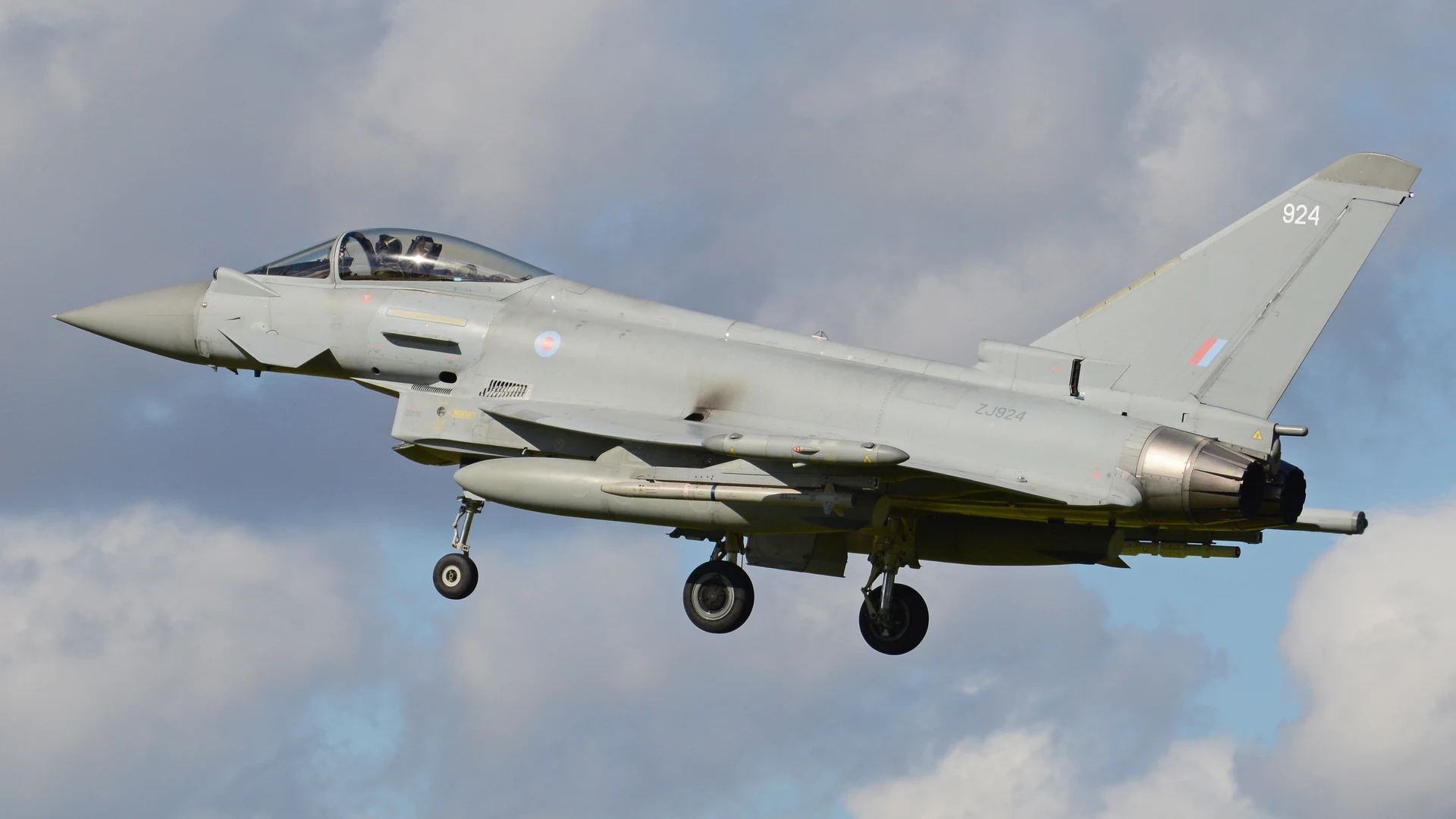
- Cover photo: An RAF Eurofighter Typhoon FGR4 (ZJ924) of 29 Squadron landing at RAF Coningsby, Lincolnshire, 22 September 2017 — Photo: Alan Wilson / Wikimedia Commons (CC BY-SA 2.0)