Britain's Benefits System Still Offline as Ministers Confirm Deliberate Cyberattack on the DWP
Britain's benefits and pensions system remained offline on Sunday, more than 48 hours after the Department for Work and Pensions took its online services down, after the government confirmed on Saturday that the disruption was caused by a deliberate cyberattack and not an accident. Work and Pensions Secretary Pat McFadden said the department had suffered an "unauthorised attempt to gain access to DWP systems", and officials said there was still no date for restoring the state pension, Universal Credit and Personal Independence Payment portals. The government insisted throughout the weekend that regular payments would continue as normal, but the outage has left millions of claimants unable to manage claims, report changes in circumstances or make new applications online.
The incident was first detected on Thursday night, when the department spotted suspicious activity and took a series of online services offline at 9 p.m. as a precaution. On Friday the government would say only that it was investigating a "cyber incident", but as the investigation progressed, experts were able to confirm that the incident was not accidental, and on Saturday the department began describing it explicitly as a cyberattack. "It's right that we took our time to try and identify what happened," Mr McFadden said on Saturday. "We will not put services back online until we have made sure that it's safe to do so. It would be a mistake to rush to do that if we weren't sure that those systems were safe." The department said it had activated well-rehearsed contingency plans, and experts from the National Cyber Security Centre and the Government Cyber Co-ordination Centre are working to establish how the attempt to gain unauthorised access was made. The "Tell Us Once" service, which lets relatives notify several government departments after a death, was also affected.
The reassurance that matters most to claimants is about money. The DWP makes about 2.5 million payments a day, worth £1.3 billion, and Mr McFadden said payment runs are prepared several days in advance, so anyone who did not receive a payment on Friday should not assume the attack was the cause. The department said people who missed appointments or could not report a change in circumstances because of the outage would not be sanctioned, and sanctions already processed would still apply. Education Secretary Lucy Powell, asked about the incident on the BBC's Sunday with Laura Kuenssberg programme, said the department "has a grip on the situation" and that "payments will continue to be made — it doesn't affect the payments system". Officials said there was no evidence that any personal details had been compromised, although that is an interim assessment while the investigation continues, and the Information Commissioner's Office said it was in contact with the department.
Inside the department, the mood is strained. One DWP worker told the BBC that staff were becoming increasingly concerned for claimants as the outage dragged on. "Morale is low as we are getting more information from BBC News at the moment than the DWP," they said. "We are all wondering what does this mean for us but more importantly — what does it all mean for claimants. This is not a job you do if you don't care about these people who are often vulnerable or have specific conditions so it's worrying." The department serves around 20 million claimants and customers, and the opposition has seized on the incident: the shadow work and pensions secretary, Helen Whately, called the attack "extremely concerning" and said it "must be treated with the utmost seriousness", adding that "the Labour government must do more to protect against increasingly frequent cyber attacks and ensure our systems are resilient to these threats".
The attack is the latest in a run of cybersecurity incidents to hit British public institutions and businesses, and it has renewed questions about whether state computer systems are keeping pace with the threat. Reuters has cited previous disruptions involving the British Library, Transport for London, Marks & Spencer and Jaguar Land Rover, and in recent weeks fashion retailers Next and Asos have separately reported incidents in which unauthorised access was gained to some data, while a number of UK meat suppliers said their fridges heated up overnight after hacks targeting software used by supermarkets across Europe. Only weeks ago the National Audit Office warned there was a "high" risk of the department suffering a cybersecurity breach that could disrupt its services or compromise its data. The BBC noted that the incident has fuelled concerns about the vulnerability of state systems and whether security protocols are keeping pace with demand and advances in AI technology, which can be used to aid hackers.
For now, the investigation has two immediate priorities: establishing whether the attackers gained access to any internal data, and restoring public services without reopening them before they are secure. The government has not said who was behind the attack, how the intrusion was attempted, or whether the attackers reached any internal systems, and Downing Street said on Friday there was no evidence that a "malicious actor" had targeted other government departments. The DWP has warned customers to stay alert for fraudsters exploiting the disruption, saying it will never ask for personal or financial information by text message or email, or ask anyone to click on links; Lisa Webb, a legal expert at the consumer magazine Which?, advised anyone unsure about a message to end the conversation immediately and contact their bank directly, dialling 159 to reach its fraud team. On Hacker News, a thread on the government's outage notice drew a comment from a developer who worked on the 1990s National Unemployment Benefit System, recalling that it was built with four-way physical redundancy across four sites in the UK so that no single failure could bring it down.
- BBC — DWP confirms cyber attack forced it to take pension and benefits systems offline
- Reuters — UK pensions department says it was targeted in cyberattack
- The Times — DWP confirms targeted cyberattack forced benefits system offline
- Glasgow Times — DWP services remain offline after cyber attack
- GOV.UK — Temporary disruption to some DWP online services
- Hacker News — UK Gov DWP services offline as a precaution after cyber incident detected
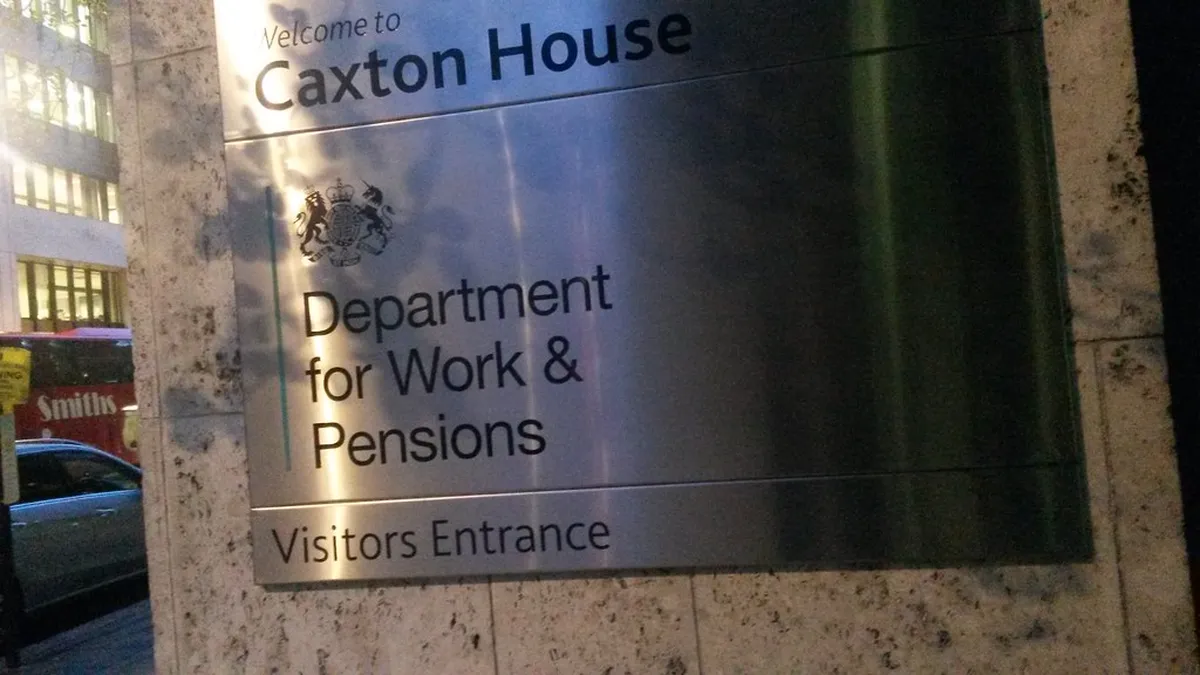
- Cover photo: The visitors' entrance sign at Caxton House in London, headquarters of the Department for Work and Pensions — Photo: DaveLevy / Flickr (CC BY-SA 2.0)