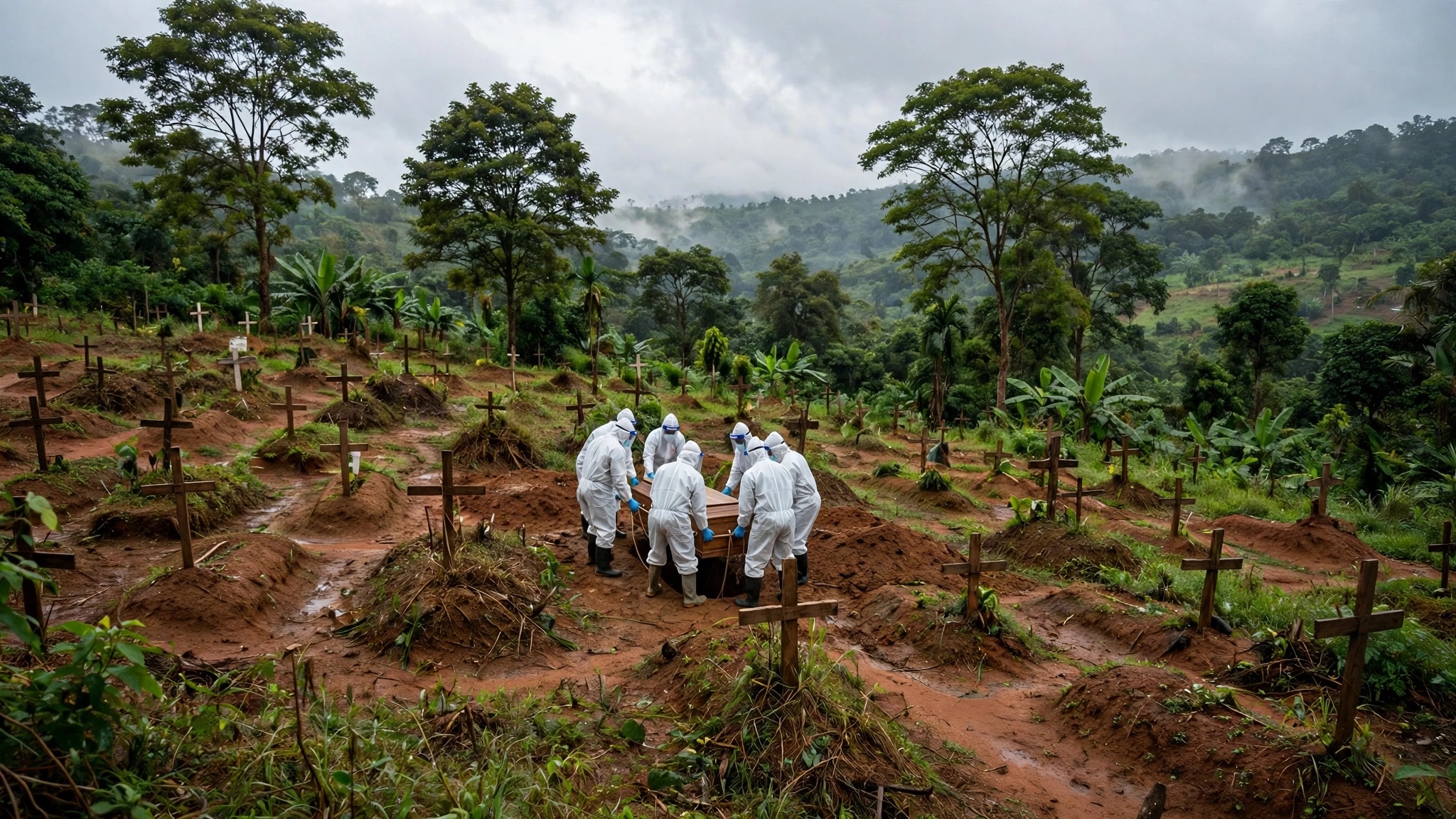
Ebola Deaths Pass 5,000 in Congo's Deadliest Outbreak — And the Virus Is Still Spreading Faster Than the Response
Deaths in the Democratic Republic of the Congo’s Ebola outbreak have passed 5,000, according to figures released by the country’s health ministry on Saturday. The ministry reported 5,026 deaths among 10,351 people infected, making this the deadliest Ebola outbreak in Congo’s history and the second-deadliest on record globally. The outbreak is caused by Bundibugyo virus and has continued to spread six months after it was declared, as health officials warn that transmission is outrunning the response.
“It is a very tragic milestone because it is just not a number,” Dr Patrick Otim, a World Health Organization programme area manager, told the Associated Press. “It is families and communities that have been devastated by this outbreak.” Ministry data also recorded 2,788 recoveries. The current outbreak has surpassed Congo’s previous record of 2,299 deaths in 2018–20; only the 2014–16 West African epidemic, which killed more than 11,000 people, has been deadlier.
Bundibugyo virus has no vaccine or specific treatment approved for this strain, although clinical trials and research into vaccine candidates are under way. The licensed Ervebo vaccine is for Zaire ebolavirus, a different species. Patients in the current outbreak receive supportive care, making early diagnosis and access to treatment especially important.
The outbreak has reached 67 of Congo’s 178 health zones across eight provinces; 50 zones were still reporting active cases in the figures cited by the Associated Press. Ituri and North Kivu are the main epicentres. Around 80 per cent of new infections are occurring outside known, monitored chains of transmission, according to Africa CDC figures reported by the AP. WHO also said roughly one-third of recorded deaths were people who died outside treatment centres before they could be tested.
Conflict, distrust and shortages are making containment harder. Armed violence in eastern Congo restricts the movement of health teams, while attacks on health workers and facilities have further weakened the response. On Friday, staff at an Ebola treatment centre in Tchomia, Ituri province, stopped work over four months of unpaid wages. The centre was caring for five confirmed patients and 10 suspected cases, the AP reported. Similar stoppages have been reported in Beni, North Kivu, where local officials cited shortages of fuel and funding.
The outbreak has also been detected beyond Congo. Kenya’s health ministry had confirmed nine cases and two deaths by October 23, according to the U.S. Centers for Disease Control and Prevention. Nigeria reported one case on October 20; the patient was evacuated to Switzerland, and no additional Nigerian case appears in the CDC’s October 30 tally. Uganda reported cases earlier in the outbreak, with no active cases reported there by the CDC’s latest summary.
The CDC says that, after 11:59 p.m. Eastern time on November 3, passengers boarding international flights to the United States will have to attest that they have not been in the Democratic Republic of the Congo during the previous 21 days. The agency says the risk to the U.S. public remains low, while recommending that travellers follow its destination-specific guidance.
The 5,000-death threshold is a measure of how far the response still has to go. WHO has called for stronger surveillance, contact tracing, clinical capacity and community engagement, particularly in hard-to-reach areas. Vaccine research may offer longer-term options, but for now the immediate priorities are finding infections outside known contact chains, getting patients into care early, restoring services disrupted by conflict and paying the health workers expected to contain the outbreak.