The Countdown in the Gulf: Iran Warns of a “No-Limits” Response as Trump Weighs His Next Move
On Saturday, 31 October, Iran’s Supreme Leader Mojtaba Khamenei gave his armed forces their bluntest order yet in a war now eight months old: any new attack by the United States or Israel must be met immediately, and without geographic limits. The warning, issued to senior commanders and carried by Iran’s IRNA news agency, landed just three days before America’s midterm elections on 3 November — the date around which diplomats across the Gulf believe the next phase of this war could be decided.
In Washington, the decision itself remains open, and that uncertainty is now part of the strategy. President Donald Trump said on Friday that the war would end “very soon, one way or the other,” offering no date and no terms. At the G20 foreign ministers’ meeting in Atlanta on Saturday, Secretary of State Marco Rubio was more precise about what had not happened: “He hasn’t made a decision. I have no announcement in that regard,” he said, adding that Washington still preferred a diplomatic solution. Earlier reporting said U.S. Central Command had briefed Vice President JD Vance and Trump on military options on 28 and 29 October, with the naval blockade among the subjects discussed.
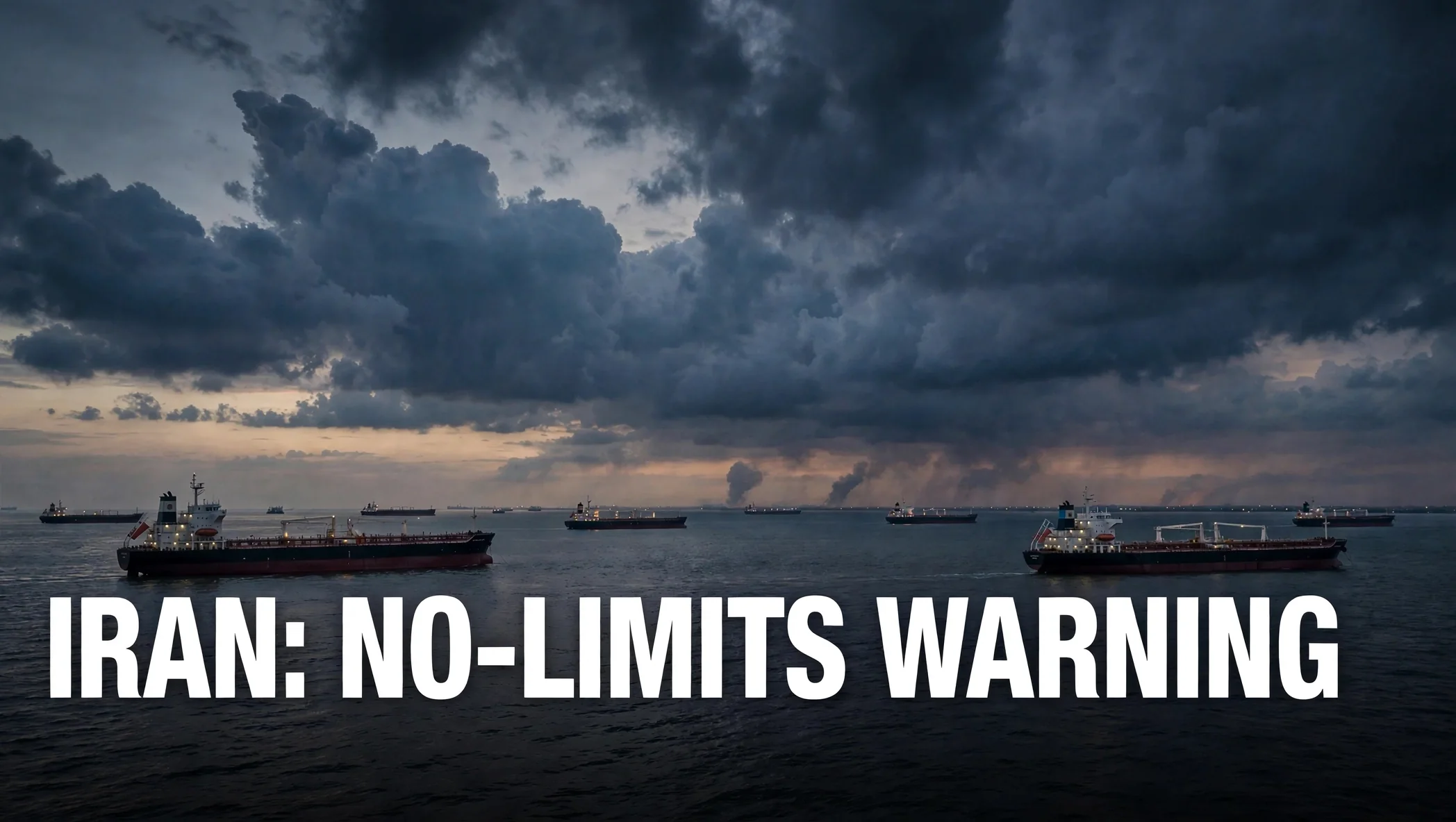
The stakes of any miscalculation were underlined in the Strait of Hormuz, the narrow waterway through which a large share of the world’s traded oil passes. Iran’s Revolutionary Guard said a supertanker carrying more than two million barrels of oil caught fire after hitting a naval mine there, in the same week Trump was speaking of a swift end to the war. The claim has not been independently verified. Fuel prices were already elevated heading into the midterms, and every incident in the strait now moves markets far beyond the Gulf. A war fought in the air over Iran is, for the rest of the world, a war felt at the petrol pump.
Behind the public warnings, quieter channels have never fully closed. Iranian negotiators held talks in Doha with Qatari mediators, following more than twelve hours of discussions in Tehran the day before, as diplomats tried to avert a new outbreak of fighting after the elections. Iran also confirmed receiving a letter from Vice President Vance, though it said it had not responded and its demands were unchanged; Trump later said the outreach concerned medical supplies reaching Iran under the U.S. naval blockade, not revived peace talks. Rubio, in Atlanta, insisted that direct and indirect contacts with Tehran were under way. “There are multiple talks. Talks have actually never stopped,” he said.
Tehran’s message, however, was designed to leave no doubt about the cost of a second round. Khamenei told commanders that any threat “must be met with an immediate, impactful and geographically unrestricted response,” and that Iran’s target list should include American and Israeli assets of every kind. An Iranian army spokesman went further on social media, warning that another American attack would push the war beyond its current borders: “The flames of war will undoubtedly engulf a much wider geographical area.” Gulf states, according to earlier reporting, had already been told to brace for possible Iranian strikes — a sign that governments in the region are preparing for a conflict that would not stay inside Iran’s borders.
What happens next is therefore not only a military question but a political calendar. Trump has previously said no strike would occur before the 3 November midterms, and regional governments are anticipating that he could restart attacks once voting is over. There is still no ceasefire deal and, eight months after U.S. and Israeli strikes began in February, no clear winner on the battlefield. The world is left watching the same clock from two sides: in Tehran, an order to be ready for anything; in Washington, a president who says the war will end very soon, and a secretary of state who says he has not yet decided how.