The War Reaches the Gulf's Doorstep: Iran Strikes Kuwait and Bahrain After the US Hits Qeshm Island
The war between the United States and Iran spread across the Gulf on Wednesday, as Tehran fired drones at American bases in Kuwait and Bahrain, Houthi missiles were intercepted over the Saudi capital, and a tanker linked to the United Arab Emirates' state oil company was struck in the Strait of Hormuz, leaving one crew member missing and eleven injured. The exchange followed an American strike on an Iranian missile site on Qeshm Island the day before, and it dragged the Gulf's wealthy monarchies — hosts to the American bases that anchor the region's security — directly into a conflict now in its ninth month.
The sequence began on Tuesday, when American fighter jets hit a missile launch site belonging to Iran's Revolutionary Guard on Qeshm Island, in the flashpoint Strait of Hormuz, with what a US military official described as "precision munitions". The strike was presented as a riposte to Iranian aggression, coming hours after Iran attacked an American radar installation in Bahrain. Tehran answered on Wednesday. Its military said its "combat and kamikaze drones" targeted American air defence systems and missile launchers at Kuwait's Ali Al-Salem air base, and Iranian drones were also fired at targets in Bahrain. Kuwait activated its air defences to counter the attack — the first time it has done so since early September — and Bahrain said it fended off the assault, its fourth Iranian attack in six days. For Kuwaitis, the return of the war was a shock after weeks of calm. "The explosions seemed to be coming from far away, but hearing them again after a period of calm was both surprising and worrying," Hani Mohammed, a 40-year-old Egyptian resident, told reporters. "People had started to readjust to a normal life."
The fighting spread beyond the two Gulf states. Explosions were heard in Saudi Arabia, where the Saudi-led coalition said it intercepted two Houthi cruise missiles targeting the Riyadh region, and later two drones launched by the Houthis in the Riyadh and southern regions. Residents of the Saudi capital described an "extremely loud" explosion in the north of the city, with windows rattling and doors flying open. The Houthis, who have seized fresh territory in neighbouring Yemen and completed their control of the country's Red Sea coast, have been hitting Saudi Arabia for weeks since a four-year truce in Yemen's civil war dissolved in July. Saudi Arabia voiced its "strongest condemnation" of the attacks on Bahrain, Kuwait and the Emirati oil tanker, and called for an end to the violence and for negotiations to resolve the crisis. The US State Department reissued security warnings to its citizens in Bahrain and Saudi Arabia, calling for "heightened vigilance" in both countries.
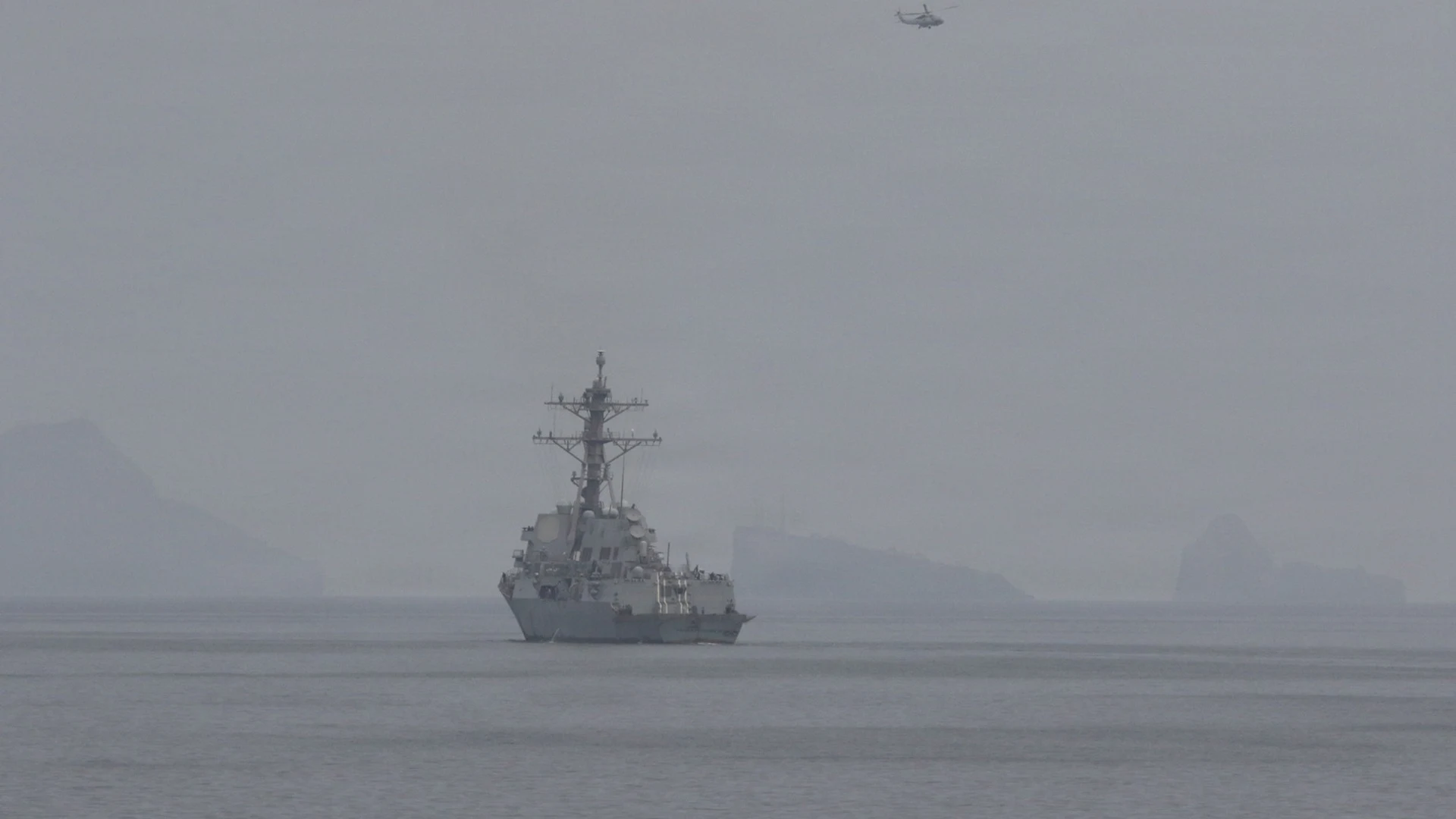
At sea, the war's choke point grew more dangerous still. A vessel belonging to ADNOC, the Abu Dhabi National Oil Company, was struck late on Tuesday in the Strait of Hormuz, the company said, leaving one seafarer missing and eleven injured. Ships transiting the strait have come under nearly daily fire from Iran, which insists they use only routes it has authorised, while the United States has imposed a blockade on Iranian ports and its navy protects tankers taking a southern route through the strait via Omani waters. The United States has reinforced its naval posture in the region, moving the carrier USS Theodore Roosevelt into theatre and raising the number of carrier strike groups on station to three. Iraq, meanwhile, restarted crude oil exports through its northern pipeline to Turkey on Tuesday, a small piece of good news for markets that have spent the week on edge over the safety of Gulf shipping.
Diplomacy is struggling to keep pace with the shooting. Qatar, which held talks with Iranian officials on Tuesday, called the latest attacks a "dangerous escalation" and warned they undercut efforts to find a peaceful solution. Officials from Gulf states, Pakistan and Turkey have stepped up coordinated diplomatic efforts, including phone calls with senior American officials, aimed at preventing a renewed war, according to the Associated Press, which cited four regional officials briefed on the effort. Their concern, the officials said, is a push by the Israeli prime minister, Benjamin Netanyahu, for Washington to resume operations or allow Israel to strike Iran's nuclear facilities and missile capabilities — and a worry that a recent visit by the Mossad chief could influence President Donald Trump in that direction. Iran's army chief, Amir Hatami, warned of a "more devastating" reaction to the United States and its allies, telling Iran's Fars news agency that any repeat of the American strikes would bring a response that "will know no geographical boundaries".
What comes next is a question of whether the diplomacy or the escalation wins. An Associated Press analysis found that Ali Al-Salem air base alone has been targeted in at least 30 Iranian attacks, damaging or destroying at least 15 aircraft hangars along with warehouses and ten buildings near a residential area — a measure of how exposed the American presence in the Gulf has become. Mediators warn that the tit-for-tat strikes, the naval blockade and the repeated attacks on shipping increase the risk of a wider, unplanned confrontation. The war's other front is political: Mr Trump is expected to raise Iran with Xi Jinping and Vladimir Putin at their trilateral meeting in Shenzhen today, and the Gulf states will be watching whether the three leaders can agree on anything that cools the region down. For now, the Gulf's capitals are intercepting drones over their own cities, and the war that began on 28 February no longer looks like anyone's war but theirs.
- The Leaders Online — 'Dangerous escalation': Gulf nations scramble to intercept fire from Iran, allies after US strikes on Qeshm Island
- Particle — US strike on Qeshm Island triggers Iranian drone attacks on Kuwait and Bahrain
- EL7 / Associated Press — Gulf and regional efforts seek to halt renewed war
- Anjan News — Iran war latest: Gulf attacks, Hormuz crisis and global impact
- Cover photo: A U.S. Navy guided-missile destroyer conducting operations in the Strait of Hormuz with a helicopter overhead, 11 April 2026 — this is not a photo of the November 2026 attacks; it shows the U.S. naval presence in the strait during the mine-clearance mission — Photo: U.S. Central Command photo / Wikimedia Commons (Public domain)