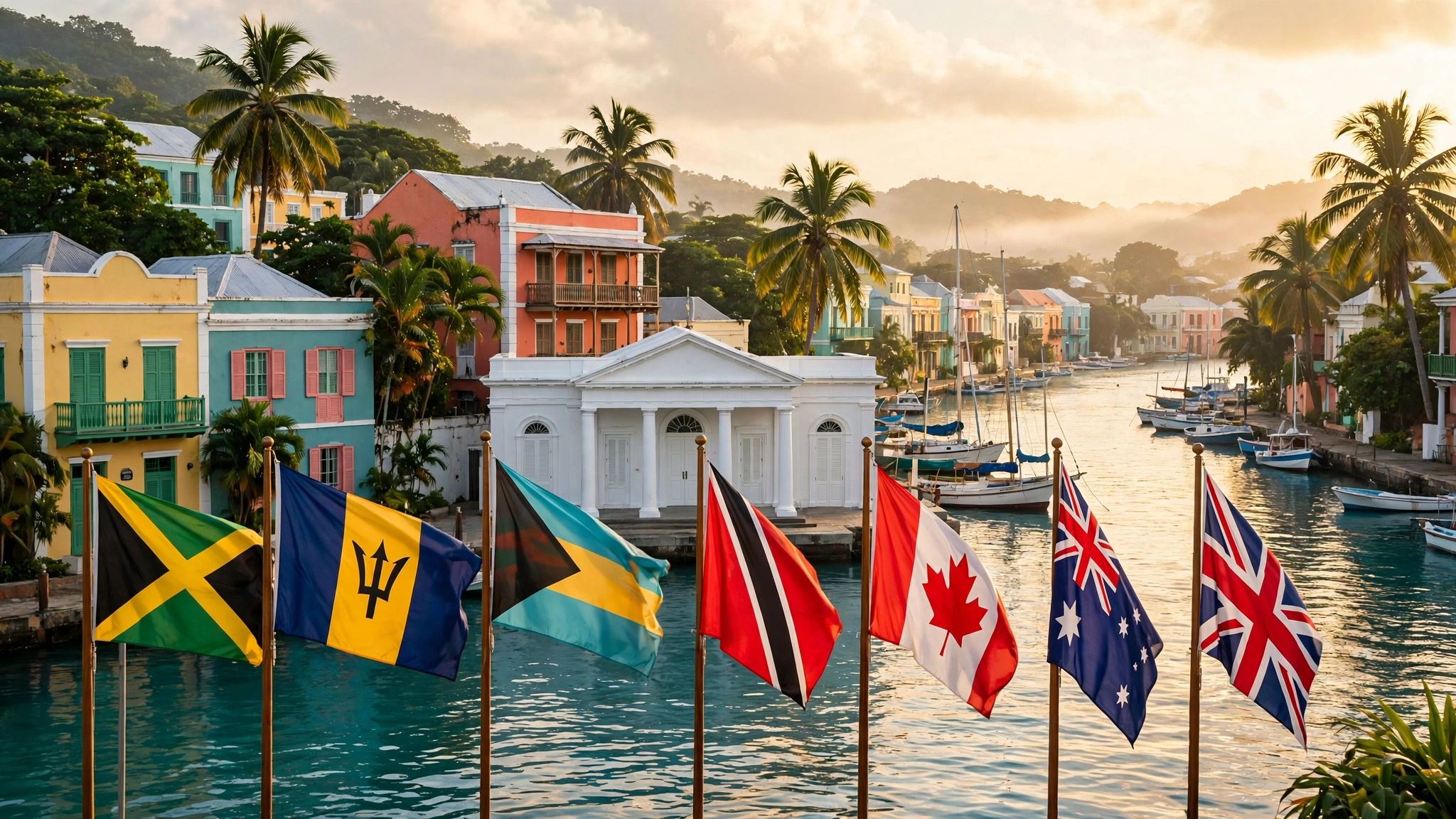
A Royal Tour Begins, and an Old Question Refuses to Stay in the Past
King Charles and Queen Camilla began a Caribbean tour on Tuesday, 27 October 2026, with a schedule that takes them to the Bahamas and Guyana before Antigua and Barbuda, where the Commonwealth Heads of Government Meeting is due to take place. The tour is scheduled to run through 4 November.
It is a royal tour, but it also arrives amid a long-running debate over Britain’s role in the transatlantic slave trade and what responsibility should follow. Caribbean leaders and campaigners are renewing calls for reparations, an apology and a fuller reckoning with the region’s colonial history.
CARICOM Secretary-General Carla Barnett said in September that reparations are fundamentally about justice, recognition, accountability and transformation, and about building a more equitable future for descendants of people who endured enslavement. CARICOM said it would press for reparatory justice to be advanced at the upcoming Commonwealth leaders’ meeting.
Buckingham Palace has said the King will not shy away from Britain’s involvement in the slave trade during the visit. But reporting ahead of the tour says he is not expected to make a formal apology, in line with the UK government’s position that also rules out financial reparations. The Palace has pointed to Charles’s past statements acknowledging historical wrongs and his work addressing enduring inequalities.
The distinction between acknowledging the past and apologising for it is central to the debate. At a Commonwealth meeting in 2022, Charles expressed “personal sorrow” over slavery. Caribbean leaders and campaigners have since continued to call for stronger recognition and reparatory action.
The Commonwealth describes itself as a voluntary association of 56 independent countries, many with historic ties to Britain. The Antigua and Barbuda meeting will test how that language of partnership is received while member states press for different forms of accountability over the legacy of empire and slavery.
The public programme will bring handshakes, photographs and speeches. Much of the harder discussion may happen in meetings and corridors, as Caribbean governments seek a formal reckoning while the British position emphasizes acknowledgement, partnership and practical support without a formal apology or financial reparations.
The tour is scheduled to end on 4 November. The question accompanying it—what a just future relationship requires—will remain after the royal party leaves.