Kyiv's Darkest Night: Water Runs Dry as the Village Toll Climbs to 40
Russian attacks triggered power and water outages for hours across Kyiv and surrounding regions on Wednesday, while President Volodymyr Zelenskyy said the death toll from Monday's bombing of an aid distribution point in a village in southern Ukraine had risen to 40, with dozens more possibly still buried in the rubble, in one of the deadliest strikes on civilians in nearly five years of war. The two events, a day apart, describe a war in which civilian infrastructure continues to bear the direct impact of the fighting even as diplomats prepare to meet — and a winter in which keeping the power and water on is becoming as urgent as anything on the battlefield.
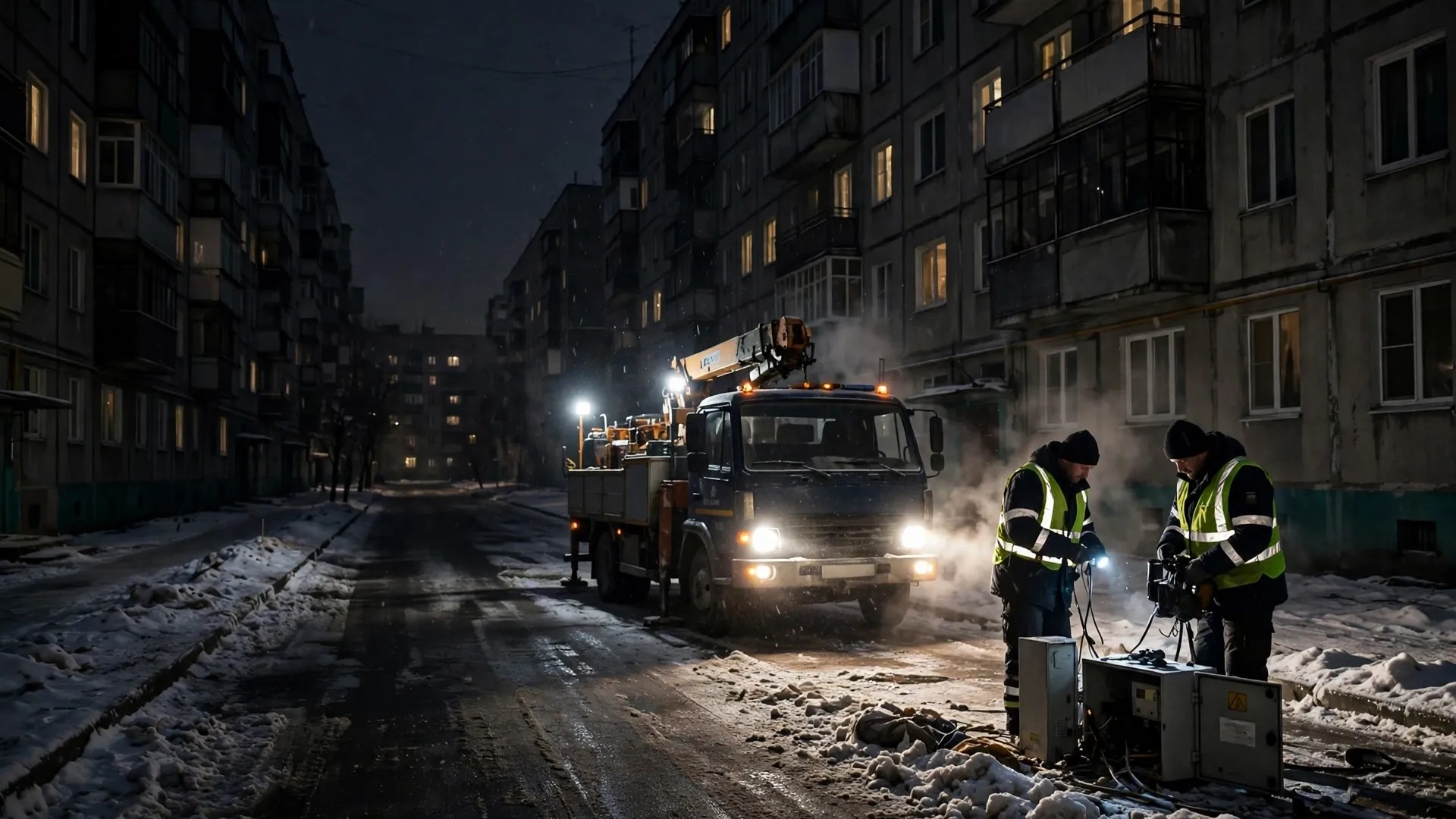
The assault on the capital was the largest of the autumn's energy campaign. Ukraine's air force said Russia attacked overnight with 310 drones, including 81 jet-powered ones, a day after strikes on power plants and substations across nine regions knocked out power around Kyiv. The state grid operator, Ukrenergo, said energy facilities had been struck more than 20 times in 24 hours, and Russia's defence ministry said its forces had hit two power stations in the Kyiv and Zhytomyr regions. Kyiv's water utility said the strikes caused the city's worst water outage since the full-scale war began, with supplies cut for more than a day across most districts — far longer than the few hours outages had lasted after earlier attacks. Residents were urged to use public drinking-water fountains, and emergency centres were hastily set up offering hot tea and power points to charge phones. Supplies were later restored, and the energy company DTEK said emergency shutdowns in Kyiv had ended after repair teams stabilised the system, though officials warned the grid remained fragile.
The toll from the earlier strike also rose, and may rise further. On Monday, multiple Russian guided bombs slammed into a former school and a nearby shelter in the village of Komyshuvakha, near the front line in the Zaporizhzhia region, as residents waited for humanitarian aid. Mr Zelenskyy said the death toll had reached 40, adding that 30 more people could still be buried in the rubble, and that the final figure could be around 70. Ivan Fedorov, co-chair of the regional defence council, said 59 people were missing, and 12 bodies pulled from the rubble had been identified so far. Mr Zelenskyy said Russian forces had dropped nine aerial bombs, striking people collecting aid and then rescuers, and called the attack "insane" and proof that Russia did not want to de-escalate. Rescuers were still searching on Wednesday, in their third day of work, while Russian drones hampered the operation, local officials said.
The two sides give irreconcilable accounts of what was hit. World Central Kitchen, which delivers food and water to the community, said the facility was a humanitarian and administrative centre, and Mr Zelenskyy described it as a shelter and aid centre. Russia's defence ministry said its forces had targeted Ukrainian military units around Komyshuvakha and two other settlements and killed up to 25 Ukrainian servicemen. Russia does not comment on reports of civilian casualties, and both sides deny deliberately targeting civilians. The figures from Komyshuvakha remain provisional while recovery work continues, and could not be independently verified in the reporting reviewed. Ukrainian strikes killed three people in Russia's Belgorod region the same day, according to the same reporting.
Diplomacy now moves faster than the rescue work. Mr Zelenskyy held a coordination call on restoring power supplies, telling Ukrainians that Russian strikes continued virtually every day and that repair work continued around the clock. Team-level negotiations involving America, NATO, Europe and Ukraine took place in Brussels on Wednesday, and a White House gathering on Thursday brings Russian and Ukrainian representatives together, in preparation for trilateral talks between Russia, Ukraine and the United States set for 10–11 November in Abu Dhabi. Mr Zelenskyy, who spoke to Mr Trump's envoys ahead of the talks, has insisted any settlement must preserve a capable Ukrainian army and provide enforceable security guarantees with European partners involved, and has said those guarantees "must be ironclad".
For Ukrainians facing a winter of blackouts, the question is more immediate than the calendar of talks: whether the power stays on. Russia has kept up nearly daily strikes on Ukraine's energy facilities as temperatures fell, and Kyiv's water system — crippled in part by earlier strikes on the capital's combined heat and power plants — has little margin left. The capital's worst water outage of the war lasted little more than a day this time. The fear in Kyiv is what happens when the next one lasts longer, and the hope is that the talks in Abu Dhabi, a week away, produce something the last round of diplomacy did not: a pause in the campaign against the grid.
- Leigh Journal (AP), "Russian strikes disrupt water and power in Kyiv as rescuers continue searches"
- US News Pulse, "Kyiv Power and Water Outages Follow Russian Strikes on Ukraine's Energy Grid"
- KTBB (AP), "Russian attacks disrupt power in Kyiv, while the death toll in a stricken village rises to 40"
- Bob News 24, "Over 40 Dead as Russian Attacks Leave Kyiv Without Power"
- South Punjab News (AP), "Russian attacks disrupt power in Kyiv, while the death toll in a stricken village rises to 40"