Hours After the Peace Photo, Russia Rains Missiles on Kyiv
Russia launched one of the largest aerial assaults of the war on Ukraine overnight into Friday, killing at least eight people and damaging three bridges across the Dnipro River in Kyiv — hours after President Vladimir Putin had stood beside Donald Trump and Xi Jinping in Shenzhen and signed a declaration presenting the three powers as a force for peace. The barrage of ballistic and cruise missiles and hundreds of drones lasted more than six hours, struck four districts of the capital, and knocked out power, heating and water in several regions, according to Ukrainian officials. It was, by every measure, the opposite of the peace the summit had promised.
The scale of the attack was extraordinary even by the standards of a war now in its fifth year. Kyiv said Russia fired at least 110 missiles overnight, an unusually large number; Ukraine's air force reported 84 cruise missiles, 404 attack drones and an unspecified number of ballistic missiles, some of them launched from Tu-160 strategic bombers that had taken off from the Ukrainka air base in Russia's far east. Russia's defence ministry said it had launched a "massive strike using high-precision weapons from land, sea, and air", targeting military and energy facilities, port infrastructure in the Odesa region and transport infrastructure in Kyiv. Six of the dead were in the capital, where the mayor, Vitali Klitschko, said three of those killed were believed to be employees of Kyivvodokanal, the city's municipal water utility; two more people were killed in the western city of Lviv, and at least 28 were injured nationwide. The casualty figures were revised upwards several times as the attack unfolded, and officials warned they could rise further.
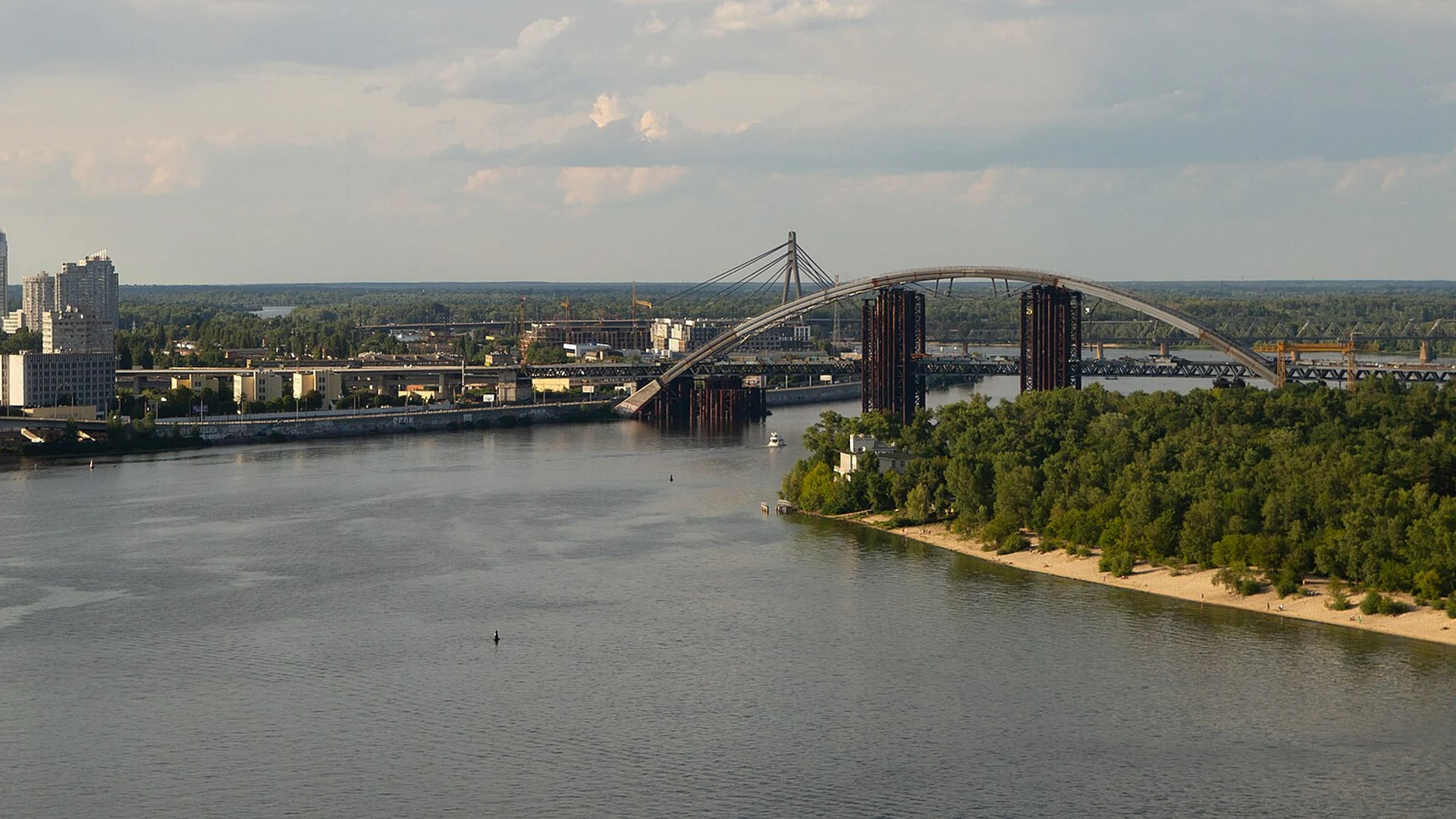
The strikes had a deliberate target: the bridges that hold Kyiv together. Ballistic missiles damaged the Podilsko-Voskresenskyi, Darnytskyi and Pivdennyi — Southern — bridges, the crossings that link the capital's right and left banks across the Dnipro. Traffic on the Podilsko-Voskresenskyi bridge was suspended entirely, and only vehicles of up to ten tonnes travelling from the left bank to the right, and public transport of up to eighteen tonnes, were permitted across the Southern Bridge. Mr Klitschko urged residents not to drive into the city and employers to let staff work from home. Russia began targeting Kyiv's bridges in early October, and the overnight attack was the most systematic attempt yet to sever the transport links between the two halves of the capital.
The assault was, by Mr Putin's own account, revenge. It came a day after he had vowed in Shenzhen that Russia would respond to Ukraine's strikes on the bridge linking Russia with occupied Crimea with retaliatory actions "far more painful than what the Kyiv regime did to the bridge". Ukraine had hit the $3.7 billion, 19-kilometre Kerch Bridge three times this week: on Tuesday, drones and missiles destroyed a section of the road bridge, and on Thursday a third strike, which Ukraine said used Neptune missiles, damaged the railway tracks and forced a suspension of rail traffic. Some rail traffic resumed on Thursday afternoon, and Russian-installed authorities in Crimea said a ferry service to the mainland would begin on Friday. Russia's deputy prime minister, Marat Khusnullin, said it would take about a week to establish how long repairs could take and suggested some sections might be running again in a month or two — but a structural engineering specialist, Inger Kroon of the Danish consultancy COWI, said replacing the damaged road span and its arch could take more than a year.
The bridge campaign is part of a wider Ukrainian effort to strangle Russian logistics, and the overnight retaliation shows how much pressure it is now exerting. Ukraine has spent the summer systematically targeting the tankers ferrying fuel to Crimea, striking energy infrastructure across the peninsula and hitting supply lines on the M-14 highway through occupied southern Ukraine, the main artery feeding Moscow's war effort. With the Crimean Bridge partly disabled, Russia must force more traffic through that heavily targeted corridor. "More traffic means more targets," Franz-Stefan Gady of the Center for a New American Security told Reuters, adding that a sudden logistical breakdown was still unlikely because Russia had developed evasive tactics such as dispersion and night driving. The bridge, opened by Mr Putin in 2018 as the showcase symbol of Russia's annexation of Crimea, had been damaged before — by a truck bomb in 2022, sea drones in 2023 and underwater explosives in 2025 — but never as severely as this week.
What the night in Kyiv exposes, above all, is the emptiness of the words signed in Shenzhen. The four-point declaration reaffirmed that a nuclear war "cannot be won and must never be fought", but it mentioned neither Ukraine nor the war with Iran, announced no arms-control talks and committed its signatories to nothing enforceable. Within hours, Mr Putin was ordering the largest missile barrage in months, and Poland reported a violation of its airspace during the night. The attack ended a few hours before Ukrainian officials and the leaders of its main European allies were due to gather in Berlin — a reminder, as it was in Shenzhen, that the country with the most at stake was not in the room. As winter approaches and Russia's campaign against Ukraine's energy system intensifies, the question is no longer whether the great powers will make peace, but whether Kyiv can keep its lights on and its bridges standing while they talk about it.
- CNN — Hours after Trump reportedly says 'tired' Putin is ready for a deal, Ukraine hit with massive strikes
- Reuters — Ukraine strains Russian logistics with Crimean bridge strikes
- The Times — At least eight killed in huge Russian missile barrage on Ukraine
- Europe Says — Hours after Trump-Putin talks, Russia hits Ukraine with massive, deadly attack
- Cover photo: The Dnipro River in Kyiv and the Podil Bridge. Photographed 13 July 2019 — Photo: Maksym Kozlenko / Wikimedia Commons (CC BY-SA 4.0)