A First for the World Court: Myanmar Found Guilty of Genocide Against the Rohingya
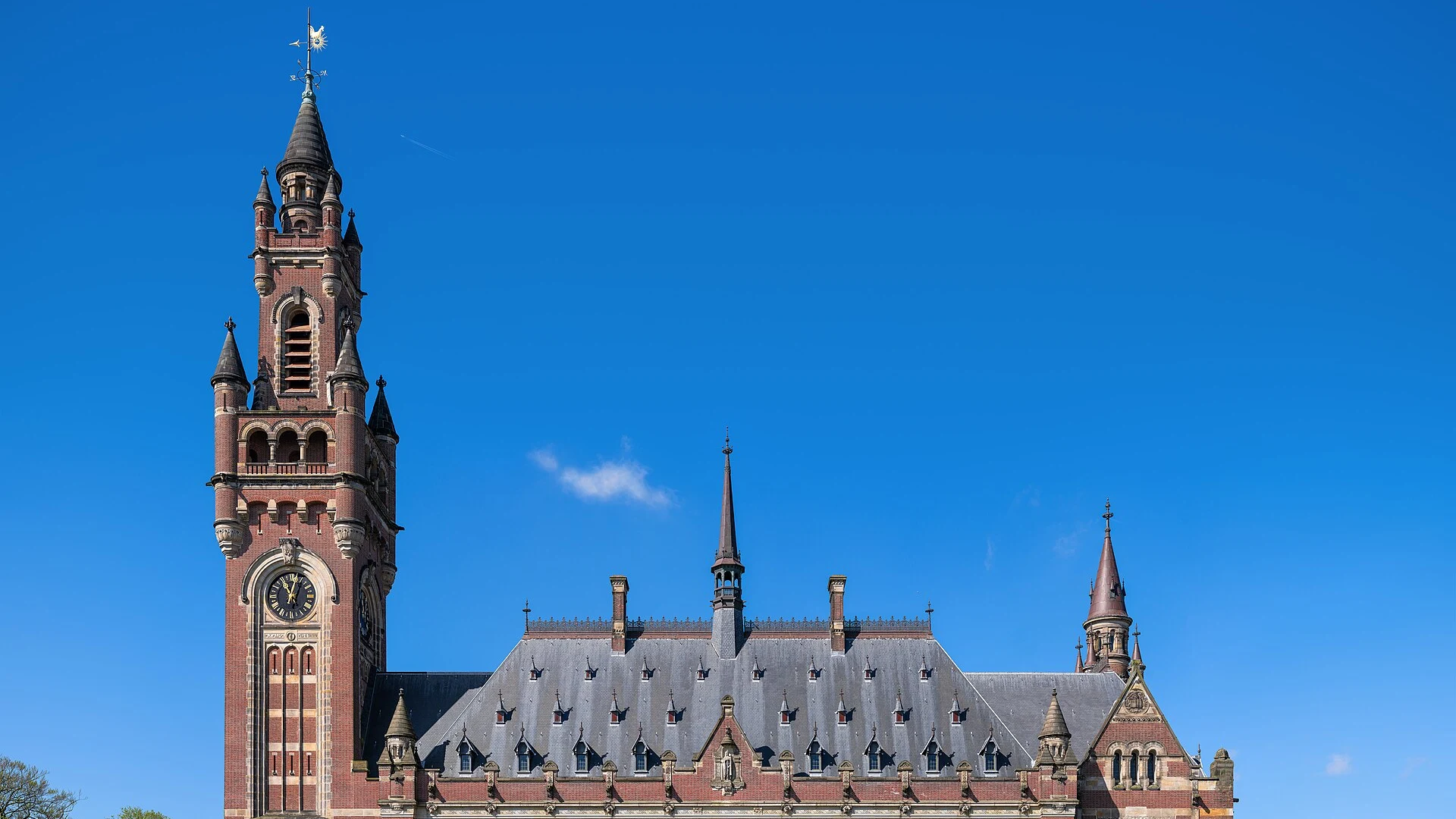
The International Court of Justice ruled on Thursday that Myanmar committed genocide against the Rohingya minority in a brutal military operation in 2017, the first time in the court's eighty-year history that it has held a state responsible for the crime of genocide. The judgment, read over three hours at the Peace Palace in The Hague by the court's president, Judge Yuji Iwasawa, was final and binding, with no right of appeal — though the court has no means of enforcing it beyond reporting non-compliance to the United Nations Security Council.
By a 9–6 decision, the court's fifteen judges found that Myanmar "has committed genocide against the Rohingya group in northern Rakhine state, in violation of its obligations under the Genocide Convention". The court rejected Myanmar's defence that the 2017 campaign was a legitimate counter-insurgency operation against Rohingya insurgents, and concluded that the "only reasonable inference" from the evidence was that the country's security forces acted with the intent to destroy a substantial part of the Rohingya population. Judge Iwasawa said the evidence showed that Myanmar's forces "killed thousands of Rohingya civilians, perpetrated widespread acts of sexual violence, as well as acts of extreme violence against children, and attacked fleeing Rohingya as they sought to flee in large numbers". The court found that about 10,000 Rohingya were killed in the operation, which began in August 2017 and drove more than 730,000 people across the border into Bangladesh.
The case was brought by The Gambia, a Muslim-majority West African nation, in November 2019, with the backing of the Organisation of Islamic Cooperation. The Gambia asked the court to rule that Myanmar had breached the 1948 Genocide Convention, to order the country to end any illegal activities targeting the Rohingya and to ensure that those responsible were punished. The road to judgment ran seven years: the court rejected Myanmar's objections to its jurisdiction in July 2022, and heard the merits of the case from 12 to 29 January this year, including closed-door testimony from Rohingya witnesses. The Gambia's ad hoc judge on the bench was Navi Pillay, the former United Nations High Commissioner for Human Rights and this year's Nobel Peace Prize winner; Myanmar chose the German scholar Claus Kreß. The Gambia has also asked for reparations for the Rohingya, including ordering Myanmar to grant them full citizenship and the right to return home.
For the Rohingya, the judgment was a moment of recognition after nearly a decade in limbo. "This is a great day for the Rohingya, and it is a great day for all oppressed people, everywhere, who have been told that their suffering does not count and that no one is listening," said Yasmin Ullah, a Rohingya rights activist who sat in the court's Great Hall of Justice for the reading of the ruling. About 1.2 million Rohingya refugees now live in Bangladesh, most of them in the crowded camps of Cox's Bazar, where they endure fire hazards, infectious diseases, monsoon landslides, inadequate sanitation and strict limits on work. "Because so far, we've just been pushed around into this limbo state," Ms Ullah said. "It's been almost 10 years now that Rohingya have been living in very, very precarious conditions across the Asia-Pacific." Human Rights Watch called the ruling "long-awaited recognition of the suffering the Rohingya have endured from Myanmar's military" and said it "provides a significant precedent for victims of genocide, and other grave crimes, across the world in their own quest for justice".
The ruling matters beyond Myanmar because it is only the third time the court has ruled on the merits of a genocide case, and the first time it has found that a state itself committed the crime. In its only previous comparable judgment, in 2007, the court said Serbia had violated its obligation to prevent genocide in the Srebrenica massacre, when Bosnian Serb forces murdered some 8,000 mostly Muslim men and boys — but it did not find Serbia guilty of genocide itself. The court is now also handling genocide allegations linked to the war in Gaza, where South Africa has accused Israel of breaching the convention, and the war in Ukraine, where Kyiv has accused Russia of fabricating genocide claims to justify its invasion. "Genocides have similarities in how they are committed so this decision will have an impact on other cases," said Melanie O'Brien, a professor of international law at the University of Western Australia.
What the judgment cannot do is compel Myanmar to act. The country's military government denies genocide and has shown no sign of accepting the court's authority; its forces remain in power in Naypyidaw, and the Rohingya who fled in 2017 have no route home. The ruling's force will therefore depend on what states and United Nations bodies do next — whether governments press the junta to comply, whether the Security Council takes up a finding of non-compliance, and whether the reparations The Gambia has sought are ever pursued in a second phase of the case. For now, the court's verdict stands as the law's answer to one of the century's worst atrocities: a state, named and judged, for a crime the world has long documented but never before formally condemned in this way.
- Associated Press via Reflector — In a landmark judgment, top UN court says Myanmar committed genocide against the Rohingya
- Human Rights Watch — World Court Finds Myanmar Responsible for Rohingya Genocide
- Reuters via Zark News — LIVE: World Court Delivers Judgment in Rohingya Genocide Case
- Al Jazeera via 234radio — UN top court convicts Myanmar of 'genocidal intent' against Rohingya
- Cover photo: The Peace Palace, seat of the International Court of Justice in The Hague, Netherlands. Photographed 29 April 2024 — Photo: Thomas Wolf, www.foto-tw.de / Wikimedia Commons (CC BY-SA 3.0 DE)