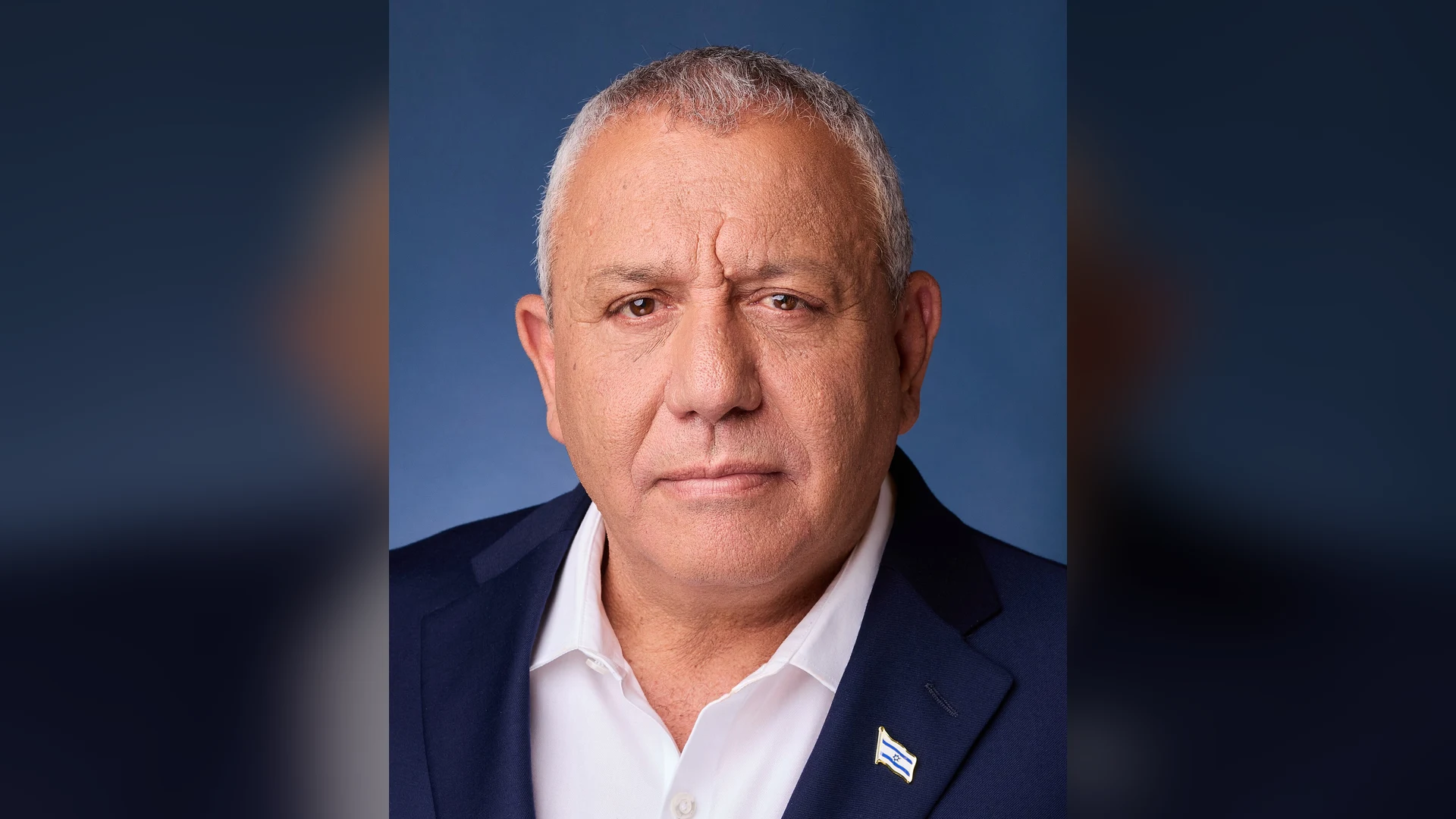
The General Against the Clock: Eisenkot's Race to Replace Netanyahu Before 6 December
Israel's political deadlock entered its decisive phase this week, as the bloc led by former army chief Gadi Eisenkot tightened its grip on parliament and its leaders declared the replacement of Benjamin Netanyahu their top priority — with the clock running down on the general's mandate to form a government. On Tuesday the Knesset elected Matan Kahana, a member of Mr Eisenkot's centre-right Yashar party, as its speaker by 66 votes to 52, replacing Amir Ohana of Mr Netanyahu's Likud. On Wednesday the leaders of Mr Eisenkot's bloc met at the Knesset and reaffirmed their commitment to forming what they called a national emergency government under his leadership, citing Mr Kahana's election as proof their parliamentary majority is real.
President Isaac Herzog formally gave Mr Eisenkot the mandate to form Israel's next government on 8 November, after consultations in which 67 lawmakers recommended the former general for the task, compared with 46 who backed Mr Netanyahu. Under Israeli law Mr Eisenkot has 28 days to assemble a coalition of at least 61 of the Knesset's 120 seats, with a possible 14-day extension — a deadline that falls on 6 December, and at the latest on 20 December. If he fails, the president may give another lawmaker the chance to form a government, and if that fails too a parliamentary majority can back a third candidate for a final 14 days before a new election is called within 90 days, with Mr Netanyahu staying on as caretaker prime minister throughout. The mandate was a deliberate snub: Mr Herzog passed over the sitting prime minister, whose Likud won the most seats of any single party, in favour of the man who has become the figurehead of the opposition.
The arithmetic is Mr Eisenkot's problem. In the 27 October general election, which stripped Mr Netanyahu of his majority but left his rivals with no clear path to power, Mr Eisenkot's four-party alliance won 48 seats — Yashar 21, B'Yachad 12, the Democrats 8 and Yisrael Beytenu 7 — while Mr Netanyahu's right-wing and religious bloc secured 53, with Likud on 27. Arab-led parties, representing Palestinian citizens of Israel, won a record 19 seats. Mr Eisenkot has ruled out forming a government with the Arab-led parties, which would give him a 67-seat bloc, leaving him one narrow path to 61: winning over the two ultra-Orthodox parties, United Torah Judaism and Shas, both long-time allies of Mr Netanyahu. He has set out four principles for potential partners — recognising Israel as a Jewish and democratic state, accepting the values of the Declaration of Independence, supporting military or civilian national service for all, and recognising Hamas as a terrorist organisation whose military and governing capabilities must be dismantled.
The speaker's election was the bloc's first concrete victory, and it matters more than it looks. In Israel's unicameral 120-seat parliament, the speaker wields considerable influence, including over what legislation is brought to a vote, and Mr Kahana will now be able to advance bills prioritised by the Eisenkot-led bloc. "The Knesset of Israel is the home of all citizens of the State of Israel, and I intend to be the Speaker for everyone," Mr Kahana said in his inaugural speech. Wednesday's meeting of the bloc's leaders — Mr Eisenkot, the former prime ministers Naftali Bennett and Yair Lapid, Avigdor Liberman and Yair Golan — declared that "all the party leaders are of one mind regarding the urgency of forming a national emergency government led by Eisenkot and replacing Netanyahu in the Prime Minister's Office, a top priority to be achieved as soon as possible". Mr Eisenkot emerged as the leader of the volatile opposition bloc only days before the October election, and his allies have been at pains to present him as a unifying figure: a former chief of staff who founded Yashar on an anti-corruption and government-reform platform.
Mr Netanyahu is not standing aside. The caretaker prime minister has publicly urged Mr Eisenkot to join a unity government with Likud, setting 6 December as the deadline to accept, and arguing that a broad government is essential to survive looming security threats. Mr Eisenkot has dismissed the overture as a political ploy, and has said he would consider joining only if Mr Netanyahu's government commits to democratic processes — specifically backing Mr Kahana for speaker, which has now happened, and severing ties with far-right elements. The tension captures the strangeness of the moment: the man Mr Netanyahu wants as a partner is the man the president has asked to replace him, and the deadline Mr Netanyahu is imposing is the same one the law imposes on Mr Eisenkot.
What happens next will be decided in the rooms where the ultra-Orthodox parties weigh their options. If United Torah Judaism and Shas can be brought across, Mr Eisenkot reaches exactly 61 seats and Israel gets a government led by a former general who has never held elected office — a national emergency government whose first test would be holding together parties that agree mainly on the need to replace Mr Netanyahu. If they cannot, the mandate passes to another candidate, and the country that has already voted once this autumn faces the prospect of voting again within months. Either way, the Knesset has already spoken once this week: the speaker's chair, held by Mr Netanyahu's party for years, now belongs to his rivals, and the prime minister who has dominated Israeli politics for a generation is, for the first time, watching his successor being chosen without him.
- Reuters via FroggyWeb — Israeli parliament elects speaker backed by Netanyahu opponents
- Like123 — Israel's political shake-up enters new phase as former PM plays kingmaker, and deadline looms
- ANI via APNA MA TV — Government formation efforts by Eisenkot-led bloc heat up
- 6IC News — Netanyahu pushes unity government with Eisenkot as deadline looms
- Cover photo: Portrait of Gadi Eisenkot, leader of the Yashar party, photographed 7 June 2026 — Photo: Yahav Trudler / Wikimedia Commons (CC BY-SA 4.0)