The World Court Calls It Genocide: Myanmar Found Guilty Over the Rohingya
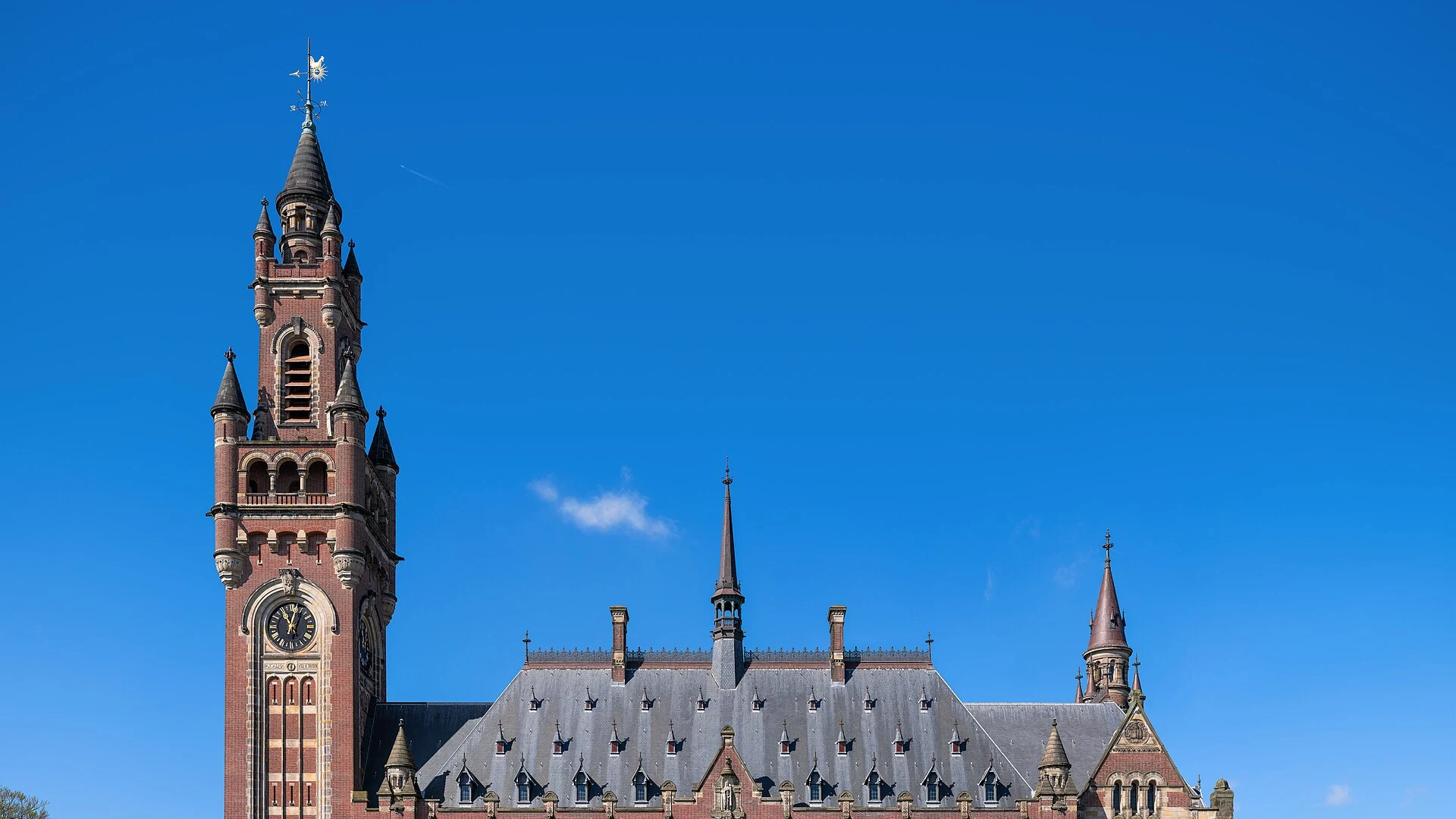
The International Court of Justice ruled on Thursday that Myanmar committed genocide against its Rohingya Muslim minority, the first time in the court's eighty-year history that it has held a state legally responsible for the crime of genocide. By nine votes to six, the court's fourteen judges found that Myanmar's military carried out a campaign of killing, rape and village-burning in northern Rakhine State in 2017 with the intent of destroying a substantial part of the Rohingya people, in violation of the Convention on the Prevention and Punishment of the Crime of Genocide. The court's president, Yuji Iwasawa, read the 191-page judgment aloud in The Hague in a session lasting nearly three hours, while Rohingya refugees watched on screens in the camps of Cox's Bazar in Bangladesh and survivors sat inside the Peace Palace itself.
The judgment sets out, in forensic detail, what the court found happened during the military's so-called clearance operations in the second half of 2017. Around 815,000 Rohingya lived in northern Rakhine before the operations began; the court concluded that about 10,000 were violently killed in a campaign of mass shootings, arson attacks and widespread sexual violence. The judges gave particular weight to the "widespread acts of sexual violence, and extreme acts of violence against children", and to attacks on Rohingya as they fled in large numbers towards Bangladesh. Rape and gang rape of Rohingya women and girls, the court said, caused physical harm and psychological trauma and reduced their chances of having children, while the killing of babies and children and the burning of whole villages "could not be considered a legitimate part of a military operation". The court's conclusion was blunt: "The only reasonable inference that can explain Myanmar's actions is an intention to destroy a substantial part of the group, namely the Rohingya population in northern Rakhine State."
The case was brought not by a victim state but by The Gambia, a small West African nation thousands of miles from Rakhine, which filed its application in November 2019 under the Genocide Convention — a world-first use of the treaty by a state with no direct connection to the crimes. Eleven other states intervened in support. Survivors testified before the court during merits hearings in January 2026, and the judgment resolves long-standing uncertainties about the definition of genocide, the specific intent that characterises it, and how that intent can be proven from a pattern of conduct rather than a single document or order. The court also found Myanmar responsible for six violations of the convention in total, and ordered the state to make reparations: to allow and facilitate the safe, voluntary and dignified return of the Rohingya to their homes, to reunite families, to return property lost or damaged, to end all acts of violence, to investigate and prosecute those responsible, and to give guarantees that such crimes will not happen again.
The reaction was swift and, for the survivors, emotional. The United Nations human rights chief, Volker Türk, called the ruling a landmark moment for accountability. The UN Special Rapporteur on human rights in Myanmar, Kelley E. Currie, said: "Today the world court has called the crimes by their true name: genocide." Gambia's justice minister, Dawda Jallow, who led the case, said the verdict vindicated seven years of work. Matthew Smith of the advocacy group Fortify Rights, who sat in the Peace Palace alongside Rohingya survivors and the Gambian delegation, called it "a huge day for the Rohingya people and all people of Myanmar". Outside the court, several dozen people demonstrated to celebrate the decision. For the roughly 750,000 Rohingya who fled to Bangladesh in 2017 — and the million-plus who remain in the camps there — the judgment is the first time any court has formally named what was done to them.
Yet the ruling also exposes the limits of international justice. The court's decisions are final and binding and cannot be appealed, but the court has no police force and no power to enforce them. Myanmar's military government, which has ruled since the 2021 coup and is itself fighting a civil war, has given no sign it will comply with the reparations order or allow returns. The verdict lands at a moment when the broader idea of international justice is under open attack from the Trump administration, which has sanctioned international court officials and questioned the legitimacy of the institutions in The Hague. Whether the judgment changes anything on the ground in Rakhine — where Rohingya who remain still live under severe restrictions — will depend on whether other states treat it as a legal obligation rather than a historical footnote.
What the ruling does change is the legal record, and with it the terms of every future argument. It is the first time the World Court has said, of a state, that it committed genocide — a finding that will be cited in the other genocide cases now before the court, including South Africa's case against Israel and Ukraine's against Russia, and that sets a precedent for how intent can be inferred from a campaign of atrocities. The court showed that genocide is not a single event but a slow progression towards the destruction of a group. For the Rohingya, the judgment is, as one survivor put it, a turning point. The question now is whether the world that waited nine years to hear the word spoken will act on it.
- Reuters — Reactions as top UN court finds Myanmar guilty of genocide against Rohingya
- The Wall Street Journal — World Court Finds Myanmar Committed Genocide Against Rohingya
- Le Monde — Historic International Court of Justice ruling finds Myanmar guilty of genocide
- CNN — In historic first, UN top court rules a country committed genocide
- UN Human Rights — "Called by its true name": UN expert welcomes ICJ genocide verdict on Myanmar
- Cover photo: The Peace Palace (Vredespaleis), seat of the International Court of Justice, in The Hague, Netherlands. Photographed 29 April 2024 — Photo: Thomas Wolf / Wikimedia Commons (CC BY-SA 3.0 DE)