Vulcan Rocket Fails on Return to Flight, Destroying 40 Amazon Satellites
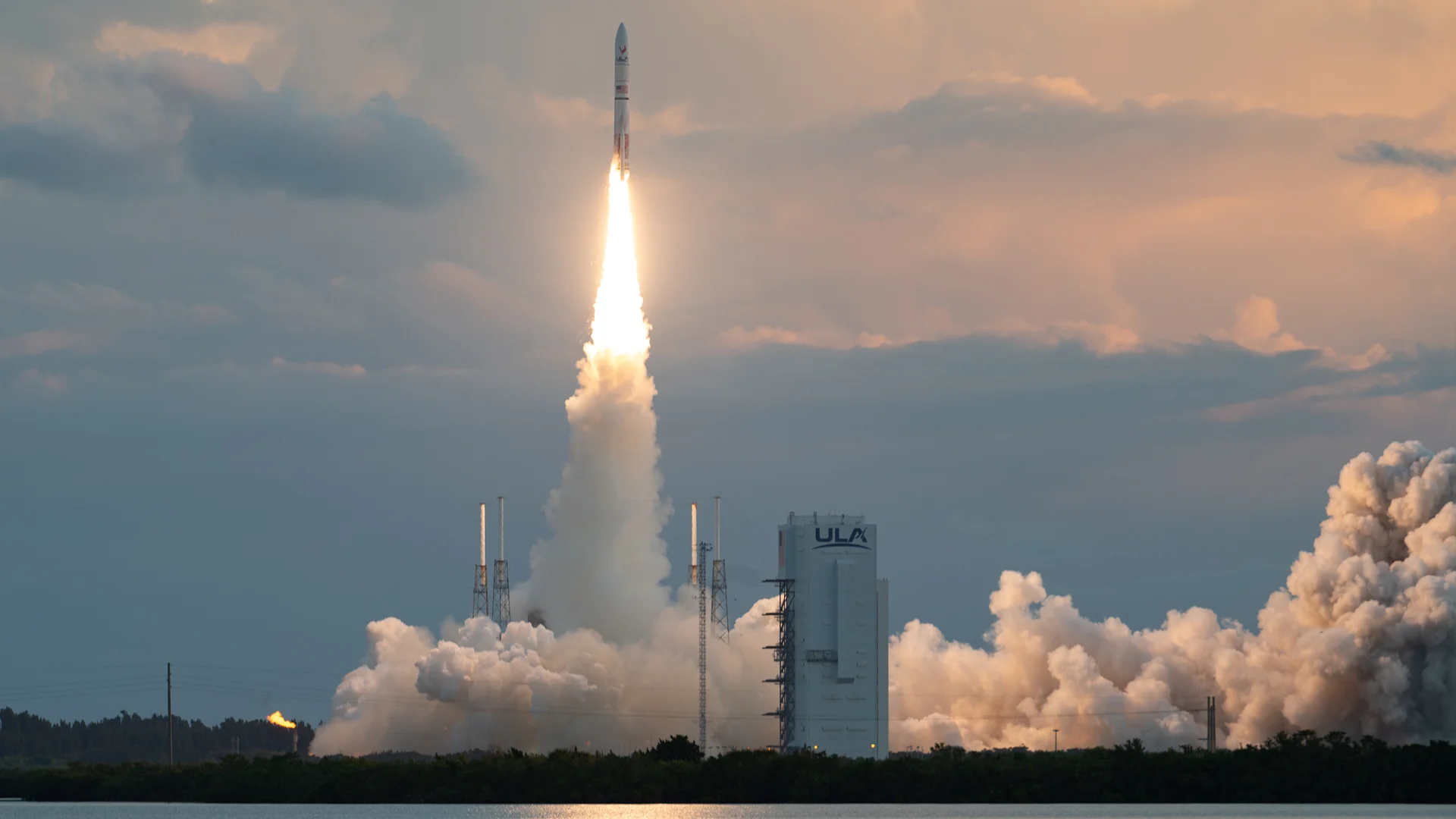
A United Launch Alliance Vulcan rocket carrying 40 satellites for Amazon's Leo internet network failed about ten minutes after liftoff from Florida on Sunday, destroying its payload and handing the launch company its first total mission failure in two decades. The rocket lifted off from Space Launch Complex 41 at Cape Canaveral Space Force Station at 12:40 p.m. Eastern time, climbing on 3.8 million pounds of thrust from six solid rocket boosters and two methane-burning BE-4 engines. About ten minutes into the flight, during the firing of the Centaur upper stage, something went wrong and the vehicle could not deliver its payload to orbit. United Launch Alliance, known as ULA, confirmed the loss in a statement about fifty minutes after liftoff. "Based on data received by our Launch Director, we confirm that the Vulcan vehicle launched from Space Launch Complex 41 suffered an anomaly 10 minutes into the flight and failed to deliver the Amazon mission to orbit," the company said. All 40 satellites were lost.
The failure came on a flight that was supposed to show Vulcan was ready again. It was only the fifth flight of the rocket since its debut in January 2024, and the first in nine months, after a hiatus drawn out by separate investigations into its solid rocket boosters and its BE-4 main engines. An earlier Vulcan flight in October 2024 reached orbit despite losing a nozzle on one of its solid boosters, and a similar booster problem occurred on a military mission in February 2026. Sunday's launch had already been delayed by two days, and the countdown was held with twenty seconds left to resolve a technical issue before the rocket finally left the pad. The six Northrop Grumman solid boosters appeared to perform normally and burned out less than two minutes after liftoff, according to Spaceflight Now, and the problem arose later, during the Centaur burn. ULA said it did not yet have specific data on what went wrong, and it was not immediately known whether the countdown issue played any role.
For Amazon, the loss is a direct blow to its plan to challenge SpaceX's Starlink in satellite internet. The flight was the first of 38 Vulcan launches Amazon has bought to build out Leo, its broadband constellation, and Vulcan is slated to carry more than 1,500 of the network's first-generation satellites — more than any other rocket in the programme. Since 2025, about 398 Leo satellites have been deployed across 14 launches, roughly 12 per cent of the 3,236 Amazon needs for global coverage, according to Reuters. Amazon has said Leo will begin initial service before the end of 2026 in the United States and Britain, along with a few other countries, and it faces a deadline set by the US communications regulator to have the full constellation in orbit by July 2029. The failure is expected to lead to a lengthy technical investigation that would keep Vulcan grounded for months, leaving Amazon waiting on ULA before it can try again with the rocket.
Online, the failure drew a large and rueful reaction. A thread on r/technology reporting the loss drew more than 9,300 upvotes and 850 comments, while a discussion on Hacker News drew 158 points and 109 comments, with several commenters lamenting the setback for competition in launch services and arguing that the world needs more than one successful launch provider. Some of the most-upvoted Reddit comments were instead puzzled by Amazon's branding, noting that calling the network Leo makes the phrase "Leo satellites" read as "low Earth orbit satellites". The scale of the reaction reflects how closely the space community has watched Leo's slow build-out: after years of delays, Amazon's constellation is still far behind Starlink, and every launch slot now matters to its timetable.
The failure also matters beyond Amazon, because ULA is one of only two American companies certified to launch the United States' most sensitive military and intelligence satellites. ULA, a joint venture of Boeing and Lockheed Martin formed in 2006, had never suffered an outright mission failure before Sunday, a record that underpinned its reputation for reliability even as SpaceX took the lead on price and launch cadence. The Space Force certified Vulcan for national security missions in March 2025 after a five-month review, and NASA selected a version of the rocket this year as a candidate for carrying astronauts. Blue Origin, which builds the BE-4 engines, is working with ULA on the investigation, and NASA's administrator, Jared Isaacman, has offered the agency's help. ULA said it would work closely with Amazon and other organisations "to find the cause, determine the appropriate corrective action and return to flight as quickly as possible".
What happens next depends on what the telemetry shows, and for now the public record is thin. Outside tracking reported by Spaceflight Now suggests the first stage, with its two BE-4 engines, ran longer than planned and separated late, and that the Centaur made unusual orientation corrections early in a burn scheduled to last 12 minutes and 15 seconds — but ULA itself has said only that the problem occurred during the Centaur burn, and until the investigation names a root cause it is not clear whether this is a new failure mode or something tied to the fixes made since February. Amazon has other rockets booked, including Atlas V, Falcon 9 and Ariane 6, so Leo launches can continue while Vulcan is grounded, but the loss of the largest single batch it had yet flown — and of the rocket meant to carry the bulk of the constellation — puts its 2029 deadline under fresh pressure. For ULA, the test is whether a company built on two decades without a failure can find the fault, fix it, and persuade its customers — above all the Pentagon — that the record still holds.
- Reuters — Rocket from Boeing-Lockheed firm fails mid-flight, destroys payload of Amazon satellites
- GeekWire — Amazon loses 40 Leo satellites in ULA Vulcan launch failure
- Spaceflight Now — ULA suffers first outright failure with loss of Vulcan rocket carrying 40 Amazon Leo satellites
- Gagadget — Vulcan rocket fails with Amazon's Leo satellites aboard
- Cover photo: A Vulcan rocket launching from Cape Canaveral, 4 October 2024 — file photo of an earlier flight, not the 15 November launch — Photo: Airman 1st Class Collin Wesson, U.S. Space Force / Wikimedia Commons (Public domain)