COP31 Collapses Without a Deal as Fossil Fuel Deadlock Breaks the Summit
The COP31 climate summit in Antalya, Türkiye, collapsed on Sunday without an agreement, after nearly 200 governments failed to bridge a divide over the one question that dominated the fortnight: whether the final deal should name the fossil fuels driving global warming at all. It is the first United Nations climate conference to end without an adopted deal since Copenhagen in 2009 — only the third such failure in the summit's history, after The Hague in 2000 — and, at more than 44 hours past its scheduled close on Friday, the longest COP ever held.
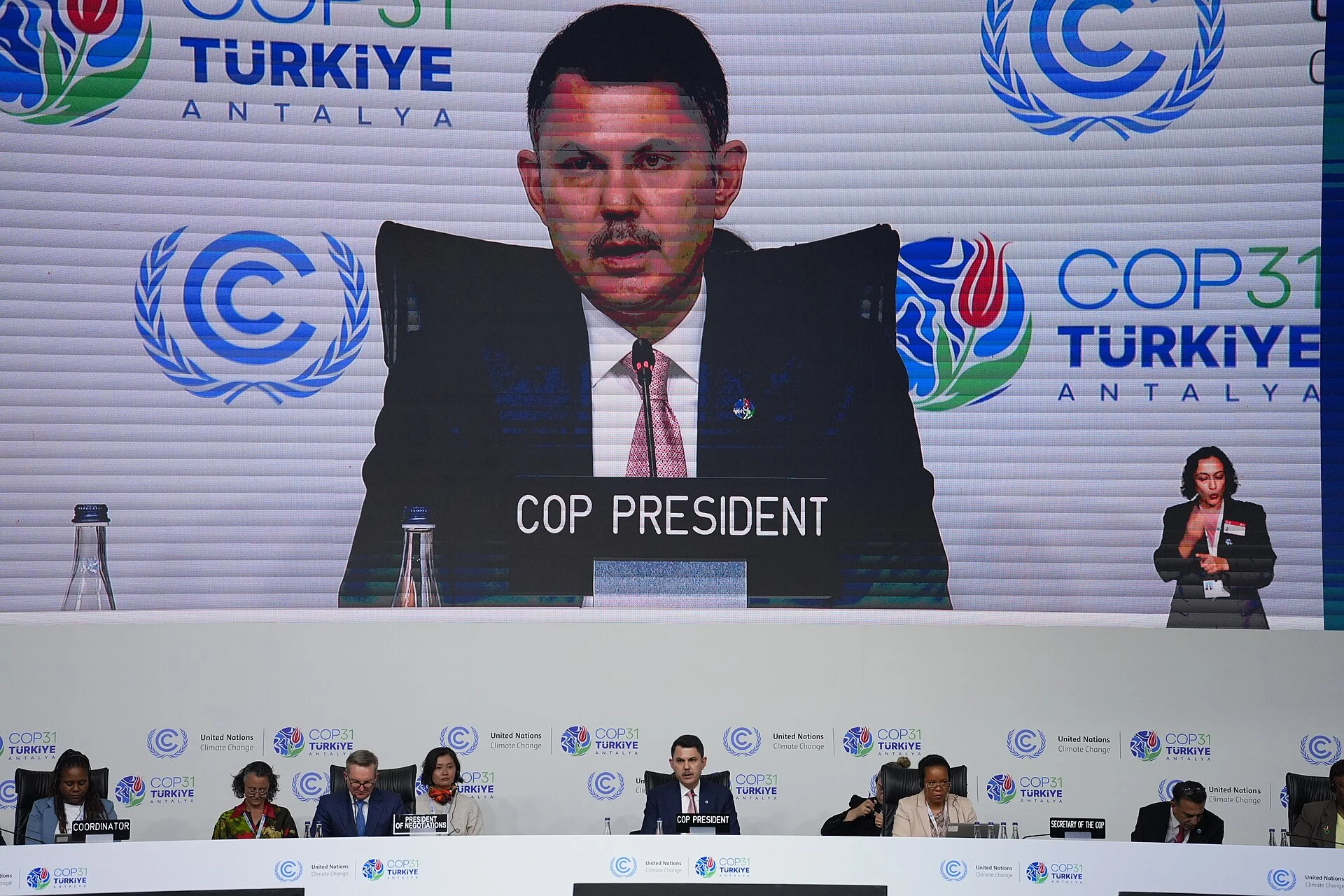
The end came in a chaotic closing plenary at the Antalya Expo Centre. The final text of the so-called Antalya Pact, put before delegates on Sunday morning, contained no reference to coal, oil or gas. The European Union, Britain, Panama, the Marshall Islands, Norway, Vanuatu and Belize formally rejected it. The EU delegation then walked out of the room, and other nations pushing for a transition away from fossil fuels followed. Summit president Murat Kurum, Türkiye's environment minister, conceded the deal had failed. "I understand that there is no agreement on this text. For that reason, these decisions have not been adopted," he told delegates, adding that there would be no new text. "There will be no new text from now on. We will not be carrying out work on a new text in an environment where there is no consensus."
The draft that died had been through four versions, each weaker on fossil fuels than the last. The first draft, published on Monday, called for "the immediate transition away from fossil fuels in energy systems" and won the backing of more than 100 countries. Every mention was stripped from subsequent drafts after objections from Saudi Arabia and other major oil and gas producers. The final text merely "recalled" the 2023 Dubai agreement, under which countries pledged to transition away from fossil fuels, without repeating the pledge itself. It kept a push to expand carbon capture technology, championed by the fossil fuel industry, and set a goal of raising electricity's share of total energy use to 35 percent by 2035. It also promised to at least triple adaptation finance by 2035, but named no baseline and no figure — and dropped a proposed target of $120 billion a year for developing countries to adapt to climate change.
For the governments that rejected it, the omission was the point. "We will not endorse a cover decision that does not even mention fossil fuels, which is the key driver of climate change," said Darragh O'Brien, Ireland's climate minister, speaking for the EU, which holds the bloc's rotating presidency. He said the draft had been "hijacked" by oil states and that the EU "will not accept a Cop that greenwashes fossil fuels." Britain's energy secretary, Miatta Fahnbulleh, called the failure "immensely disappointing", and the UK's negotiator, Kate Hughes, said the text "moves us backward on the science" and was "a lowest common denominator where it should have been, instead, presenting bold collective ambition on climate action." Panama, which had warned on Friday it would block any deal that failed its eight demands, including a cap on global oil production, also formally objected.
The reactions from the United Nations were unsparing. Secretary-General António Guterres said he was "deeply disappointed that COP31 has ended without consensus on an overarching outcome" and that he shared "the very profound frustration of all those who expected governments to rise to the moment the climate crisis demands." "There may be no consensus in the negotiating room. There is no ambiguity in the science," he said, adding: "Those who profit from the destruction of our planet must never dictate the terms of the fight to save it. Fossil fuels are driving the climate crisis." Simon Stiell, the head of the UN climate body, said he shared the disappointment of many, noting that COP31 had been unable to agree on either of the two presidency-led decisions. Chris Bowen, Australia's climate minister, who led the negotiations as president of negotiations, called the outcome "very disappointing", while pointing to what had been salvaged, including a pledge by more than 90 countries to ramp up electrification. China's vice minister Li Gao said his delegation was disappointed, and Nepal's delegation said it was "not good to go back home without a cover decision, not for Nepal but for all parties."
The collapse was not for want of warning. The summit, co-hosted by Türkiye and Australia and attended by delegations from nearly 200 countries, was scheduled to end on Friday. Instead, the closing plenary was suspended late that evening with the biggest questions unresolved, and negotiators worked through Saturday and into the small hours of Sunday while crews boxed up the venue around them. On Saturday, the EU's climate commissioner, Wopke Hoekstra, had warned the summit would produce either a good deal or no deal at all. Under the UN's consensus rule, a single formal objection from any of the nearly 200 nations can block agreement. The United States, the world's largest historical emitter, stayed away for a second consecutive year.
Not everything was lost. A handful of technical decisions were adopted on Friday, including measures on international carbon trading under Article 6 of the Paris Agreement and on support for the least developed countries. And the electrification pledge that drew more than 90 countries survived in the unadopted text. But the central political declaration — the cover decision that gives each COP its meaning — was not adopted, and no resumed session has been announced. The next summit, COP32, is scheduled for Addis Ababa, Ethiopia, in November 2027. It will inherit a process whose credibility, after Antalya, is in tatters — and a climate that, by the summit's own draft's admission, is set to overshoot the 1.5°C limit of the Paris Agreement.
- Reuters — COP31 climate talks set to collapse without political deal
- CNN — Global climate summit collapses as countries fail to agree on moving away from fossil fuels
- The Times — COP31 talks collapse after UK and EU reject proposal
- AFP via phys.org — COP31 fails to agree on climate deal in chaotic finale
- NPR — International climate talks end in disappointment
- edie — COP31: Antalya talks collapse after countries refuse to back fossil fuel-free deal
- Cover photo: COP31 President Murat Kurum addresses the closing plenary in Antalya — Photo: Xuthoria / Wikimedia Commons (CC BY-SA 4.0)