Tehran Says It Hit an American Fighter Jet. Washington Says It Never Happened — Then the Missiles Flew at Bahrain
Iran's army said on Saturday that its air defences had damaged an American F-16 fighter jet over the Gulf, forcing it into an emergency landing. Within hours, the United States military said no such thing had happened at all. And on Saturday night, as the two accounts collided in public, Iran's Revolutionary Guards said they had fired missiles and drones at two American bases in Bahrain — and Bahrain said an Iranian attack had set a civilian industrial site ablaze. It was, in the space of a day, a demonstration of how much of this war is now fought in competing claims, and how quickly those claims can turn into fire on the ground.
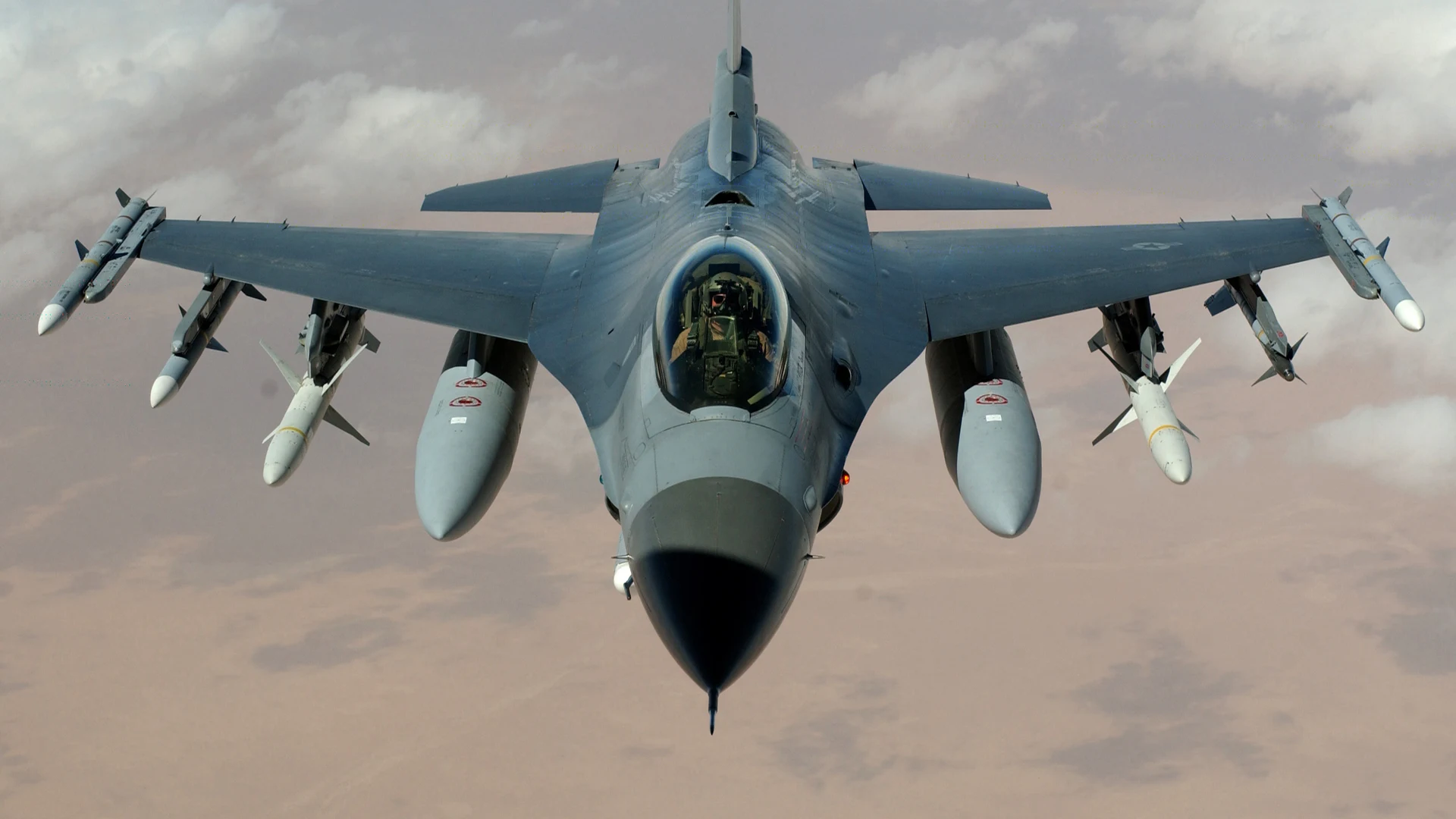
The F-16 claim came first. Iran's regular army said its air defence systems had detected the jet over the Gulf on Friday evening and fired a missile towards it, which exploded close to the aircraft, damaging it and forcing the pilot to abandon the mission and make an emergency landing at a nearby airport. Iranian state media, including Press TV and Tasnim, carried the account on Saturday. Tehran named no weapon system, no base the jet had flown from and no airport where it supposedly landed. Unverified flight-tracking accounts circulating online reported an F-16 transmitting the aviation emergency code 7700 near the United Arab Emirates, but nothing in those accounts tied the signal to a missile encounter. US Central Command answered on Saturday in a post on X. "This is FALSE," it said. "Iran did not attack a US F-16 fighter aircraft yesterday — at all." Every American fighter jet in the Middle East, it said, was safe and accounted for. Reuters, which reported the denial, noted that Iran has made similar claims during the war of shooting down or damaging American aircraft, and that the American military has denied them. The war erupted in February, when the United States and Israel attacked Iran, and has since spread across the Middle East, killing thousands of people, disrupting shipping and pushing up global energy prices. What makes this claim different is its source: it came not from the Revolutionary Guards, who usually make such announcements, but from the regular army's air defence force, the Artesh — although Central Command's own statement described it as a Guards claim, a sign of how quickly the two forces' messages blur once they leave Tehran.
The Bahrain attack, hours later, was harder to dismiss. The Revolutionary Guards, quoted by the Fars news agency and the state news agency IRNA, said their aerospace forces had carried out a combined missile and drone attack on American military positions at the Sheikh Isa and Juffair bases — which Iranian state media also identified as al-Riffa and Awali — and claimed that two Patriot early-warning radar systems had been hit. At 22:20, Bahrain's interior ministry said on social media that a civilian industrial facility had been targeted in what it called "heinous Iranian aggression", causing a fire that Civil Defence teams were working to bring under control, with material damage but no injuries. Residents told the AFP news agency they had seen smoke rising over Sitra Island, on Bahrain's east coast, which is home to several industrial sites, including a refinery run by the state oil company Bapco. Bahrain's Defence Force said its air defences had intercepted a number of Iranian aerial attacks, and that shrapnel from the interceptions had caused material damage but no casualties. The United States military did not immediately confirm the Guards' claims.
On Sunday, Bahrain escalated the dispute from the battlefield to the United Nations. Its foreign ministry demanded action by the UN Security Council and compensation from Iran, described the facility as civilian, rejected Tehran's justification for the attacks and said Bahrain reserved the right to defend itself. Iran's foreign minister, Abbas Araghchi, said discussion of reopening the Strait of Hormuz was pointless until Tehran's demands were met, according to remarks carried by Iranian state television. The night's violence had also reached the strait itself, where two tankers were hit by projectiles — an account already reported in the morning's news. Bahrain, which hosts the US Navy's Fifth Fleet, says it has intercepted several aerial attacks over the past week, and the island kingdom now finds itself on the front line of a war it did not start.
The claims fit a pattern that has repeated all month. On 13 November, the Guards claimed a hit on an American early-warning radar in Bahrain, which the Pentagon denied. Two days later, they said six drones had targeted the air defence radar system at the Al-Riffa helicopter base. On Tuesday, they claimed a third radar hit, and Central Command called it false: "Multiple Iranian one-way attack drones launched by the IRGC today towards Bahrain were intercepted without any damage to US equipment or injury to American personnel." Iran's army has also claimed, via state television, that its drones targeted American Patriot air defence systems and launch platforms at Ali Al-Salem Air Base in Kuwait; Kuwait has not reported any damage. Each claim is denied or dismissed within hours, each denial is met with a new claim, and neither side has offered independently verifiable evidence for its account.
What happens next depends on a line President Trump is said to have drawn in private. Three people familiar with the matter told Reuters last week that he has told senior advisers he does not plan to escalate attacks on Iran unless provoked by the Islamic Republic or the Houthis. Saturday night tested that line twice over: a claim about an American jet that Washington calls fiction, and an attack on American bases and a Bahraini industrial site that Bahrain says is fact. Until either side produces evidence — wreckage, radar tracks, satellite images — the public will have to choose between two governments' words, in a war where both have been caught out before. For the crews on the American bases in Bahrain and the workers on Sitra Island, the distinction matters less than the fire: whatever hit the industrial site, and whatever did or did not happen to the F-16, the Gulf's war is no longer something that happens somewhere else.
- Reuters — US denies Iranian account that missile damaged F-16 over Gulf
- NewsNation — Iran Missile at US F-16 Persian Gulf: Claim vs Denial
- AFP — Bahrain says Iran struck industrial site
- Zark News — Bahrain Says Iran Struck Industrial Site as Two Tankers Are Hit in Strait of Hormuz
- Daily Inference — Bahrain Seeks UN Action as Two Tankers Are Hit in Hormuz
- Cover photo: A US Air Force F-16 Fighting Falcon flies a mission in the skies near Iraq, 22 March 2003, during Operation Iraqi Freedom — Photo: Staff Sgt. Cherie A. Thurlby, US Air Force / Wikimedia Commons (Public domain)