Drones Set a Sanctioned Russian Military Ship Ablaze in the Gulf of Finland — and It Drifted Into Finnish Waters
Two drones struck the Russian cargo ship Sparta II in the Gulf of Finland on Saturday morning, setting the vessel on fire and forcing its crew to evacuate as the burning ship drifted from international waters into Finnish territorial waters. Estonian authorities logged the first reports of fire and explosions aboard the ship at 9.35am, and by mid-morning the Finnish Border Guard was leading a maritime rescue operation around a vessel that had become the latest flashpoint in a war that keeps reaching further from Ukraine's borders.
The Sparta II is no ordinary freighter. The Russian-flagged roll-on/roll-off dry cargo ship is operated by Oboronlogistics, a shipping company contracted by Russia's Defence Ministry and under United States sanctions. It had departed St Petersburg on Friday bound for Kaliningrad, Russia's heavily militarised Baltic exclave between Poland and Lithuania. Leningrad region governor Aleksandr Drozdenko said the two drones hit the ship in neutral waters about three nautical miles from Russia's border; Estonian authorities put the vessel about 11 nautical miles north of Estonia's Vaindloo Island, in an international shipping lane. The Finnish Defence Forces said they had detected the attack in international waters west of Gogland Island, known in Finnish as Suursaari, in the eastern Gulf of Finland.
Finland moved fast. The Border Guard said the damaged vessel had crossed into Finnish waters, that rescue operations were being coordinated with other authorities, and that preparations were under way for possible pollution control. "The situation poses no danger to other maritime traffic," the Border Guard said in a statement. Prime Minister Petteri Orpo said on X that "the war is spreading to our neighbouring regions", adding that "Ukraine has the right to fight back against the aggressor", and Finland said it had informed its NATO allies of the incident. Finnish authorities also closed a maritime area off Kotka and twice restricted aviation and shipping in the eastern gulf on Saturday morning — restrictions first imposed before dawn, lifted at 7.43am, then reinstated at about 9.30am as a precaution.
Nobody has claimed the attack, and nobody has said who launched the drones. Ukraine has not commented. Kaliningrad governor Alexei Besprozvannykh said the incident posed no threat to supplies to the region, and the crew was being evacuated while the damage was assessed; there was no immediate confirmation of casualties. The strike came after a night of heavy drone activity over Russia's Leningrad region, and Drozdenko claimed Russian air defences had shot down 80 drones overnight — a figure that has not been independently verified.
The Sparta II has long been watched for exactly this kind of cargo. According to Ukrainian military intelligence, the vessel has transported weapons and military equipment for Russia, including shipments from Syria in 2022, and it appears on the United States sanctions list. Its cargo at the time of Saturday's attack remains unknown. That uncertainty is part of the problem: a ship known for moving military hardware, sailing a route that keeps Kaliningrad supplied, was hit in waters used by civilian shipping from three NATO states — and the first question, what was in its holds, still has no answer.
What is clear is that the war's geography widened again on Saturday, and it did so in a place NATO cannot ignore. Finland joined the alliance in 2023, and the Gulf of Finland is now bordered almost entirely by NATO members. The burning ship drifted into the waters of one of them barely a day after Russian missiles crashed into Poland, another NATO state. The immediate questions are practical — who launched the drones, what the Sparta II was carrying, whether the fire can be contained before it becomes an environmental disaster — but the larger one is whether attacks on Russian military logistics in the Baltic are becoming a pattern, and how far the alliance's newest members are willing to let that pattern come to their shores.
- Reuters — Russia says cargo vessel struck by drones, Finland says it is on fire in its waters
- Helsinki Times — Russian cargo ship on fire after drone attack, drifts into Finnish waters
- Defence Blog — Russia says drones hit Kaliningrad-bound ship in Gulf of Finland
- LaPresse — Finland confirms drone attack on Russian ship: 'War is spreading'
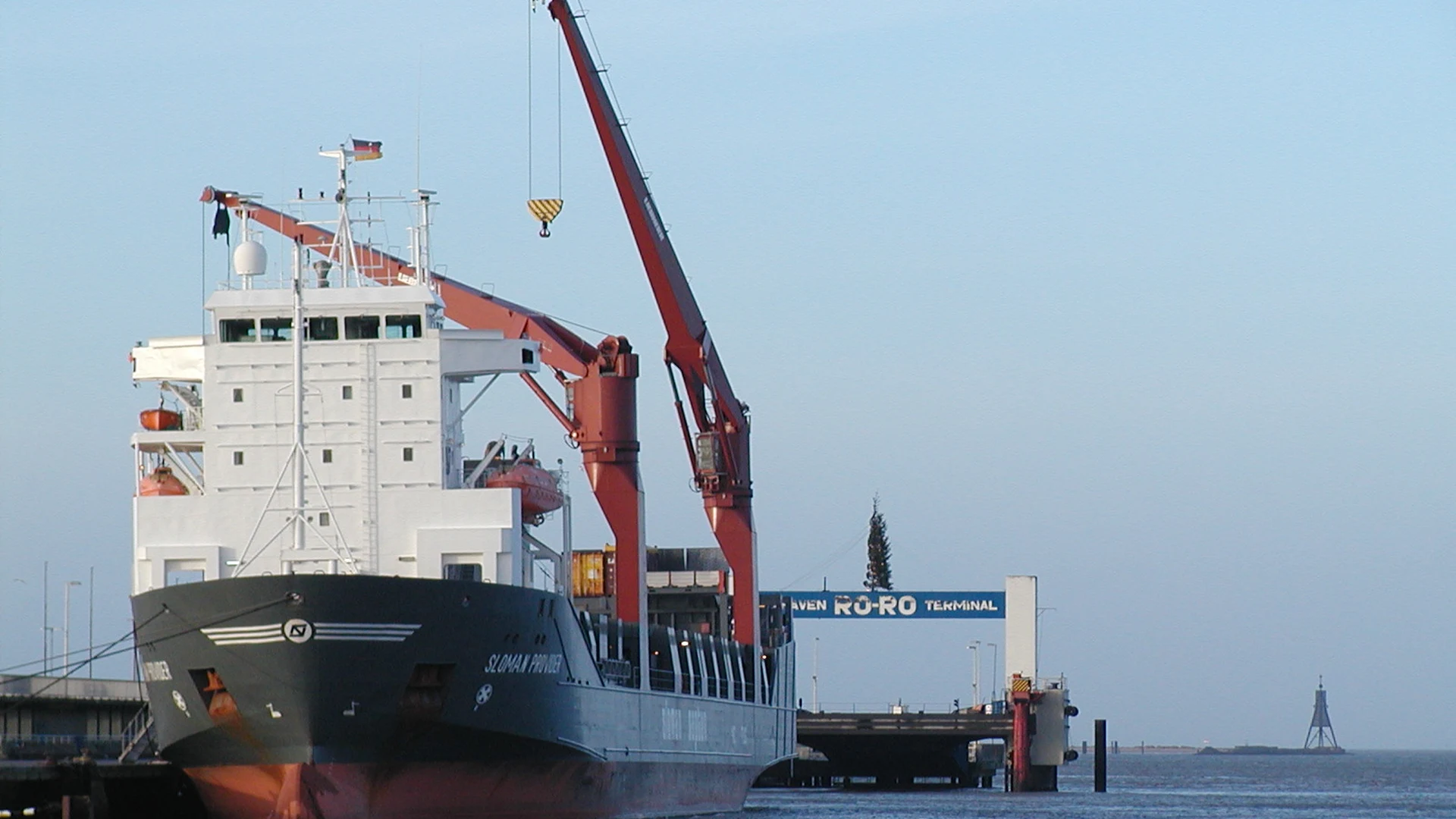
- Cover photo: The Sparta II, photographed as Sloman Provider off Cuxhaven, Germany, 24 December 2004 — Photo: Ra Boe / Wikimedia Commons (CC BY-SA 2.5)