The Ground Would Not Sit Still: A Night of Tremors Along the San Andreas Puts California on Edge
California barely had time to fall back asleep. At 10:49 on Thursday night, a magnitude 5.0 earthquake struck near Pinnacles National Park in central California, close to the San Andreas Fault; less than five hours later, at 3:25 on Friday morning, a magnitude 4.2 quake shook East Los Angeles, waking residents across the basin. Dozens of smaller tremors followed in the first quake's wake, more than 12,000 people reported feeling the second, and the state's emergency alert system sounded in both regions. There were no reports of damage or injuries from either quake. But in a state that lives with the knowledge of the fault running beneath it, two significant earthquakes in a single night were enough to put millions of people on edge — and to revive the question Californians ask after every tremor: was that the big one?
The first quake was the stronger of the two. Centred about 10 kilometres north-west of Pinnacles, in San Benito County, some 100 miles south of San Francisco, it struck at a shallow depth of just 6.7 kilometres, which is why its shaking was felt so widely — from Monterey County to Stockton and across the San Francisco Bay Area. The US Geological Survey first estimated its magnitude at 5.4 before revising it to 5.0 as more data came in, a routine correction in the first hours after a quake. Two smaller tremors came first, a magnitude 3.1 at 9:53pm and a magnitude 3.3 at 10:12pm, and at least 78 aftershocks followed in the magnitude 2.6 to 3.5 range, the largest a 3.4 less than half an hour after the main shock. The USGS issued a green alert — its lowest level, meaning little or no damage or loss of life was expected — and its ShakeAlert system sent urgent warnings to phones across the region. The quake's epicentre lay less than 10 miles from the San Andreas Fault, the 800-mile fracture that marks the boundary between the Pacific and North American tectonic plates.
The second quake, hours later and some 300 miles to the south, was a different kind of event. Its epicentre was about one kilometre north-west of Commerce, in East Los Angeles, roughly five miles south-east of downtown, at a depth of about 15 kilometres — directly beneath one of the most densely populated urban regions in the United States. First reported as magnitude 4.4, it was reviewed down to 4.2 by the USGS. More than 7,500 people had filed "Did You Feel It?" reports within the first hour, and the total passed 12,000 by Friday morning, with shaking reported from Pasadena and North Hollywood to Long Beach, Simi Valley and Santa Clarita. The Los Angeles Fire Department went into earthquake mode, sending crews from all 106 of its neighbourhood stations to survey the city's 470 square miles for damage to critical infrastructure — a sweep that typically takes less than an hour. It found none. The quake was the largest to hit the Los Angeles area in a year.
Seismologists were quick to damp down the most alarming reading of the night: the two quakes, for all their timing, are almost certainly unrelated. They struck 300 miles apart, on different parts of the fault system, and the USGS lists them as separate events, each with its own aftershock forecast. For the Pinnacles quake, the forecast gives about a 74 per cent chance of a magnitude 3 or larger aftershock within a week, about 16 per cent for magnitude 4 or larger, and about 2 per cent for magnitude 5 or larger; for the Commerce quake the figures are about 36 per cent, 6 per cent and under 1 per cent. And the USGS is blunt about the limits of what it can say: earthquakes cannot be predicted with enough precision to say when a major one will happen, where it will strike or how large it will be. The night's tremors, in other words, were a reminder of the risk, not a forecast of it.
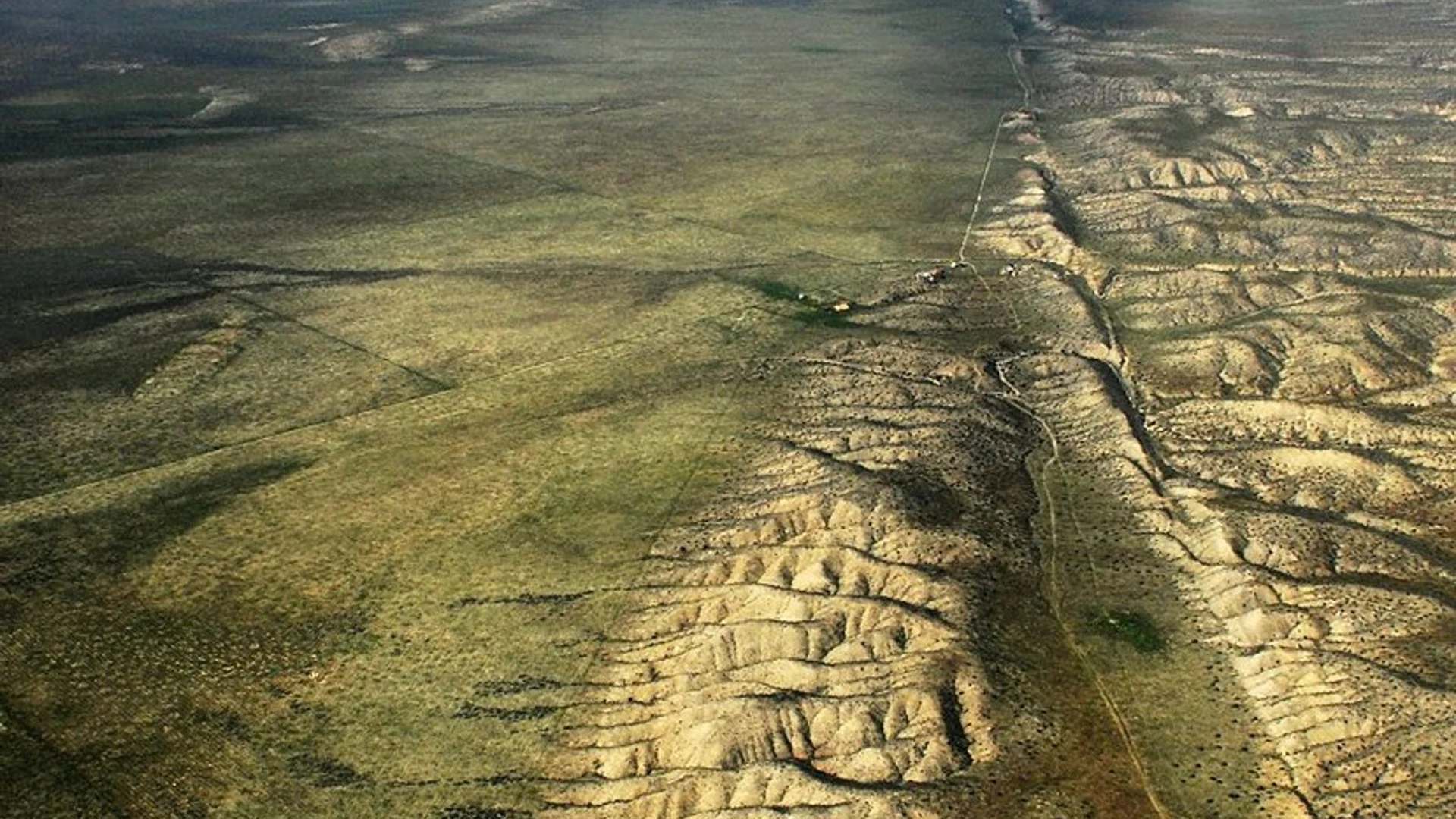
That reminder lands hard in California because the risk is so well known. The San Andreas Fault produced the devastating 1906 San Francisco earthquake, and scientists have long warned that another major rupture is inevitable somewhere along its length — the event Californians call "the Big One". The fault's southern section, which runs through the Los Angeles basin, has not produced a major quake in more than three centuries, which is precisely why it is watched so closely. Building codes in the state are among the strictest in the world, and the ShakeAlert system that sounded on Thursday night exists because the state has invested heavily in giving residents seconds of warning. But no code and no warning system can remove the fear that follows a night like this one, when the ground moves twice and nobody can say whether it is finished.
For now, the official advice is the same as after every California quake: stay prepared, expect aftershocks, and follow Drop, Cover and Hold On if the ground moves again. The aftershock sequence near Pinnacles was still running on Friday, with more than a dozen tremors of magnitude 2.5 or larger recorded in the hours after the main shock, and seismologists will be watching the fault closely for days. Online, the night played out in real time: on Reddit's r/Earthquakes, a thread asking Angelenos whether they had felt the 3:25 a.m. shake drew 232 comments of first-hand accounts — "felt it in West LA", "felt a bit aggressive" — while another thread shared the USGS statistic that only about 5 per cent of smaller quakes turn out to be foreshocks to something larger. That statistic is the one Californians will be holding on to: 95 per cent of the time, nothing larger follows. But the ground, for one long night, would not sit still.
- Fox Weather — Central California hit by more than a dozen earthquakes near Pinnacles
- The Californian / USA TODAY — Magnitude 5 earthquake near Pinnacles rattles Salinas, Central Coast
- KABC — More shaking felt in California
- NewsCubby — Quake near Commerce rattles L.A. hours after 5.0 near Pinnacles
- Internewscast — Magnitude 5 earthquake rocks California as seismic swarm erupts
- Cover photo: Aerial photo of San Andreas Fault looking northwest onto the Carrizo Plain with Soda Lake visible at the upper left. Photographed 20 February 2009 — Photo: John Wiley / Wikimedia Commons (CC BY 3.0)